

Discover how competitive SEO is for personal injury lawyers in 2026. Learn why top personal injury law firms competing face high costs, AI-driven search, and aggressive local rankings. This guide covers personal injury lawyer SEO, high-value case strategies, backlinks, technical SEO, and actionable tactics to convert clicks into potential clients, giving your firm a lasting competitive advantage.
Key Takeaways
PI SEO is ultra-competitive—top personal injury law firms face AI, paid ads, and high-value keywords.
Authority wins: showcase case results, attorney bios, and client reviews to beat AI content.
Local & niche focus drives leads: optimize practice area pages for TBI, Rideshare, and Maritime cases.
Technical SEO + backlinks matter: fast, mobile-friendly sites and authoritative links boost visibility.
SEO is a long-term asset: sustained SEO investment builds a digital moat and lowers cost-per-signed-case.
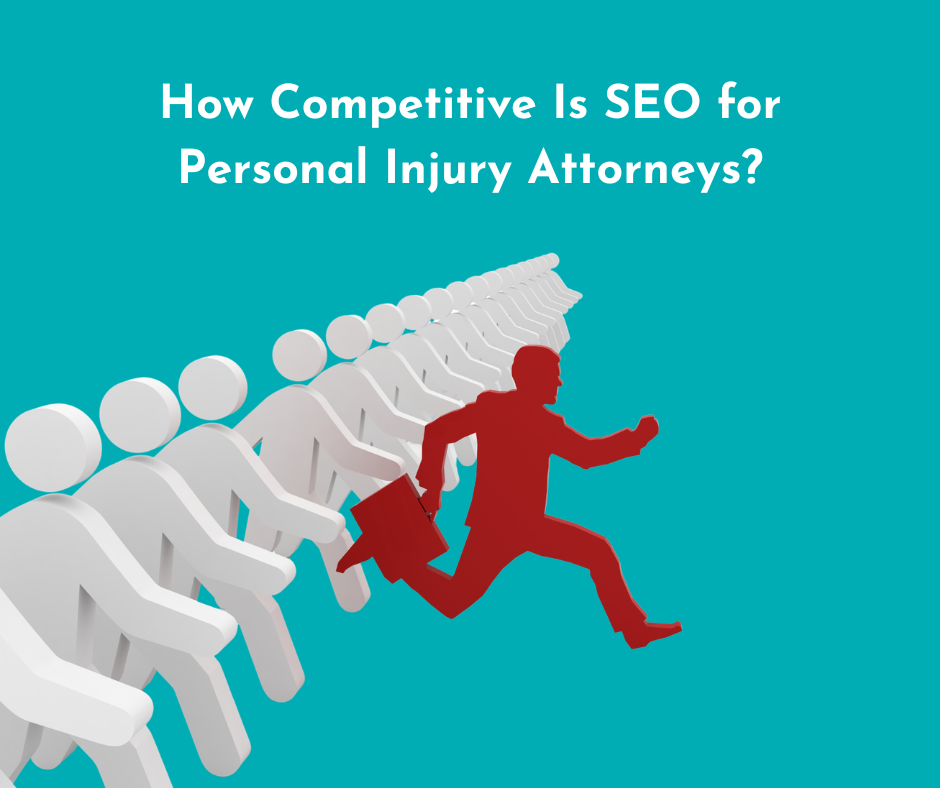
In 2026, asking how competitive is SEO for personal injury attorneys is strategic. The competitive legal industry of personal injury marketing has evolved into a digital battlefield. Personal injury lawyers and personal injury law firms competing for visibility now face aggressive tactics, high costs, and rapidly changing search dynamics.
This isn’t about ranking #1 anymore. It’s about winning real clients. Organic search alone no longer guarantees clicks or cases. Between competitive markets, AI-generated results, paid ads, and Local Services Ads, visibility is harder and more expensive than ever.
Fortunately, you don't have to worry about that, as we have you covered. Sapphire SEO Solutions offers reliable, affordable personal injury law firm SEO services to help you dominate search rankings and generate qualified leads.
In this guide, you’ll get a realistic look at the math, the competition, and the SEO strategy required to actually sign cases. Let's get started.
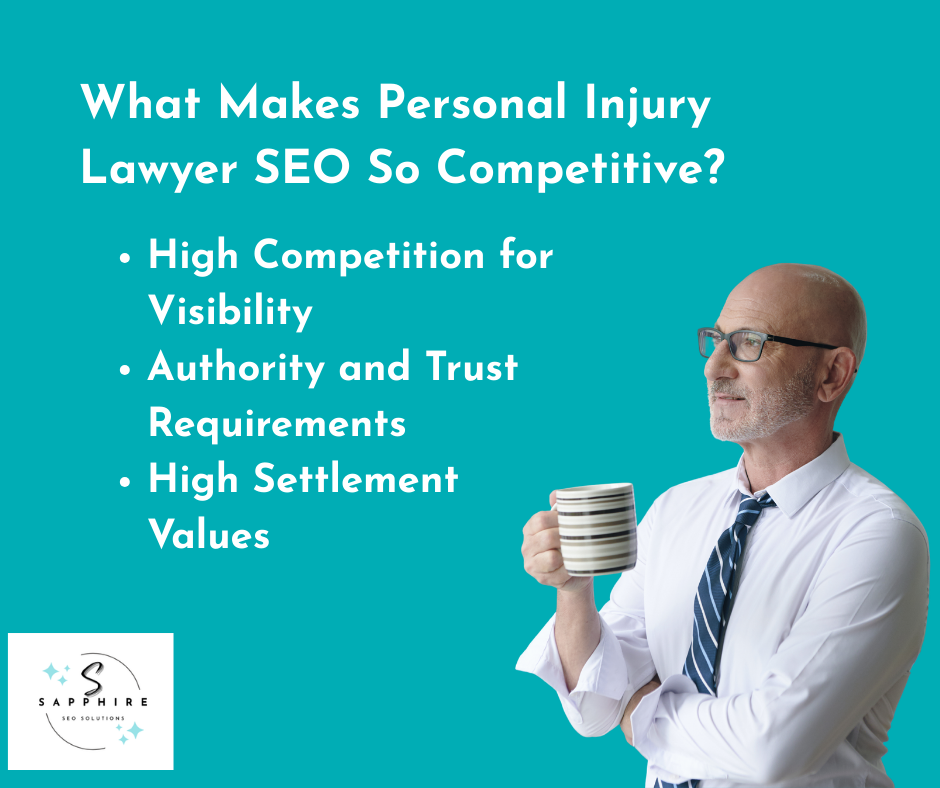
What Makes Personal Injury Lawyer SEO So Competitive?
Search engine optimization for personal injury lawyers isn’t just harder than most other niches. It’s one of the fiercest competitive legal markets online. Here's why:
1. High Competition for Visibility
Every personal injury firm wants to rank for terms like “personal injury lawyer,” “car accident attorney,” and “truck accident lawyer.” These law firm SEO strategy targets have high search volume and commercial intent, which draws established firms with deep budgets.
At the same time, directories and lead aggregators dominate top positions, making it harder for smaller sites to break through organically.
2. Authority and Trust Requirements
Google treats legal websites as YMYL (Your Money Your Life) content, meaning its algorithms apply stricter standards for trust and credibility. To compete at scale, you need:
Strong backlink profiles
High domain authority
Demonstrable expertise
Without these, search engine visibility and search rankings remain out of reach, even with quality content.
3. High Settlement Values
Personal injury cases have high settlement values. That attracts not just organic competition but expensive paid ads, which in turn drives up the value of ranking organically. The competition isn’t just about content. It’s about long-term visibility against brands willing to invest in both SEO efforts and paid search.
In short, law firm SEO strategy in personal injury is about ranking and overcoming massive competition, earning authority, and maintaining visibility where clients actually search.
The State of Personal Injury Search in 2026
In 2026, the landscape for organic search, search engines, and personal injury keywords research is dramatically different from what it was just a few years ago. Two major trends define the current state of personal injury SEO, and they are intensely competitive search terms and the rise of AI‑driven search results.
The Most Competitive Personal Injury Keywords
Keyword research is incredibly crucial for your law firm's online success. It reveals relevant keywords and the exact phrases potential clients are typing into search engines, such as terms like 'car accident attorney' or 'best personal injury lawyer near me.'
The head terms like “personal injury law,” “car accident lawyer,” “medical malpractice attorney,” and “slip and fall lawyer” continue to draw massive search volume and fierce competition. These broad terms now often have high keyword difficulty scores and are dominated by major firms, directories, and PPC campaigns.
According to keyword datasets, terms like “car accident lawyer” and “personal injury lawyer” appear among the highest‑volume searches but also rank as extremely competitive for organic visibility.
At the same time, long tail keywords like “lawyer for Uber accident in [city]” or “what to do after a hit and run collision” represent real searcher intent and tend to convert better, despite lower volume. These specific searches are essential for capturing clients further down the funnel. Optimizing for long-tail and question keywords captures users in the research phase and is suitable for voice searches.

How AI Overviews and Paid Ads Are Reducing Organic Clicks
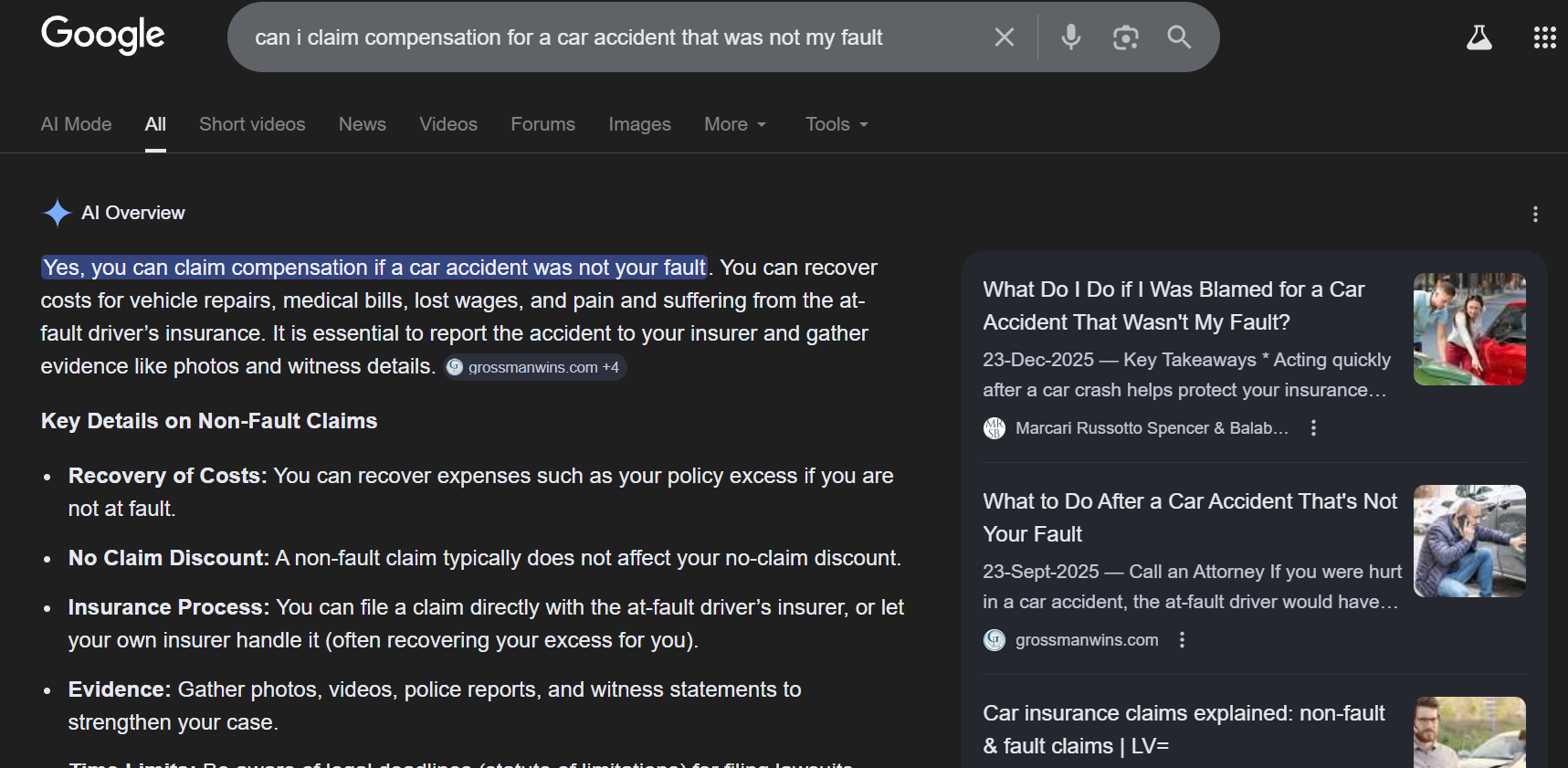
AI Overviews and generative results are now appearing on a large percentage of legal searches, providing answers before users even see traditional listings.
In 2026, many legal queries trigger AI summaries that occupy huge portions of the screen and reduce organic click‑through rates. This has shifted the focus from simply ranking to becoming an entity that the AI trusts and cites.
At the same time, paid advertising and local placements continue to push down organic listings. Even if you rank high, Local Service Ads (LSAs) and PPC ads now dominate much of the visible search real estate, especially on mobile, making organic visibility harder and more expensive.
In addition to search engine optimization, you need AI SEO for personal injury lawyers to succeed. Check out our guide on "The Future of Search is GEO" for more information.
Why Local SEO Matters More Than Ever
Personal injury is the most competitive area of law. IBISWorld reveals that there are 50,286 personal injury attorneys in the US, and they’re competing for a market worth around $61.3 billion. According to Answering Legal, 96% of people seeking legal advice start with search engines, making SEO crucial for personal injury lawyers. Dominating local search is important since most personal injury clients seek nearby help promptly.
With organic search clicks declining (Search Engine Land says that organic traffic is down by 2.5%) and AI formats reshaping results, local SEO tactics have become crucial. Local searches, especially with modifiers like city, neighborhood, or nearby hospital, now trigger competitive local packs where proximity, reviews, and Google Business Profile optimization often determine visibility more than broad domain authority. Google tests smaller local packs with fewer firms displayed, making every reputation signal matter.
Your Google Business Profile is often the first impression potential clients have of your firm, and it's absolutely critical for local SEO success. Learn more about it and how it can boost your firm's online presence by reading our comprehensive guide on "Attract More Visitors to Google Business Profile in 2025."
So, what do we know so far? Organic search visibility is shrinking, AI overviews are intercepting clicks, and local search results now compete with paid ads and maps before organic pages ever get seen. Effective 2026 search engine marketing for personal injury firms requires a deeper keyword strategy, local optimization, and adaptation to AI‑centric search behavior.

Who You’re Competing Against in Personal Injury SEO
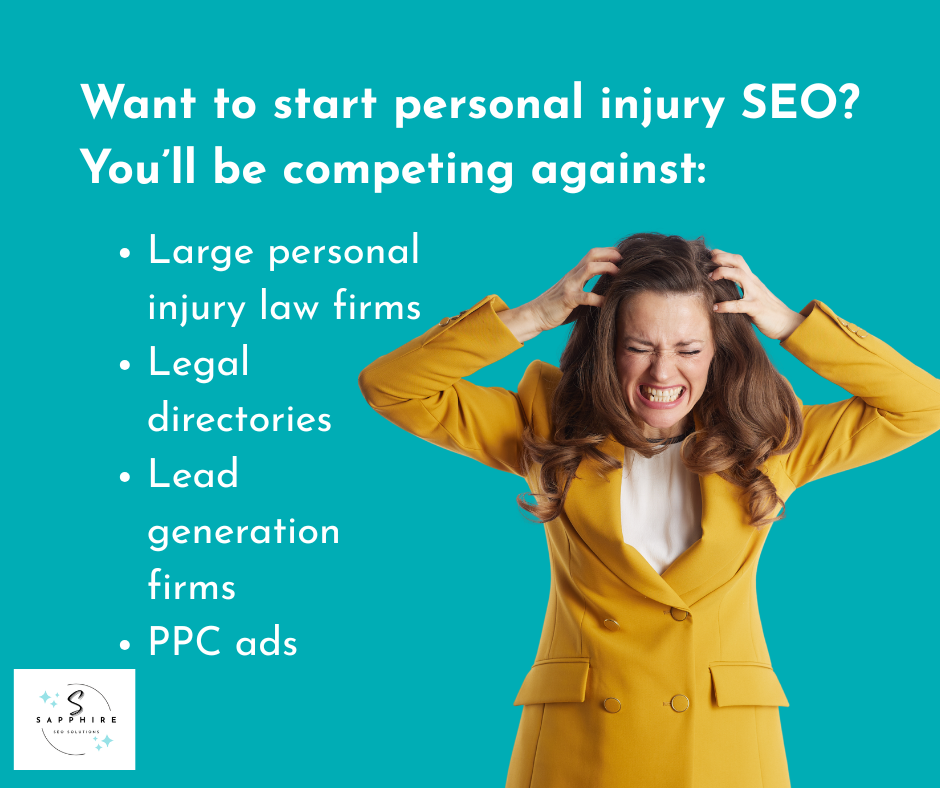
When evaluating personal injury firms competing online, it’s crucial to understand the landscape. Competition isn’t just with other lawyers but also with directories, lead generators, and paid ads. Knowing who occupies the top spots helps define your law firm SEO strategy.
Large Personal Injury Firms Dominating Search Results
Firms with decade-old domains often spend $20k–$50k/month on SEO. Their high domain authority and long-standing content make them hard to outrank. Even smaller firms with strong content struggle to compete without similar investment.
How Legal Directories Dominate Organic Search
Major legal directories like Avvo, Justia, and FindLaw command top results for competitive personal injury keywords. They benefit from massive backlinks and strong trust signals. Many firms now piggyback on their authority by optimizing profiles and linking back to their own websites.
Lead Generation Firms Using Virtual Offices
Remote firms exploit virtual offices to rank in multiple local markets. By placing addresses near hospitals or accident hotspots, they dominate local search results, even without a real local presence. This makes local SEO strategies for genuine firms more complex.
How LSAs and PPC Ads Push Organic Listings Down
Local Service Ads (LSAs) and paid search campaigns now occupy prime real estate on search pages. Four or more LSAs can push organic listings below the fold, reducing the visibility of even highly optimized personal injury law firm websites. Understanding this landscape is essential to building a competitive advantage in search engine marketing.
The Unique SEO Challenges for Personal Injury Attorneys
Optimizing a personal injury practice online comes with unique hurdles. Ranking is only part of the equation; converting traffic into potential personal injury clients depends on credibility, compliance, and user experience.
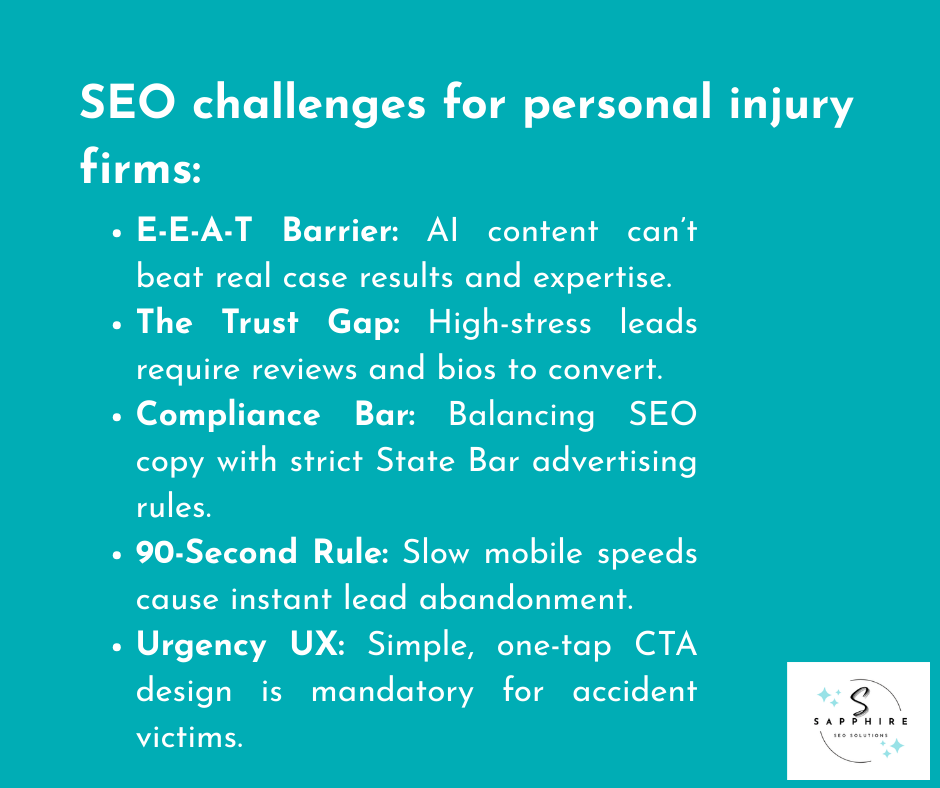
Why Experience and Case Results Matter for SEO
For practice area pages, demonstrating real-world experience through proven case results and detailed attorney bios is essential. Google and other search engines favor authoritative E-E-A-T content, making this the only way to outrank AI-generated thin content. Creating informative and engaging content is key to resonating with your audience, especially for personal injury lawyers whose clients often seek guidance during times of stress.
Client testimonials also boost trust and click-through rates, signaling reliability to potential clients.
Want SEO-optimized content for your personal injury law firm? Place an order online today to get started!
Navigating State Bar Advertising Rules
Maintaining SEO efficiency while complying with state bar rules is challenging. Laws like California’s SB 37 restrict certain claims and guarantees. Optimizing content on practice area pages requires balancing compliance with persuasive messaging that appeals to potential personal injury clients.
Why Website Speed and UX Directly Impact Signed Cases
Even the best SEO fails if potential clients abandon your site. The “90-Second Rule” highlights that most users decide within a minute and a half. Fast-loading, mobile-friendly practice area pages with clear calls-to-action and accessible client reviews ensure searchers become leads, not just clicks.
Personal Injury SEO Strategy: Targeting High-Value Case Types
Effective personal injury SEO isn’t about chasing every keyword. The goal of SEO for personal injury is to attract potential clients who convert. This requires focused strategies on high-value cases and smart content planning.
High-Value Niche Practice Areas That Drive Revenue
Targeting specialized case types like TBI, Maritime, Rideshare, and E-scooter accidents can dramatically improve ROI. These niches have lower competition but much higher settlement values. A well-optimized personal injury lawyer SEO strategy focuses on these target keywords to generate qualified leads.

Building Topical Authority With “What to Do After” Guides
Creating guides such as “What to Do After a Truck Accident” or “Steps Following a Workplace Injury” builds topical authority. This content signals expertise to Google and AI engines, increasing the likelihood your firm is cited in AI-generated answers. It’s an essential SEO strategy that turns information into trust.

Why Low-Volume Keywords Often Bring the Best Clients
Not all valuable target keywords show high search volume. Terms that appear “0” in tools often reflect urgent, high-intent searches. Personal injury SEO for these low-volume keywords can generate the highest-quality leads, because these searchers are ready to hire, not just research.

Backlinks and Off-Page SEO for Personal Injury Law Firms
Off-page SEO factors are crucial for SEO success in personal injury lawyer SEO. Building authority beyond your website can make or break visibility in competitive markets.
Why High-Authority Links Matter More Than Quantity
Backlinks are important to personal injury lawyer SEO because they act as endorsements for your law firm website, boosting your search rankings. That said, you need to avoid poor-quality links.
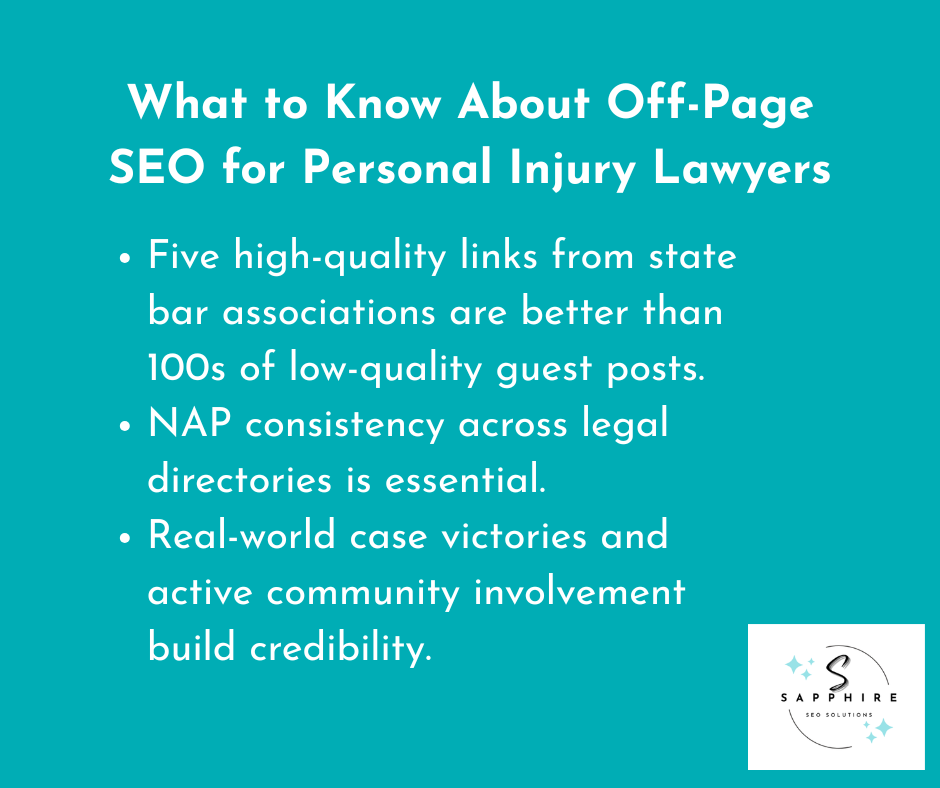
Five high-quality links from state bar associations or respected local news outlets outperform hundreds of low-value “guest posts.” Strategic link building creates a competitive advantage that AI and Google algorithms recognize.
Managing Legal Directory and NAP Citations
Consistency across legal directories is essential. Ensuring accurate Name, Address, Phone (NAP) data across 100+ directories strengthens local SEO, improves search rankings, and prevents confusion for potential clients.
Earning Links Through Case Results and Community Involvement
Real-world case victories and active community involvement generate “unbuyable” links that boost credibility. Press releases, sponsorships, and local events can all translate into backlinks, creating a durable competitive advantage for your personal injury practice.
Technical SEO for Personal Injury Websites in 2026
SEO for personal injury attorneys is the most competitive legal digital marketing niche driven by high-value, high-intent cases. This is why technical SEO is essential to ensure a strong firm’s online presence. Even the best content can fail if the site structure and speed aren’t optimized for users and search engines.
Why Site Speed Is a Non-Negotiable Ranking Factor
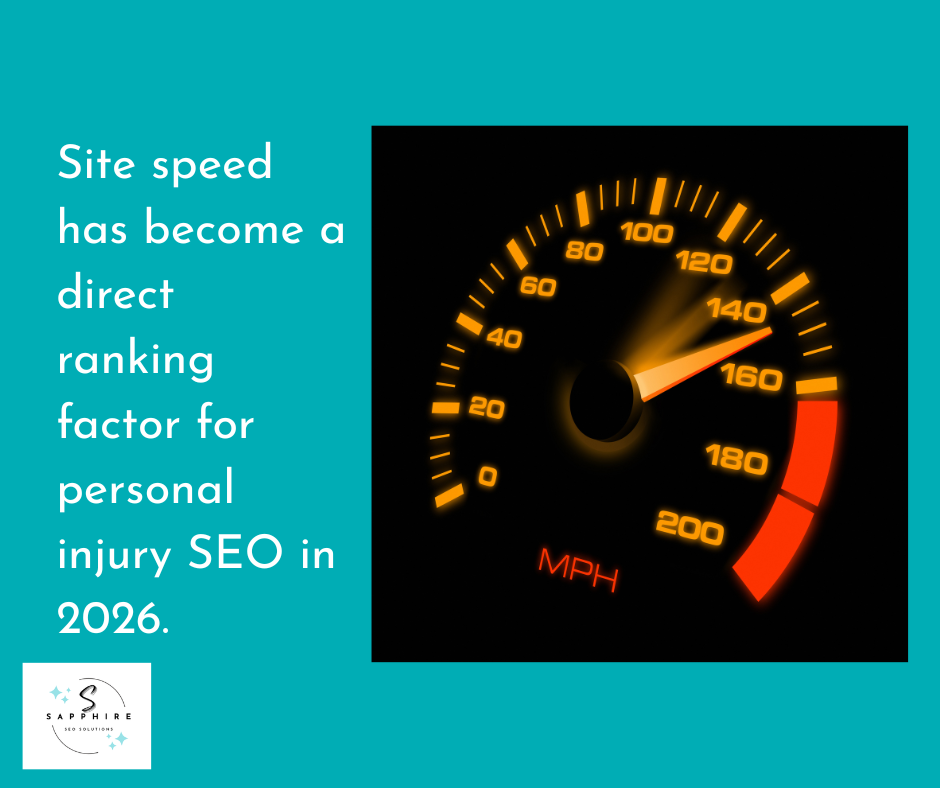
In 2026, site speed will be a direct ranking factor for SEO. Slow-loading websites can confuse search engines and frustrate users. Site speed is a hygiene factor: if your pages take too long to load, your personal injury practice may become invisible in both organic search and mobile results.
Mobile Optimization for Emergency Searchers
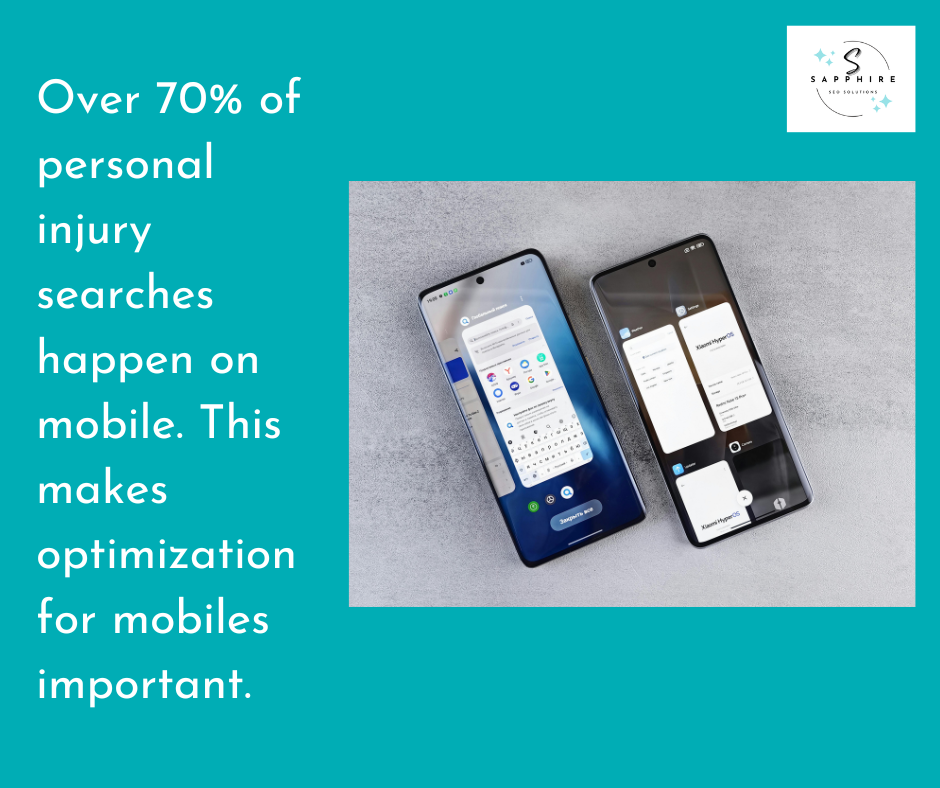
Over 70% of personal injury searches happen on mobile. Conducting a “Thumb-Friendly” audit ensures buttons, forms, and calls-to-action are accessible for users who need help quickly.
Proper mobile optimization converts searchers into potential clients. But mobile optimization goes far beyond simply making your website fit on smaller screens; it must provide a superior user experience that facilitates immediate contact and engagement.
Using Schema Markup to Increase Search Visibility
Implementing LocalBusiness and FAQ schema expands your real estate in search results. This structured data (schema markup) helps Google understand your content, increasing click-through rates and enhancing your firm’s online presence without additional paid ads.

What Does SEO Cost for Personal Injury Lawyers?
Investing in SEO for personal injury is not cheap, but it’s often more cost-effective than traditional advertising methods to generate cases long-term. SEO delivers 10x higher ROI compared to traditional advertising methods for law firms, and organic search leads convert at 14.6% compared to 1.7% for traditional outbound marketing (Digital Marketing Institute). Some may find SEO expensive, but it's important to note that the average personal injury case value ranges from $52,900 to $1.2 million, making client acquisition through SEO highly profitable.
Understanding the timeline and ROI is crucial for law firms considering digital marketing.

How Long Does Personal Injury Law Firm SEO Take to Show Results?
Most personal injury law firms can expect to see meaningful movement in rankings within 6-12 months. However, it's important to understand that SEO for personal injury lawyers is a long-term investment that typically takes more than 12 months to see consistent case generation.
The first 6–12 months of SEO investment can feel like a “black hole.” Firms that quit early, around month 5, lose ground to competitors who continue building search engine visibility and authority. Patience is essential; SEO is a long-term strategy, not a quick fix.
2026 Benchmarks
SEO Cost-per-Signed-Case: $300–$700 for mature campaigns
PPC Cost-per-Signed-Case: $1,200+
Compounding Growth: By year 3, SEO returns can be 10x more profitable than year 1 due to improved rankings, backlinks, and topical authority
Most agencies quote $3,000 monthly as the starting point for competitive markets in personal injury SEO. Fortunately, Sapphire SEO Solutions offers affordable SEO services that you can customize based on your law firm's needs. Our content writing starts from $0.03 per word. Check out the different content writing tiers we offer.
How to Audit Your Personal Injury SEO Competitors
Understanding your competition is important for effective personal injury lawyer SEO. A structured audit reveals opportunities to outrank others in organic search.
The Gap Analysis
Start with keyword research to identify content gaps. Look for “content holes” your competitors neglect, such as topics or practice area pages they haven’t optimized. Filling these gaps positions your firm as more authoritative and relevant to potential personal injury clients.
The Review Audit
Analyze competitor Review Velocity: how many 5-star client reviews they earn each month. Tracking this helps you set targets to match or exceed their social proof, which directly impacts local rankings and trust signals.
Toolbox
Use tools like Semrush, Google Search Console (GSC), and Local Falcon to monitor rankings, track backlinks, and evaluate local search presence. Combining these tools gives a full picture of your competitors’ strengths and weaknesses, enabling a smarter SEO strategy.
Why High SEO Competition Creates Long-Term Advantage
Ranking in a competitive legal industry is hard, but it also provides an opportunity to create lasting value. High competition builds a durable competitive advantage for your personal injury practice.
High Barrier to Entry
The more difficult it is to rank, the tougher it becomes for new entrants to displace you. Once your firm secures top positions, your firm’s online presence becomes a long-term asset that competitors struggle to replicate.

The "Quality Filter"
Intense competition forces improvements across the board: better intake processes, enhanced website UX, stronger branding, and higher-quality practice area pages. This not only improves rankings but also makes your firm more appealing to the local community and potential clients.
Asset vs. Expense
Investing in SEO for personal injury builds a “digital moat.” Unlike short-term campaigns, this asset continues to generate leads even if you stop spending, making SEO a lasting competitive advantage rather than a simple expense.

Partner with a Reliable Personal Injury Lawyer SEO Company Today!
For personal injury lawyers, investing in personal injury lawyer SEO is the only way to avoid paying the PPC Tax forever. Relying solely on paid ads means constantly bidding against competitors for every lead, while strong SEO builds long-term authority.
In 2026, the winner is the firm with the most trust, authority, and visibility. Ranking high without credibility won’t generate potential clients. Partner with a skilled personal injury lawyer SEO team and see where your firm stands. Start with a free Personal Injury law firm SEO audit to compare your website against your top three local rivals and identify opportunities to dominate search results today.
You can even contact us to get in touch with an SEO expert to learn more about our services and how we can help your personal injury law firm rise above!

Frequently Asked Questions
How do small law firms compete with high-budget SEO rivals?
Small firms compete by dominating local visibility through hyper-local content. By focusing on specific neighborhoods and niche accident types rather than broad city terms, smaller practices can bypass massive competitors and connect directly with local clients in their immediate community.
Is SEO still effective with Google’s AI Overviews (SGE)?
Yes, but the strategy has shifted toward citation optimization. Because most legal searches occur with specific intent, firms must provide data-rich, authoritative answers that AI models can easily cite. This ensures your firm remains visible even in a "zero-click" search environment.
Why is SEO more cost-effective than PPC for personal injury?
While PPC requires a continuous "tax" to keep ads running, a robust legal seo strategy builds a permanent digital asset. Over time, the cost per lead drops significantly as your site earns compounding organic traffic without the need for an ever-increasing ad budget.
How does E-E-A-T impact personal injury law firm rankings?
Google’s 2026 algorithms prioritize high-quality keyword rankings for sites that demonstrate real-world Experience and Expertise. To rank, attorneys must go beyond generic advice and provide unique case insights and verified results that prove they are the best personal injury lawyer for a specific claim.
How long does it take to sign a case from organic SEO?
In the 2026 landscape, a realistic timeline for a new campaign is 12–18 months. While technical improvements happen quickly, building the authority required to compete for high-value cases takes consistent effort before a firm sees a steady flow of leads from organic search.