

How Long Does It Take for Google to Trust a New Site?
Wondering how long it takes for Google to trust a new site? Most websites see early ranking movement in about six months, while consistent traffic usually takes 12 months or more. Google needs time to crawl, index, and evaluate your pages using signals like topical authority, E-E-A-T content, search intent alignment, mobile optimization, user experience, and backlink quality. New sites often appear to be in a temporary hold because they lack authority and data. By improving on-page SEO, publishing helpful content, building topical clusters, strengthening technical performance, and earning quality backlinks, you can speed up trust building and indexation. This guide explains the timeline, why delays happen, and how to help Google trust your new site faster.
Key Takeaways
Most new sites take 6 to 12 months to earn Google’s trust. Timelines vary based on competition and optimization.
Google needs crawl data, quality content, and authority signals before ranking a new site. This answers the core search intent.
Strong E-E-A-T content, topical clusters, and quality backlinks accelerate trust building. Proven methods used by leading SEO experts.
Optimize technical SEO and mobile experience early. Faster crawling, indexation, and ranking momentum.
Submit sitemaps, target low-competition keywords, and build internal links. Simple steps that speed up discoverability and rankings.
If you've just launched your website, you may be wondering when you'll start seeing the site climb in search engine rankings. So, how long does it take for Google to trust a new site? In short, it depends on many factors. Some people can expect quicker results, while others may have to wait longer.
What's the reason for such a discrepancy? Well, Google doesn't trust new sites immediately. Your site needs to prove that it's worthy to attract the attention of search engines. With no history, no backlinks from credible sites, and no helpful content, you might experience slow growth.
While some new sites see movement in just six months, others can take much longer. This is because factors like competition, your SEO efforts, and click-through rates play a crucial role in determining how quickly you can rank.
Looking for instant results with search engine optimization? Forget about it. While SEO is a vital part of digital marketing that you should always explore, it's a long-term strategy, and you need to be patient.
At Sapphire SEO Solutions, we have helped hundreds of businesses climb search rankings with our affordable SEO services since 2007. Whether it's content writing, on-page SEO, or off-page search engine optimization, we work with clients closely to ensure that our team helps them achieve their goals.
In this comprehensive guide, we will cover many different talking points, including what affects your website's ranking, how long it takes for Google to trust your site, and how you can speed up the process.
Let's get started!
How Long Does It Take for Google to Trust a New Site?
Google isn't handing out trust badges to every new site. You have to earn it. How? The search engine evaluates hundreds of signals over a period of time to decide whether you deserve to start ranking.
If you're starting from scratch, you don't have any historical data or content, so it could take time. Again, how long? It depends.
Most sites can see some movement in around 6 months. However, if you're looking for consistent traffic, it could take a year or more. That's a few months of patience you'll need to practice.
That said, there are certain exceptions. Domains with strong early backlink campaigns or business owners that invest heavily in search engine optimization from day one can see faster movement.
So, why does it take Google so long to act? Because the search engine needs time to:
Crawl your pages
Index your pages
Assess the quality of your pages
Test how your pages perform in actual search results
Google is also watching how people interact with your content. Are they staying longer? Are they leaving? Or are they coming back? All of these metrics matter when it comes to building trust.
Check out our comprehensive guide on “How Long Does SEO Take to Work?” to learn more about the factors that can impact the time it takes to rank.
Does Google Put a Hold on New Sites? – Expert Insights
Heard of Google Sandbox? It's a popular theory that suggests that the search engine puts an intentional hold on new sites for about six months. While Google has denied it, saying that there's no exact period until when your site remains in a state of limbo, the reality is much different.
New sites always behave like they're in a hold pattern. The reason? They lack the signals Google uses to start ranking. Google's algorithm needs time and data before deciding on where your site stands.
While on-page SEO, E-E-A-T content, and quality backlinks can get you a good start, there are external factors that also play an important part in the time it takes to rank. They include your industry's competitiveness and seasonal trends.
If you're looking for immediate traffic, you can invest in Google Search ads. Read our detailed guide on "SEO vs PPC: Which Is Better for Long-Term Growth?" to learn more about paid digital ads and their immediate impact on your site.
What Are the Factors That Affect the Time It Takes Google to Rank a New Site?
According to Backlinko, search engines have hundreds of signals they evaluate to determine where your page should stand in the search engine results pages (SERPs). If you want to rank highly, you need to optimize your site for these signals.
The following factors are some elements that can affect your site's ranking, and learning more about them is crucial to your bottom line:
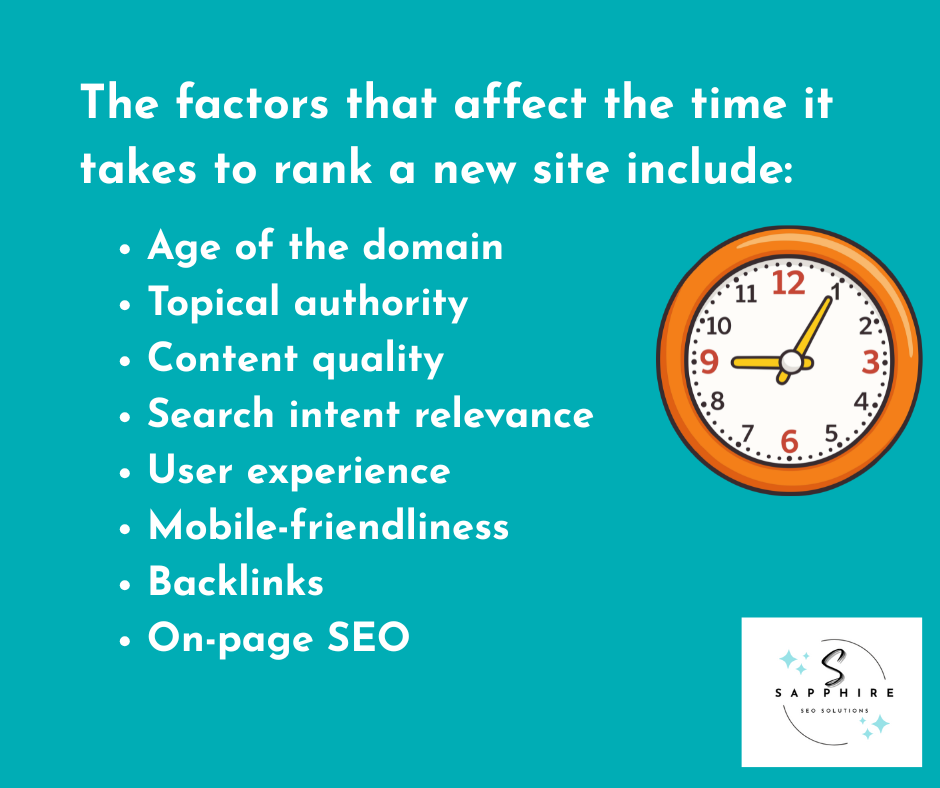
Age of the Domain
Since older domains have more historical trust signals, they are more likely to rank quicker than those that are new. However, age alone doesn't guarantee rankings. But plays an important role, which is why it's important to build domain authority over time.
Topical Authority
You need to inform Google and other search engines what subject your domain is about. To do that, it's crucial to focus on creating high-quality content and strong topical clusters.
For example, sites with deep coverage, like Salesforce dominating CRM-related searches, rank faster because they've proven relevance and authority to their target audience.
Content Quality
Publishing content is not enough. You need to create high-quality content that aligns with Google's E-E-A-T guidelines.
Your content needs to be comprehensive, properly structured, incredibly helpful, and easy to read. Outdated or thin content can lead to indexing issues, which can prolong the time it takes for Google to trust your site.
Search Intent Relevance
The content you publish should also match the user's goal, whether it's informational, commercial, transactional, or navigational.
If your content targets the wrong search intent, it can adversely impact your ranking. For Google, user intent is important, which is why you should understand what it is and how to improve your content accordingly.
User Experience (UX)
If your site is slow, has confusing layouts, or has poor navigation, it can hurt rankings. Technical SEO is super important.
Google uses metrics like Core Web Vitals to evaluate how user-friendly your site is. A smooth experience ensures that people stay longer, sending strong signals to Google and building trust quickly.
Mobile-Friendliness
Google uses mobile-first indexing for all websites. This means that the mobile version of your site determines your rankings. If it has a poor layout, is slow, or the pages are inaccessible on mobile devices, it can prevent indexing or impact rankings.
Since the majority of searches are now mobile searches (over 60%), it's important for business owners to make this a priority for building trust and visibility.
Backlinks
One of the strongest trust and authority signals is backlinks. Quality backlinks (links from reputable sites in your industry), which is part of off-page SEO, tell Google that your content is good enough to reference it.
Building links also helps search engines discover new URLs on your site and improves indexation speed.
On-Page SEO
Without on-page SEO, you shouldn't expect much traction. It helps optimize your site for everything that search engines deem important, including metadata, internal links, schema markup, and alt-tags.
On-page search engine optimization helps Google understand what a page is about and how it fits into your website's hierarchy, thereby improving crawlability and rankings.
Google Indexing Process Explained
Google considers several factors when it comes to indexing speed, and they include the following:
Site's authority
Structure
How well you've optimized the site for discovery
That said, Google indexes your pages through a three-phase process, which includes:
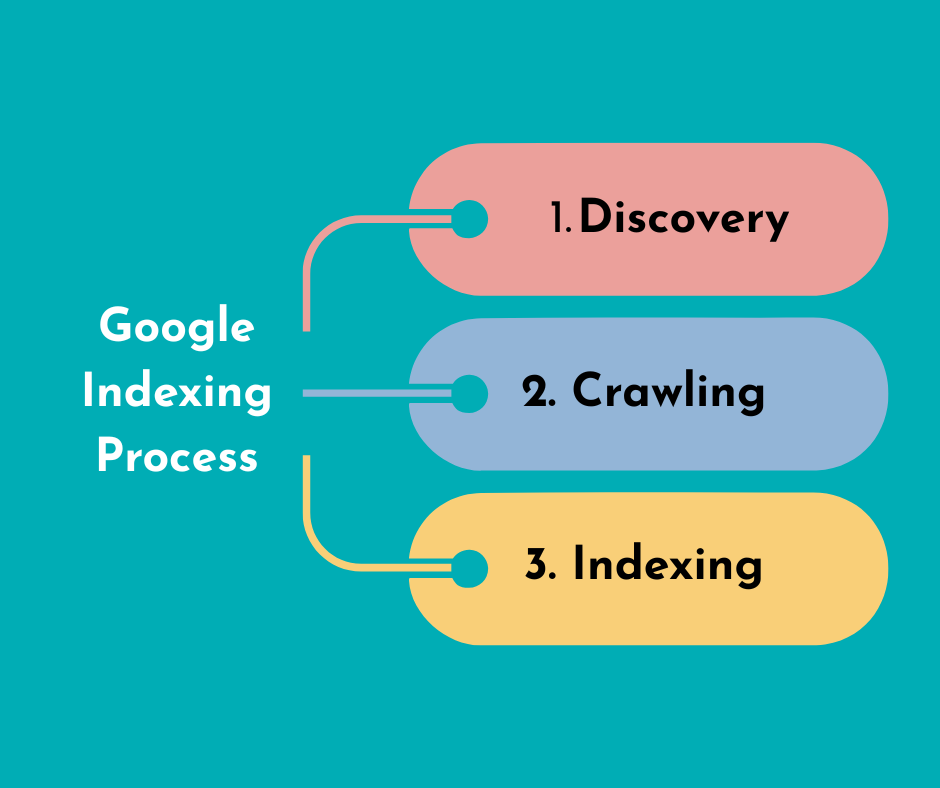
Phase 1: Discovery
Before Google can even index your site, it needs to be aware of the URL.
For quicker discovery, backlinks from other sites, XML sitemaps, internal links, or manual URL submission in Google Search Console are crucial. These provide a pathway for search engine crawlers to find your content.
Phase 2: Crawling
When Googlebot finds your site, it begins to scan through all of the web pages for data about content, structure, and links.
Crawl speed depends on your crawl budget, server performance, site structure, and how accessible your internal links are. There are several issues that can reduce crawl speed, and they include the following:
Heavy JavaScript reliance
Broken links
Noindex tags
Phase 3: Indexing
After crawling, it's time to index, and the time it takes to index. For Google to index your site efficiently, it shouldn't have heavy JavaScript, low-quality content, weak internal links, or duplicate pages. These can make indexing much harder for the search engine.
The time for indexing varies. Sites under 500 pages take 3 to 4 weeks, sites with 500 to 25,000 pages need 2 to 3 months, and larger sites with over 25,000 pages can take 4 to 12 months before all pages ranking potential is fully realized.
Best Practices to Increase Your Chances of Building Trust Faster with Google
For better discoverability of your web pages, rank higher in search results, and drive organic traffic quickly, here are some of the best practices to follow:
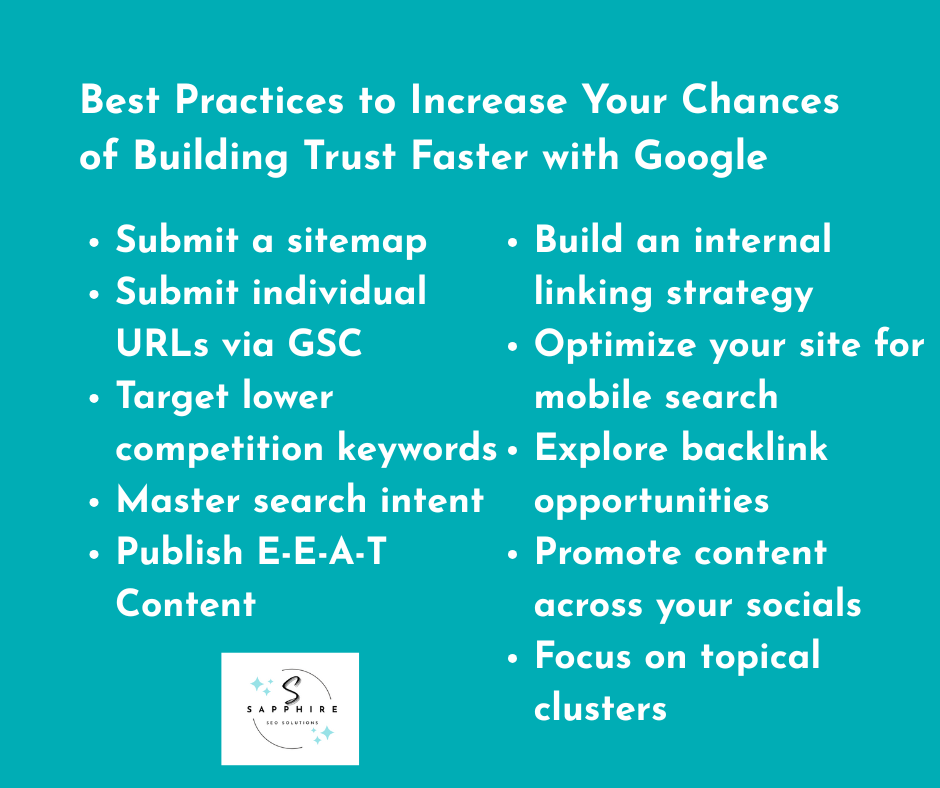
Submit a sitemap: Submitting an XML sitemap through Webmaster Tools helps Google discover and prioritize your pages faster, and you can do it directly via Google Search Console in just a few clicks.
Submit individual URLs in Google Search Console: Google Search Console lets you submit individual URLs for new or updated content to speed up discovery, and you can use the URL Inspection Tool to monitor crawling status and issues.
Target lower competition keywords: Low competition keywords and long-tail keywords are easier to rank for and help you gain traction faster, and tools like Ahrefs or Semrush show you competition levels and search volume for keyword research. Check out our page on keyword research to master the art of finding the perfect search terms for your content.
Master search intent: Matching intent increases relevance in search results, so analyze what's currently ranking in Google search to understand user expectations and rewrite content if intent changes over time.
Publish high-quality E-E-A-T content: Showcase first-hand experience, expertise, and accuracy in your website's content while citing credible sources and keeping fresh content updated to build trust and authority through E-E-A-T signals.
Focus on relevant content and topical clusters: Publish regularly to build topical authority faster through improved internal link depth, making this a core content marketing strategy that helps Google understand your niche.
Build an internal linking strategy: Internal linking enhances crawlability and strengthens topical relevance, so aim for 10 to 20 relevant internal links per post while avoiding keyword stuffing or spammy links. This strategy helps Google navigate ranking pages quickly.
Optimize your site for mobile search: Ensure responsive design, fast load times, and clean navigation for mobile-first indexing, and test your mobile site regularly since poor mobile UX can block indexation entirely. This helps index and rank your pages on Google faster.
Explore backlink opportunities: Guest posts, PR campaigns, and citable content earn natural links from authoritative sites, and link building accelerates authority while data studies and statistics perform well as reference material.
Promote your content across socials: Social shares increase visibility and lead to more backlinks from other websites, building brand recognition and trust signals that make website owners more likely to link to you. Social media management is crucial.
Partner with Sapphire SEO Solutions to Avoid Indexing Issues and Start Ranking Quickly!
Want to know my final thoughts on all of this? Indexing and ranking can take time and require skills, expertise, and knowledge.
While business owners can execute the best practices to index and rank their new site faster, it requires a lot of time and commitment, which you could allocate towards growing your business. Plus, you might make mistakes along the way that can break your site.
Let the search engine optimization experts at Sapphire SEO Solutions handle your site's SEO needs. Our SEO-certified professionals will follow the best practices, avoid common indexing issues, and deploy advanced techniques to ensure that your site gets indexed and appears in the SERPs quickly.
Want to know more about how we can help? Contact us to schedule a free consultation with an SEO expert today!
Ready to order SEO or AI SEO content for your business? Check out the different content writing tiers before placing an online order.

Frequently Asked Questions – Building Trust with Google
Why is my website not showing up on Google?
Some of the most common reasons why your website or new pages aren't being indexed include zero backlinks, accidentally blocking Google with robots.txt or noindex tags, poor or thin content, misaligned intent, and technical issues like slow servers and broken links can also prevent your new website from appearing in search results.
How often does Google crawl a site?
The amount of time Google crawls your site depends on your crawl budget, site authority, how often you update content, and your server speed. High-authority sites get crawled daily, while new or low-authority sites may only get crawled every few weeks. You can monitor crawling activity through Google Analytics and Google Search Console to see how often Googlebot is visiting your pages.
How do you get your website to the top of Google?
Getting to the first page requires matching search intent, publishing high-quality E-E-A-T content, and building topical authority through clusters. You also need to earn high-quality backlinks, optimize technical SEO and mobile UX, and consistently update and expand your content. There's no shortcut, but focusing on these fundamentals will help you rank higher over time.
How long does indexing take?
The time it takes to index depends on your site's size and quality. Small sites under 500 pages typically take 3 to 4 weeks, medium sites with 500 to 25,000 pages need 2 to 3 months, and large sites over 25,000 pages can take anywhere from 4 to 12 months to rank. JavaScript-heavy sites and thin content take longer to index. Submitting URLs and sitemaps can accelerate discovery, but won't guarantee indexing, so focus on quality and patience.