

Landscaping Website SEO Checklist: Is Your Site Done Right?
Your landscaping website might look great. Clean photos, nice colors, maybe even a video of your crew at work. And it still isn't bringing in leads.
That's more common than you'd think. A lot of landscaping websites are missing basic pieces of search engine optimization, along with usability details that keep visitors from actually reaching out.
Sapphire SEO Solutions works with landscaping businesses to improve search visibility and generate leads. Since 2007, our certified SEO experts have helped countless landscaping companies rise to the top in traditional search and now AI search results. We know, through more than a decade of experience, what works and what doesn't, saving your business time and money.
This landscaping website SEO checklist walks you through a practical audit you can run yourself, with no technical background needed. It's not about Google Business Profile, backlinks, or local SEO strategy. Just your website.
Think of it as your complete SEO checklist for the site itself, covering the SEO basics that affect your search rankings. Run through it before you spend a dime on professional SEO services, and you'll know exactly where you stand.
Key Takeaways
A professional-looking website can still fail to generate leads without basic SEO and usability fixes in place.
This landscaping website SEO checklist covers only the website itself, not backlinks, citations, or Google Business Profile.
Simple fixes like unique title tags, fast load times, and alt text make a measurable difference in search visibility.
Run the checklist yourself before paying for professional SEO services, using it as a starting site audit.
Trust signals like reviews, real photos, and service guarantees turn website visitors into actual phone calls.
Website Structure Checklist
Good website structure isn't about looking fancy. It's about making sure both users and search engines can find what they need without digging around.
Start with your homepage. It should say clearly, within a few seconds of landing on it, what you do and who you do it for. "Full-service landscaping for homeowners in [your area]" beats a vague tagline every time.
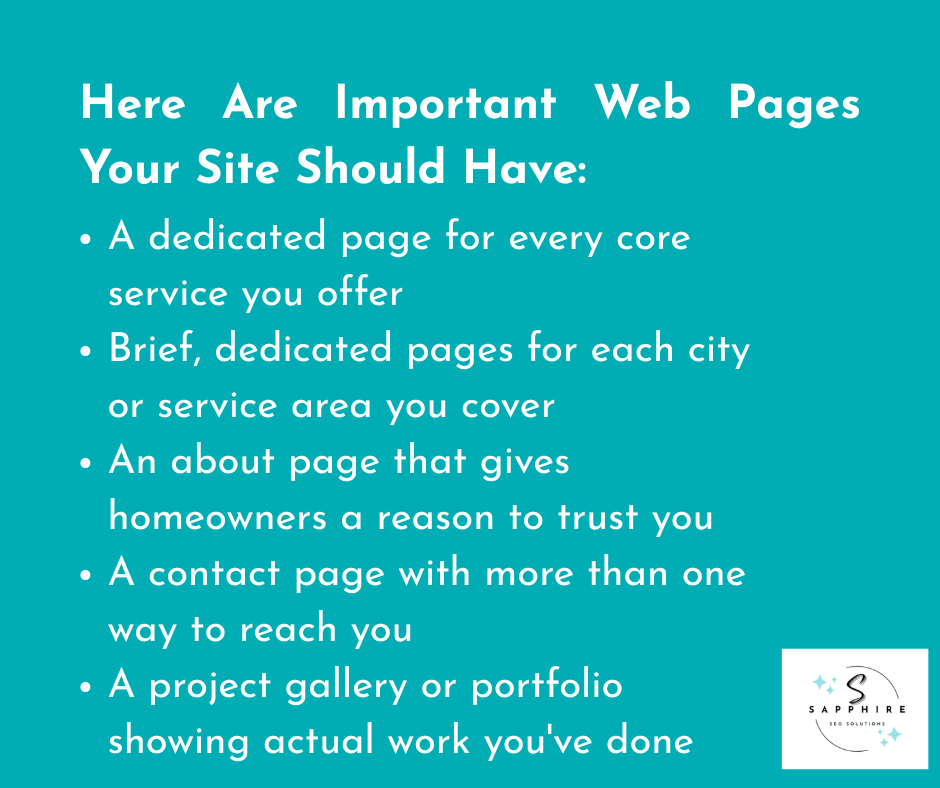
From there, your website should have the following web pages:
A dedicated page for every core service you offer (lawn care, hardscaping, irrigation, whatever applies to your business)
Brief, dedicated pages for each city or service area you cover
An about page that gives homeowners a reason to trust you before they ever call
A contact page with more than one way to reach you (phone, email, form)
A project gallery or portfolio showing actual work you've done
None of this matters much if visitors can't find it. Navigation should be simple enough that someone new to your site isn't hunting for the "contact" link. URLs should be short and readable, not strings of numbers and symbols. And every important page should sit within one or two clicks of the homepage.
On-Page SEO Checklist
This is the part of an on-page SEO checklist that search engines actually read on every single page. Get these right, and Google has a much easier time figuring out what each page is about.
Start with your title tag. That's the clickable headline that shows up in Google search results. Every page needs its own, built around a primary keyword for that page, not a copy-pasted version of your homepage title.
Meta descriptions work alongside it. These are the short summaries under the title tag in search results. They don't directly boost rankings, but a clear, honest one gets more people to click through.
From there, keep it consistent:
One H1 heading per page, and only one
A logical heading hierarchy underneath it (H2s, then H3s, in order)
SEO-friendly URLs that describe the page, not a jumble of characters
Descriptive image file names instead of "IMG_4521.jpg"
Alt text on every image, describing what it actually shows
Your business name, address, and phone number should look the same on every page, along with a click-to-call number for anyone browsing on their phone.
One more thing worth having in place: basic LocalBusiness schema. A schema markup is a small piece of code that helps search engines understand exactly who you are, where you're located, and what you do. No need to build it yourself. Just know it should be there.
Does Your Content Actually Help Homeowners?
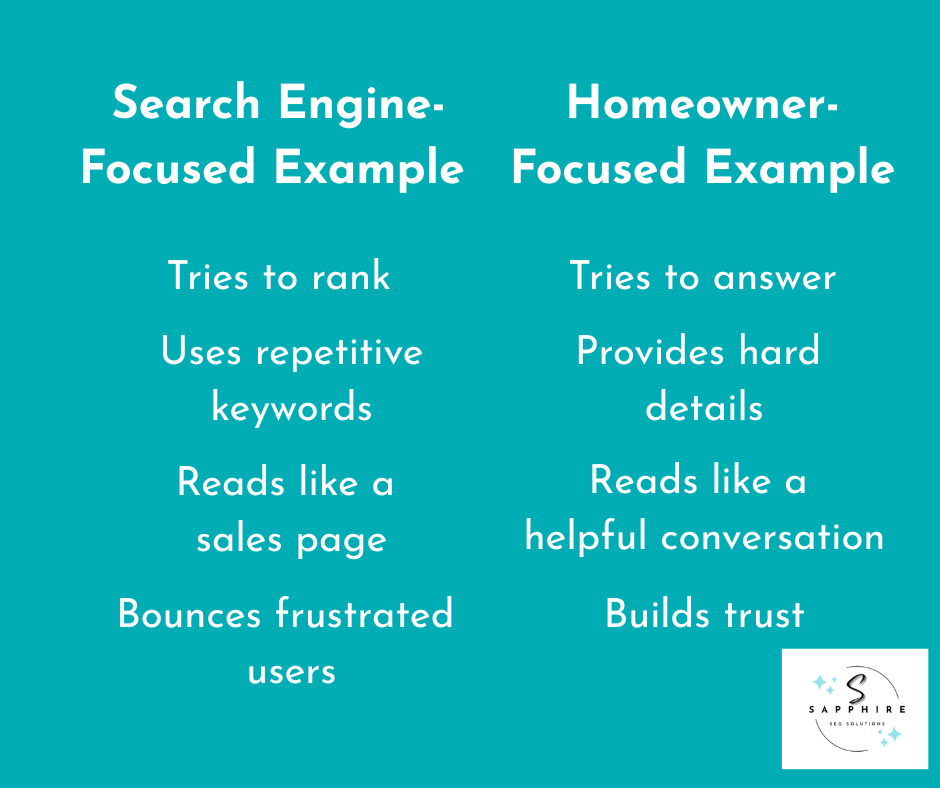
Forget rankings for a second. Read your own service pages like a homeowner would. Would they actually get an answer to the questions in their head?
Good page content doesn't read like it was written for a search engine. It reads like it was written for the person standing in their backyard, wondering if they can afford a new patio.
For each service you offer, check whether the page explains:
What's actually included in the service
Who it's meant for (new homeowners, larger properties, specific yard types)
Materials you typically work with
How long a project usually takes
What the customer can expect, step by step
Real before-and-after examples from past jobs
Answers to the questions you get asked most, on the phone or in person
Original photos of your own work, not stock images that could belong to anyone
This matters more than it might seem. Homeowners search with search intent in mind. Someone typing "how long does a patio installation take" wants a real answer, not a sales pitch. Pages built around relevant keywords and genuinely relevant content tend to satisfy both that person and the search engine trying to match them with it.
User Experience Checklist
Here's a simple test. Pull up your website on your phone and try to request a quote. Time yourself. If it takes more than a minute, homeowners browsing between errands are probably giving up before they finish.
Most people find your business on mobile devices first, so mobile-friendly design isn't optional anymore. Pages need to load fast, too. Slow site speed frustrates visitors and works against the technical measures Google uses to judge a page, often called Core Web Vitals.
Beyond speed, look for the basics:
Fonts that are actually easy to read on a small screen
Navigation that doesn't require thinking
Calls-to-action that are visible, not buried at the bottom
A quote request form that's short and simple
Click-to-call buttons for anyone who'd rather just dial
A secure, HTTPS website
No broken or dead-end pages
None of this is about web optimization for its own sake. It's about whether a homeowner can actually reach you. Fix these, and inquiries tend to go up, whether or not your rankings move an inch.
Technical Website Health Checklist
You don't need to be technical to understand this part. Think of it as making sure the front door is actually unlocked before you invite anyone in.
Search engines crawl websites using automated programs, often called search engine crawlers or search engine bots, to figure out what's on each page. If something blocks that process, your site can end up invisible in search results no matter how good the content is.
A basic technical SEO checklist covers:
An XML sitemap, which is just a map of your pages that helps search engines find them all
HTTPS enabled, so the site is secure
Fast-loading pages
Compressed images, so pages don't drag
No broken links leading to dead pages
Every page can be indexed (added to Google's results)
No duplicate pages competing with each other
A site that works correctly on phones and tablets
None of this requires a developer to check. Following these SEO best practices just keeps search engines from losing patience with your site before homeowners ever get the chance to.
Trust Signals Every Landscaping Website Should Include
Homeowners don't hire the first landscaping company they find. They hire the one that feels safe to call. Trust signals are what make that decision easier.
Your website should show:
Customer reviews, ideally the same ones showing up on your Google Business Profile
Before-and-after photos from real projects
Real project locations, so visitors know you actually work in their area
Photos of your actual team, not stock images
How many years you've been in business
Certifications and licenses, if your state requires them
Proof of insurance
Any awards you've won
Service guarantees
Financing options, if you offer them
None of these are about improving your search engine rankings, though a site that earns trust tends to earn more organic traffic anyway. They're about the moment a homeowner lands on your site and decides whether to pick up the phone or keep scrolling.
Common Landscaping Website Problems
Run a site audit on ten landscaping websites, and you'll find the same problems over and over:
Every service crammed onto one page, with no room to explain any of them properly
Descriptions so thin they say almost nothing
The same paragraph copy-pasted across five different city pages
Stock photos of a lawn that could be anywhere
A project gallery that hasn't been updated since before the pandemic
Then there's the smaller stuff that adds up:
Calls-to-action that are nowhere to be found
Contact forms that quietly stopped working months ago and nobody noticed
A copyright date that's still stuck on 2021
Branding that looks different from one page to the next, like three different companies built the site
A lot of it comes down to one thing: pages written for search engines instead of the homeowners actually reading them. No SEO strategy, no SEO tools, no WordPress SEO plugin, and no amount of link building fixes that on their own.
The good part is that none of this usually means starting over. It just means going through the site and fixing what's broken, one piece at a time.
Quick Landscaping Website SEO Audit
Use this SEO checklist template as a scannable summary of everything above. Bookmark it. Treat it like a free tool you come back to every few months.
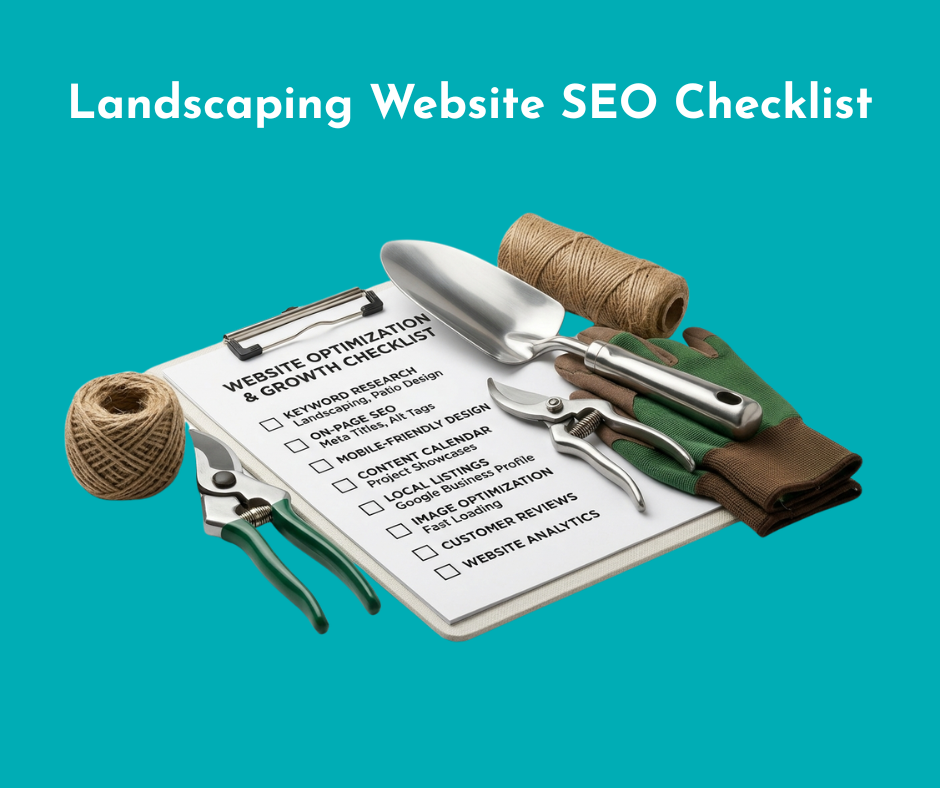
Landscaping Website SEO Checklist
Wherever you answered no, that's your starting point. Go back and fix that section first.
Work with Sapphire SEO Solutions to Ensure Your Site Performs the Right Way!
You can run the best landscaping crew in town and still struggle to show up when someone decides to search Google. A website missing the basics holds even great companies back, whether homeowners find you through Google search results or other search engines.
Run through this checklist as your business grows. It doesn't get done once and forgotten.
Checking every box is just the start, though. What improves organic search ranking over time is fixing what's broken and keeping it that way.
Not sure where to start? Request a free professional website audit, and we'll show you exactly what's holding your site back.
Frequently Asked Questions
How can I improve local search rankings for a landscaping company website?
Start with your website basics: dedicated service pages, consistent business information, and fast, mobile-friendly pages. Then build out your Google Business Profile and reviews.
What are the best SEO tools for landscaping websites to increase traffic?
Google Search Console and Google Analytics cover the essentials for free. Tools like Ahrefs or Semrush help once you're ready to dig into keyword research.
What are the essential on-page SEO elements for a landscaping service site?
Unique title tags, meta descriptions, one H1 per page, descriptive URLs, and alt text on every image.
What are the recommended keyword research tools for the landscaping industry?
Google Keyword Planner and Google's autocomplete work well for finding what homeowners actually search.
How do I set up Google Business Profile for a landscaping contractor?
Claim your Google Business Profile at business.google.com, verify your address, and fill out every field completely. Read our detailed guide on “Google Business Profile Optimization for Landscapers” for more information.