

How to Hire a Medical SEO Expert (2026 Guide)
Hiring a medical SEO expert in 2026 requires more than finding someone who understands search rankings. Healthcare websites are classified by Google as "Your Money or Your Life" content, meaning they are held to the highest standards of expertise, accuracy, and trustworthiness. A qualified medical SEO specialist must navigate HIPAA compliance, AHPRA advertising guidelines, clinical content accuracy, WCAG 2.1 accessibility requirements, and the growing influence of AI-driven search engines like Google AI Overviews, ChatGPT, and Perplexity, all while building a patient acquisition strategy that converts organic search traffic into booked appointments. This guide explains exactly what to look for when hiring a healthcare growth consultant, which red flags to avoid, and which questions to ask before signing any contract, so your clinic can grow its online visibility without exposing itself to regulatory, reputational, or algorithmic risk.
Key Takeaways
Healthcare digital specialists outperform generalists. Healthcare compliance, clinical accuracy, and HIPAA rules demand specialist knowledge.
YMYL standards determine your rankings. Google holds medical websites to the highest trust and authority bar.
E-E-A-T and local SEO drive patient acquisition. Verified credentials and local optimisation convert searchers into booked appointments.
Audit your agency before signing. Ask about BAA compliance, content review processes, and asset ownership upfront.
Red flags cost more than starting over. Guaranteed rankings, black hat links, and vanity metrics reporting actively damage your practice.
In 2026, your medical practice cannot rely on referrals alone. Most of your future patients online are already searching for symptoms, treatment options, and nearby healthcare providers before they ever think about making a call. This is where medical search engine optimization becomes essential.
Over the years, the healthcare industry has shifted. People now compare healthcare services, read reviews, check credentials, and evaluate your digital presence before choosing where to book an appointment. If your clinic or hospital does not appear in those searches, your competitors will.
Investing in healthcare SEO services is no longer just another digital marketing tactic. It directly impacts your online visibility, your reputation as a trusted provider, and how easily new patients can find your medical business. Strong SEO helps healthcare brands stand out in an increasingly competitive medical industry where trust and accuracy matter.
Working with the right SEO agency ensures your medical practice shows up when patients are actively looking for care. This is where Sapphire SEO Solutions comes in. Our affordable medical SEO services focus on improving your healthcare brand, boosting its online visibility, and driving more traffic to your door.
In this comprehensive guide, we will cover:
Why do you need a healthcare growth consultant
What to look for in a medical digital specialist
What red flags to look out for
Why Healthcare Practices Require Specialized Search Strategy
Hiring someone who understands basic SEO is not enough anymore. The healthcare industry operates under stricter rules than almost any other niche online. Your healthcare SEO strategy must balance:
Compliance
Credibility
Performance
A general marketer may know how to improve search engine rankings. A specialist understands how to optimize medical website SEO without:
Risking misinformation
Privacy violations
Loss of trust
In 2026, your website's visibility depends on more than keywords. It depends on expertise, accuracy, and how search engines evaluate medical authority.
Here are a few reasons why you need a healthcare growth consultant:
The YMYL Standard - Google Holds Medical Sites to the Highest "Trust" Bar
Google applies its 'Your Money or Your Life' (YMYL) filter to healthcare more strictly than any other industry. Because a single inaccurate medical claim can trigger a sitewide visibility collapse, your clinic needs an expert who doesn't just 'write content,' but understands how to build a Verification Infrastructure.
This includes syncing your digital credentials with the NPI database and ensuring every page meets the 2026 E-E-A-T trust signals that AI search models use to verify your clinical authority.
For more details on quality rater guidelines for YMYL content, read through the official “Search Quality Rater Guidelines: An Overview” document.
Navigating HIPAA, AHPRA, or Local Medical Board Advertising Rules Because Compliance Matters
Healthcare SEO is not just about traffic. It is about protecting your practice.
Your healthcare SEO strategy must comply with regional patient privacy laws and advertising standards that apply to healthcare clients.
Whether it involves HIPAA in the United States, AHPRA guidelines in Australia, or local medical council regulations elsewhere, your content and marketing must respect how healthcare information is presented online.
An experienced specialist knows how to structure healthcare websites so that patient testimonials, case studies, and service pages attract attention without violating compliance requirements.
What generalist agencies routinely get wrong here goes beyond basic legal awareness. Many standard digital marketing tools that generalists use by default, including certain advertising pixels and standard analytics configurations, are not HIPAA-compliant when deployed on medical websites.
Beyond simple compliance, a medical digital specialist mitigates the $50,000-per-incident risk of non-compliant tracking pixels. This is especially critical following the HHS bulletin on requirements for online tracking technologies, which clarified that IP addresses combined with health-related URLs often constitute PHI.
A skilled healthcare digital specialist ensures your growth strategy is built on a HIPAA-compliant analytics stack (like Piwik PRO or server-side GTM), protecting your practice from the legal 'pixel-tracking' lawsuits currently targeting the healthcare industry.

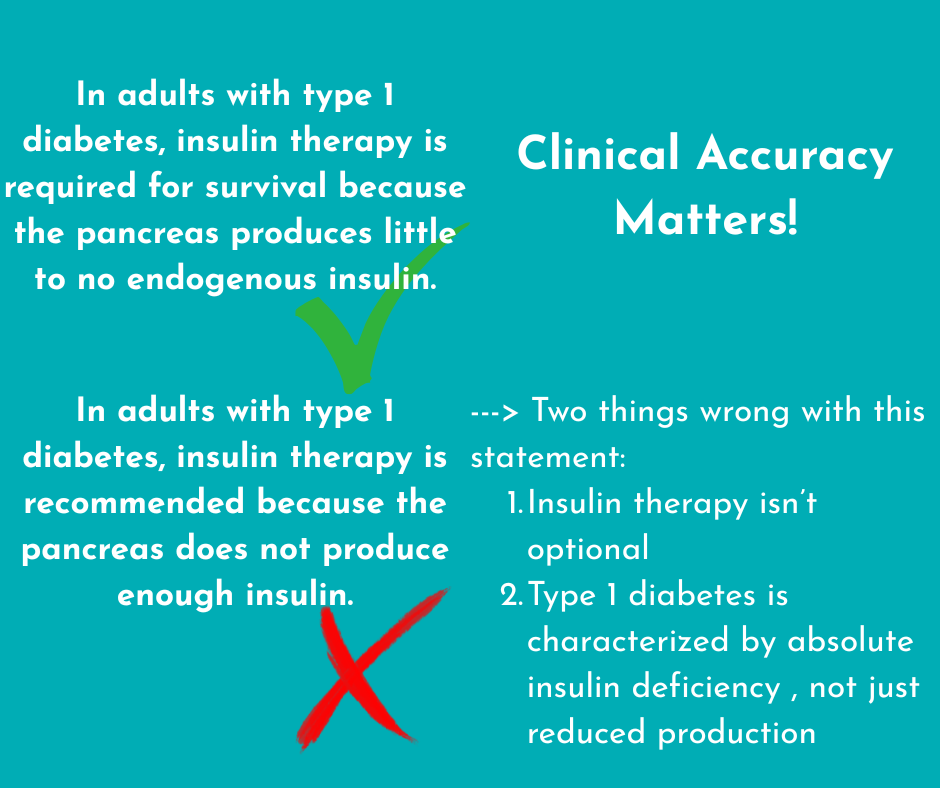
Clinical Accuracy Is Important - "Generalist" AI Content Can Get Your Site Penalized
Many agencies now use generic AI tools to create blog posts for clinics. This may seem efficient. It is also risky.
Inaccurate or oversimplified medical advice published using traditional SEO tactics can damage trust and lead to ranking losses. Search engines now evaluate whether your content reflects real-world clinical standards within your specialty.
A specialist ensures your medical website SEO reflects accurate treatment explanations, procedure details, and medically reviewed content that supports better search engine results without compromising patient safety.
Understanding Patient Language vs. Clinical Terminology
One of the most common and costly errors generalist agencies make is optimising for how doctors talk, rather than how patients search.
Generalists often optimize for 'vanity' clinical terms that doctors use. A specialist bridges the gap between clinical vocabulary and actual patient search intent. By targeting 'knee pain specialist' over 'orthopedic surgeon,' they capture patients at the highest point of intent, ensuring your traffic actually converts into booked appointments.

Specialty-Specific Search Behaviour: One Size Does Not Fit All
Patient search behaviour varies dramatically, depending on the medical specialty, and a generalist agency has no framework for understanding those differences.
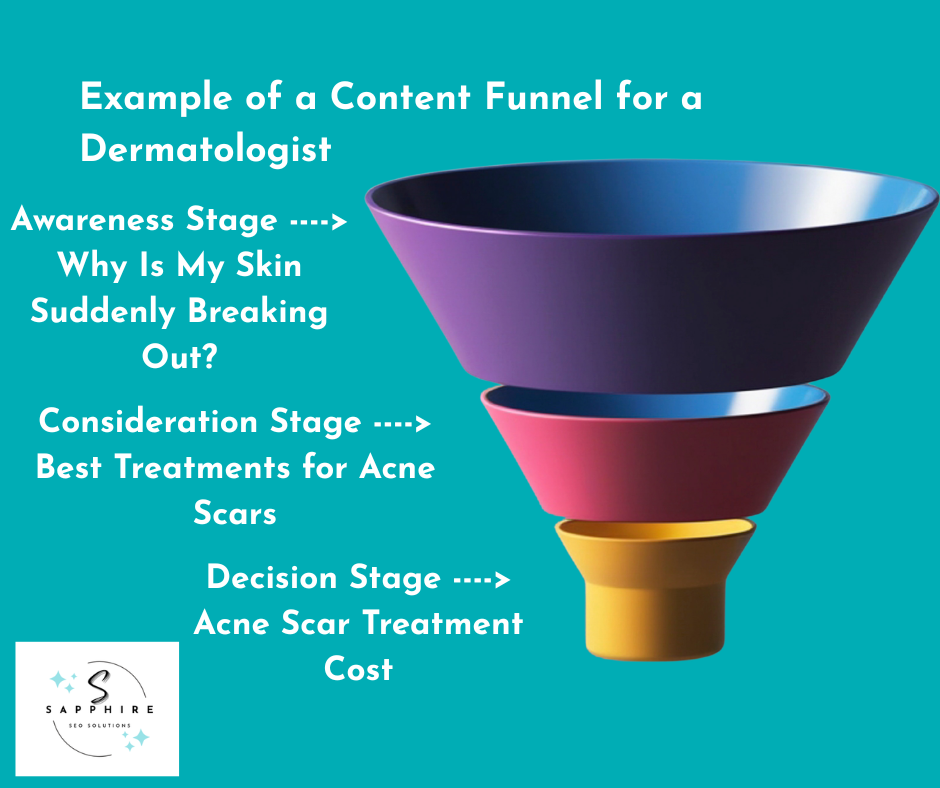
Patient journeys differ by specialty; for instance, OB/GYN searches are high-intent and local, while Cardiology often begins with long-form educational research. Your expert must map content to these specific funnels.
You Are Not Just Competing with Other Clinics
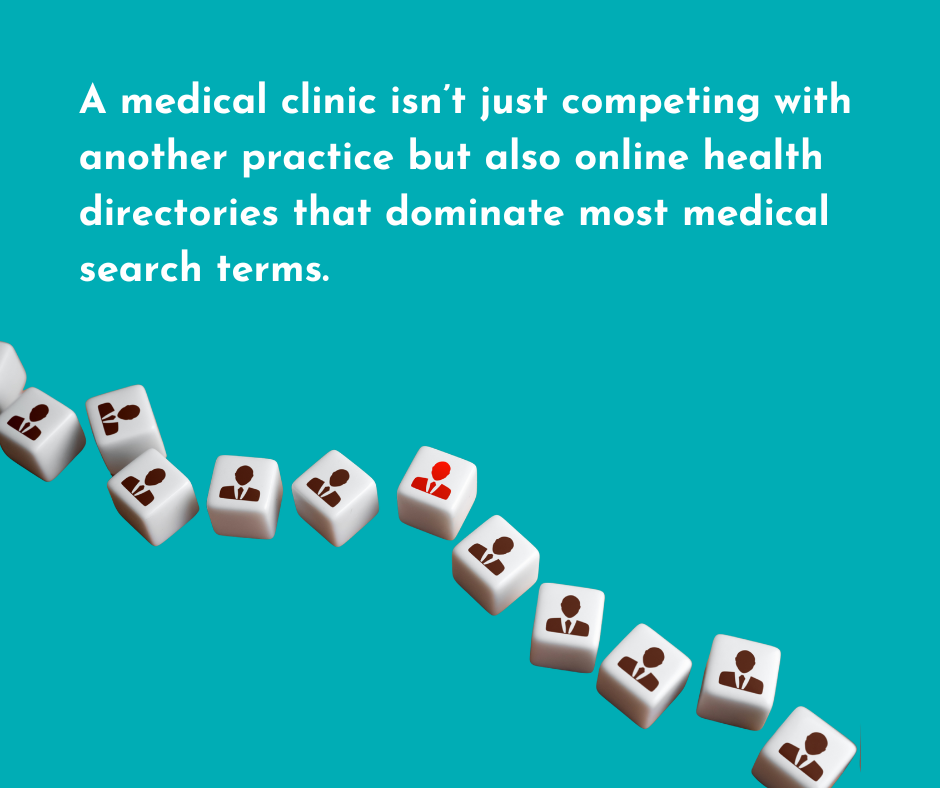
Most clinics assume their SEO competition is the practice across town. The reality is more complex. Your search rankings are also contested by national health directories, hospital systems with multi-million-dollar marketing budgets, and large aggregator platforms like Healthgrades and WebMD that dominate high-volume medical search terms.
A generalist agency may not even identify these as competitors, let alone have a strategy for navigating around them. A specialist understands how to position your clinic to capture the local and specialty-specific searches where independent practices can genuinely compete and win, rather than chasing broad terms where you will always be outspent.
What Your SEO Partner Must Sign (The Business Associate Agreement)
If your SEO agency has any access to patient data, analytics that touch protected health information, appointment systems, or patient communication tools, HIPAA requires you to have a signed Business Associate Agreement in place with them. This is a legal obligation, not an optional formality.
Many generalist agencies have never heard of a BAA, let alone signed one. A specialist who works exclusively in healthcare will have a standard BAA ready as part of their onboarding process. If a prospective SEO partner cannot explain what a BAA is or dismisses it as unnecessary, that alone is reason to walk away.

8 Indicators of a High-Authority Healthcare Digital Partner
Finding the right medical SEO agency is critical. Not every SEO team claiming expertise in healthcare can deliver results. You need someone who:
Understands your medical brand
Knows how patients search online
Can turn visits into inquiries
Here are some important signs of a true healthcare digital strategist:
Deep Understanding of E-E-A-T and Clinical Verification
A true SEO specialist knows that Expertise, Experience, Authoritativeness, and Trustworthiness (E-E-A-T) matter more than ever. They do not just create content for the sake of keywords. They highlight your credentials, publications, and professional background to boost SEO performance while reassuring healthcare consumers that your information is accurate.
But what does real E-E-A-T implementation actually look like in practice?
A true specialist goes well beyond simply adding a doctor's name to a blog post. They build detailed physician bio pages that list board certifications, state medical licenses, hospital affiliations, medical school credentials, and published research.
Every piece of medical SEO-optimized content on your website carries a clearly attributed author with a link to that physician's verifiable profile, whether on Doximity, Healthgrades, or your own website.
They also synchronise your credentials across every platform that search engines check. In 2026, Google and other AI-driven search engines cross-reference your digital identity against the National Provider Identifier (NPI) database and state medical board listings.
If your name, address, or specialty is inconsistent between your website, Healthgrades, WebMD, and Doximity, your Entity Trust score drops, meaning search engines and AI platforms become less likely to surface and recommend your practice. A specialist understands this verification infrastructure and keeps every detail consistent and accurate across all platforms where your identity appears.
They also know that E-E-A-T is not just a content quality signal. It influences whether your practice appears in AI-generated answer summaries, which have become one of the most competitive and valuable forms of medical search visibility in 2026.
Only content that meets the highest trust thresholds gets cited by AI systems as a source. A specialist engineers that trust deliberately.

Dominating Local Search and Patient Proximity Map Packs
Your patients often search for care nearby. This makes local SEO more important than ever.
A healthcare growth consultant knows how to optimise your local SEO strategy, making sure your clinic appears in Google's Map Pack. They go beyond basic online directory listings and build online reviews, authoritative citations, and location signals that improve website traffic and your clinic's higher search rankings locally.
A true specialist understands that local authority in healthcare is built through a combination of factors that most generalists overlook. It involves precise NAP consistency (your Name, Address, and Phone number) must be identical, not just similar, across every online directory, social profile, healthcare listing, and your website itself. Even minor discrepancies like "St." versus "Street" can dilute the consistency signals that search engines rely on to confirm your practice is a verified, trustworthy local entity.
In addition to directories, a specialist builds local authority through condition-specific and procedure-specific location pages, local schema markup that communicates your exact coordinates, service area, and accepted insurance plans to AI systems, and a strategy for acquiring locally relevant backlinks from health associations, community news outlets, and nearby medical institutions.
A medical growth strategist also knows how to optimise for the "near me" and conversational local searches that now account for the majority of healthcare queries, ensuring your practice captures high-intent patients at the precise moment they are ready to book.

Turning Patient Reviews Into an SEO Asset (Online Reputation Management)
In 2026, around 94% of patients consult online reviews before choosing a healthcare provider (Medical Economics). Your review profile on Google, Healthgrades, and Zocdoc does not just influence patient decisions. It directly impacts your local search rankings and the likelihood of appearing in AI-driven search summaries.
A medical growth specialist should manage your reputation as a ranking signal, not just a customer service task. Ensure their strategy includes these five non-negotiables:
Read more about the importance of online reviews on local SEO for your medical clinic by going through our comprehensive guide on "The Role of Online Reviews in Local SEO Rankings."

Acquiring Clinical Backlinks and Medical Journal Citations
Link-building strategy (off-page SEO) in healthcare is fundamentally different from link building in other industries, and a true specialist understands exactly why.
In healthcare SEO, the quality and relevance of backlinks matter far more than volume. A single backlink from a medical journal, a university hospital system, a government health agency, or a national medical association carries significantly more weight than dozens of links from unrelated wellness blogs or general news sites.
A specialist does not chase link quantity. They build a backlink profile that reinforces your clinical authority within your specific specialty.
In practice, this means a true specialist pursues backlinks through strategies that position your physicians as expert media sources. They include:
Medical journal contributions
Hospital partnership mentions
Local health authority listings
Guest commentary in healthcare trade publications
Digital PR
A medical SEO specialist also knows what to avoid. Backlinks from irrelevant websites, purchased links, link farms, or sites flagged for misinformation can actively damage your domain reputation and trigger algorithmic penalties that are particularly difficult to recover from in YMYL categories like healthcare.
When vetting an agency, ask specifically which sources they target for healthcare link acquisition and request examples from past clients. If they cannot name medical journals, health associations, or specialty-specific directories as part of their strategy, they are likely applying a generic approach that will underperform in a healthcare context.
Focusing on "New Patient Calls" Over "Organic Traffic" (Conversion-First Mindset)
High traffic does not always mean more patients. The right healthcare SEO agency tracks metrics that matter: patient inquiries, appointment requests, and calls from potential patients. They design every page and piece of content to turn searchers into booked appointments, not just clicks.
A specialist understands what the research now clearly shows: attracting website visitors who are casual symptom researchers rather than patients ready to book is a costly mistake that wastes your marketing investment.
Every page they optimise is built with clear calls to action, frictionless appointment booking pathways, and content that aligns with the specific intent stage of the patient who would land on that page.
A condition explainer page is optimised differently from a procedure page, which is optimised differently from a "book an appointment" landing page, because each one serves a different patient at a different point in their decision journey.
They also avoid what is sometimes called the "click trap." This is a scenario where high traffic metrics create the illusion of SEO success while actual new patient conversions remain flat.
A specialist sets conversion-focused KPIs from the start of your engagement: phone calls from organic search, form submissions, appointment bookings, and, where possible, patient lifetime value traceable to their first organic search interaction.

Transparency in Reporting
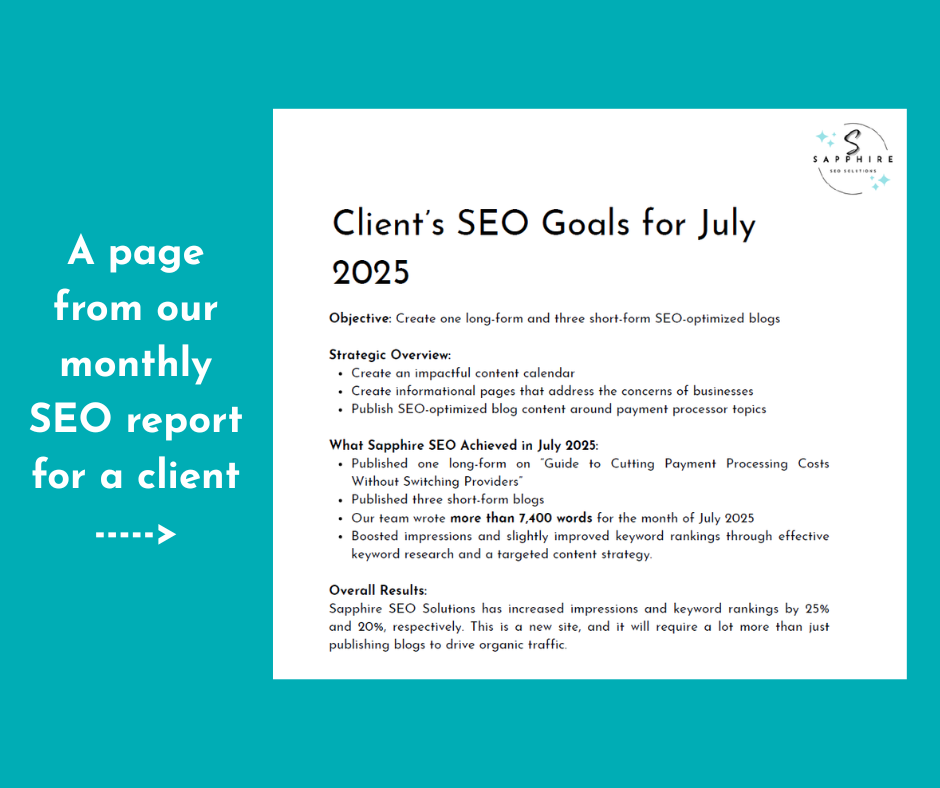
A reliable SEO specialist provides clear, actionable reports. You should understand how your medical SEO services translate into patient growth, directory performance, and link-building results. No hidden metrics or confusing jargon, just measurable improvement in your healthcare brand's visibility.
Genuine transparency in healthcare SEO reporting goes deeper than a monthly traffic summary. A specialist tracks and communicates:
Local ranking positions for your priority specialty and location keyword combinations
Google Business Profile engagement metrics, including calls, direction requests, and website clicks
Core Web Vitals scores and their movement over time
Keyword-specific conversion rates
Quality and source of new backlinks acquired each month
They also clearly flag when algorithm updates occur and explain how those updates may have affected your performance, rather than obscuring volatility behind averaged-out monthly numbers.
Ask any prospective partner to walk you through a sample report from an existing healthcare client. If the report is built around impressions and session counts without connecting those numbers to actual patient inquiries or calls, you are looking at a reporting structure designed to impress rather than inform.
Proven Healthcare Case Studies
The ability to produce verified case studies is not enough for an agency to claim healthcare SEO experience. They should be able to show you documented before-and-after results for a clinic or practice similar to yours, including the starting position, the strategy applied, the timeline, and the measurable outcomes in terms of patient inquiries or appointment bookings.
Crucially, case studies should be specialty-relevant. An agency skilled in dental SEO may not have the expertise or strategic framework needed for a cardiology practice, a fertility clinic, or a behavioral health provider.
Patient search behavior, compliance requirements, keyword intent patterns, and competitive landscapes all vary significantly between medical specialties. When reviewing case studies, look for evidence that the agency understands the specific patient journey and competitive dynamics of your field.
The "Technical Health" Audit: What to Ask For
Even the best content and strategy can fail if your medical website SEO is not technically sound. A proper technical SEO audit ensures your clinic's site is fast, accessible, and structured for both human visitors and AI-driven search engines.
Here is what to focus on when vetting a healthcare SEO agency:
Implementing MedicalCondition and Physician Tags (Medical Schema Markup)
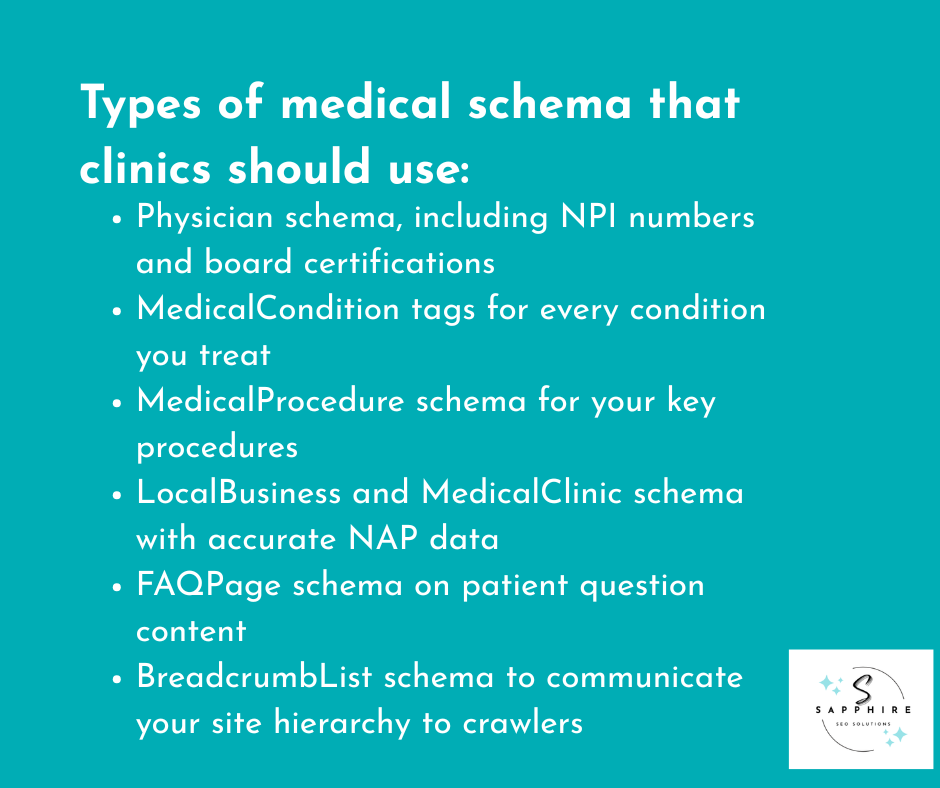
Structured data (schema markup) helps search engines understand your medical services. Using MedicalCondition and Physician schema tags:
Signals expertise
Increases rich results
Boosts search rankings
A specialist ensures your healthcare websites communicate both content and credentials effectively to Google and AI platforms.
While a generalist might add 'LocalBusiness' schema, a specialist implements Physician and MedicalCondition tags to link your clinic to the NPI database, building the 'Entity Trust' required for 2026 AI search results.
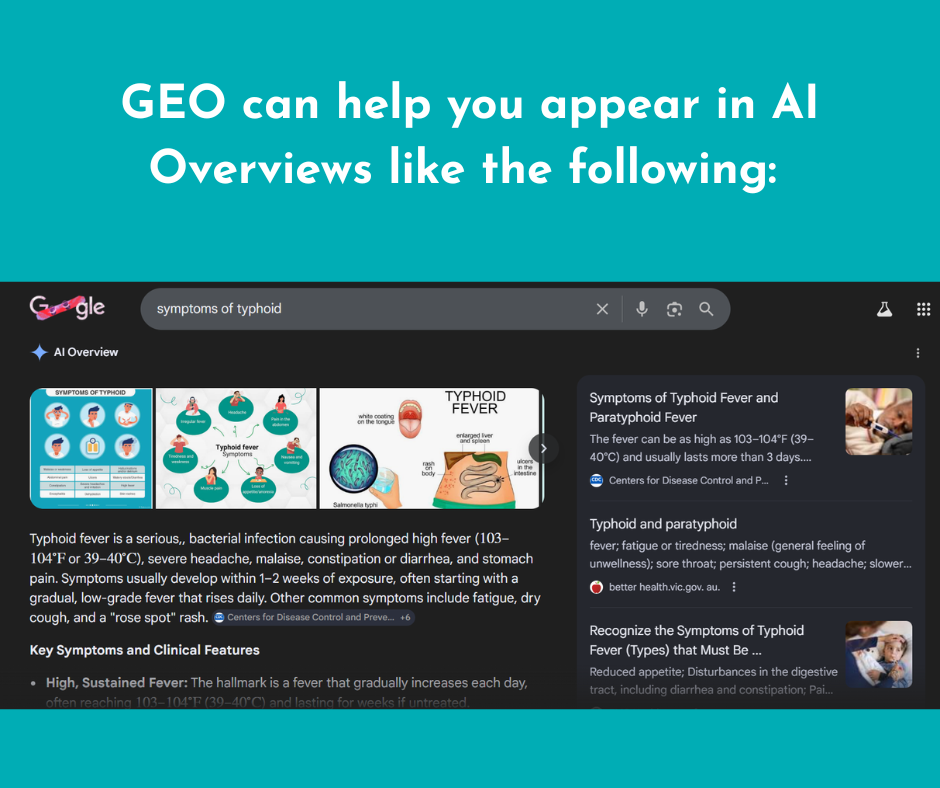
GEO (Generative Engine Optimisation) to Ensure You Appear in AI-Driven Summaries
With AI-driven search overviews growing in 2026, appearing in AI visibility summaries can drive new patients to your practice. Generative Engine Optimisation (GEO) ensures your clinic shows up in these AI-generated results when potential patients search for nearby medical practices or specific healthcare services.
A true technical specialist understands that AI systems like Google's AI Overviews, ChatGPT search, Perplexity, and Gemini do not simply rank web pages. They synthesise and cite sources.
For your practice to be cited as a trustworthy source in AI-generated answers, your content must be structured in a way that machine learning models can parse, extract, and confidently reproduce. This means your pages need:
Clear, concise answers within the first 40 to 60 words of each section
Descriptive H2 and H3 headers that state the topic explicitly
FAQ sections written in a natural question-and-answer format that mirrors exactly how patients phrase queries to AI assistants
A specialist also knows that AI models cross-verify sources against known medical authorities. Your content must demonstrate E-E-A-T signals throughout to be selected as a reliable citation rather than being bypassed in favour of a competitor or a national health directory.
Answer Engine Optimisation (AEO) to Capture Zero-Click Medical Searches
Closely related to generative engine optimization (GEO) but distinct in its technical application, Answer Engine Optimisation is a critical component of any 2026 technical audit that the original article does not address.
AEO focuses specifically on structuring your content so that voice assistants, smart speakers, and AI search tools can deliver direct answers from your website to patients without requiring them to click through.
When a patient asks their phone, "What is the recovery time for ACL surgery?" or "Is there an orthopedic surgeon near me who takes Medicare?", the device selects a single answer source. That source is almost always the page that is most clearly structured for machine readability, not necessarily the page with the highest domain authority.
A specialist optimises your clinic's key procedure and condition pages for AEO by using structured FAQ markup, writing direct-answer paragraphs under clearly labelled question headers, and ensuring your local data, such as accepted insurance, hours, and location, is machine-readable through both schema and your Google Business Profile.
Without this layer of technical optimisation, your practice is effectively invisible to the growing segment of patients who now interact with healthcare information through conversational AI interfaces.

HIPAA-Compliant Analytics Configuration That Most Agencies Get Wrong
A fully compliant technical audit for a medical website must include an assessment of your analytics and tracking configuration. This is an area where the vast majority of generalist agencies create significant legal exposure for their healthcare clients without realizing it.
Standard Google Analytics 4, in its default configuration, is not HIPAA-compliant for healthcare websites. The HHS has clarified through updated guidance that when a tracking pixel collects an IP address alongside a URL that reveals health-related information, for example, a page about fertility treatment, addiction recovery, or mental health services, that combination constitutes Protected Health Information under HIPAA.
This applies even when the individual has no existing patient relationship with your practice and even when the data is aggregated within your analytics dashboard, because the data is still being transmitted to Google's servers, which have not signed a Business Associate Agreement.
A specialist knows that this exposure applies to all standard tracking implementations, including:
Meta Pixel on condition-specific landing pages
Standard Google Ads conversion tracking on appointment confirmation pages
Client-side Google Tag Manager configurations that pass raw user data to third-party platforms without sanitisation
To ensure your practice isn't exposed to regulatory or algorithmic risk, verify that your digital growth specialist provides the following:
A technical audit from a qualified specialist includes a full tracker audit of every page on your domain. If your current SEO agency has never discussed this, your analytics setup is almost certainly non-compliant.

ADA and WCAG 2.1 Accessibility Compliance
Perhaps the most urgent addition to any technical audit checklist for 2026 is ADA and WCAG compliance, an area that has transformed from a best-practice recommendation into a mandatory legal requirement for healthcare organisations, with significant SEO implications on top.
Following a new rule published by the US Department of Health and Human Services (Section 504), any healthcare organization that receives federal financial assistance, which includes practices participating in Medicare, Medicaid, or CHIP, is legally required to ensure its website, patient portal, mobile app, and digital communications comply with WCAG 2.1 Level AA standards.
For practices with 15 or more employees, the compliance deadline is May 11, 2026. Non-compliance exposes your practice to federal investigations, corrective action plans, potential loss of federal funding, and private ADA lawsuits. Over 4,100 of which were filed in the US in 2024 alone, with healthcare consistently among the most targeted industries.
Accessibility is no longer optional. Beyond the May 2026 legal deadline, proper WCAG 2.1 implementation improves crawlability by providing a clear heading hierarchy for search engines.
Site Speed and Accessibility
Google evaluates user experience heavily. Slow pages, missing mobile optimisation, or inaccessible content can hurt search rankings and patient satisfaction. A specialist ensures your medical practice's site passes Core Web Vitals, loads quickly, and meets accessibility standards so visitors can easily navigate your healthcare website.
In 2026, the three Core Web Vitals metrics, Largest Contentful Paint (LCP), Interaction to Next Paint (INP, which replaced First Input Delay), and Cumulative Layout Shift (CLS), remain primary ranking signals, but the performance thresholds have become more demanding as the web has matured.
A medical SEO specialist does not just report on whether your scores are in the "green" range today. They assess whether your site's performance architecture can maintain those scores as your content library grows, as your appointment system is updated, and as new third-party tools are added.
Common technical performance issues specific to healthcare websites include:
Unoptimized medical imagery
Heavy third-party scripts from EHR and appointment booking integrations
Render-blocking JavaScript from chat and accessibility widgets
A specialist identifies and resolves these at the code and infrastructure level, implementing image compression, lazy loading for below-the-fold content, content delivery networks for geographic performance consistency, and browser caching configurations, rather than simply flagging them in a report and leaving remediation to your internal team.

Video Integration
Video content is no longer optional. Explainer videos, procedure walk-throughs, and testimonials establish credibility and improve technical SEO signals.
Proper video optimisation enhances site speed, improves dwell time, and encourages patients actively searching to engage with your healthcare brand before even stepping through your door.
A specialist technical audit specifically examines how video is implemented on your site. Embedding large uncompressed video files directly reduces page load speed and Core Web Vitals scores significantly.
A medical SEO specialist ensures your videos are lazy-loaded and transcribed, improving site speed while allowing search engines to index your spoken expertise.

9 Red Flags and When to Walk Away
Not all medical search engine optimisation providers are the same. Choosing the wrong partner can waste your marketing dollars and harm your sustainable growth. Here are some of the red flags that, if you experience them, you should walk away:
#1. An SEO Professional Who Guarantees Rankings
No legitimate SEO agency can promise exact search engine rankings. Anyone claiming guaranteed placement is ignoring the realities of Google's algorithm updates, AI-driven search, and the complexity of healthcare SEO strategy. Promises like this often lead to short-term gains, long-term penalties, or wasted marketing dollars.
What makes this red flag especially dangerous in a healthcare context is how guaranteed rankings are often delivered. Agencies making these promises almost always rely on targeting low-competition keywords that technically achieve a ranking but generate no meaningful patient traffic.
A clinic might be told it now ranks number one for "best brain doctor,” a phrase few patients actually search, while the high-intent, high-value terms patients genuinely use to find and book appointments remain unaddressed. The ranking looks impressive in a report. It does nothing for your practice's growth.
Guaranteed ranking promises in healthcare also frequently accompany black hat tactics, manipulative techniques that produce fast but fragile results. When Google's AI-powered spam detection systems catch up with these methods, which they consistently do, the resulting penalty can remove your website from search results entirely.
In YMYL categories like healthcare, algorithmic and manual penalties are applied more aggressively and are significantly harder to recover from than in other industries. The clean-up work required to restore a penalised healthcare website can cost more than a year of legitimate SEO investment, and during that recovery period, your practice is effectively invisible online.

#2. Lack of Medical Niche Focus
Your clinic needs someone familiar with HIPAA, clinical accuracy, and healthcare marketing nuances. Generalist agencies cannot fully understand patient behaviour or medical businesses online.
The practical implications of this are more serious than they may appear. An agency without healthcare-specific experience:
Will not know that standard Google Analytics configurations are non-compliant on medical websites
Will not know which advertising claims require medical board sign-off before publishing
Will not recognise when AI-generated content contains clinical inaccuracies that could expose your practice to misinformation liability
Will not understand why a backlink from a wellness lifestyle blog carries almost no authority value for a cardiology practice, while a citation from a regional hospital network carries significant weight
When evaluating agencies, ask specifically which healthcare specialties they have worked with and what compliance frameworks they work within by default.
If they cannot name HIPAA, AHPRA, or relevant advertising standards without prompting, or if they treat these as minor footnotes rather than foundational constraints, they are a generalist applying a healthcare label to a one-size-fits-all service.

#3. The Use of Black Hat and Grey Hat Link Building Techniques
Black hat link building encompasses any tactic designed to artificially inflate your backlink profile in violation of Google's guidelines. The most common forms an unethical agency will use on healthcare clients include:
Private Blog Networks (PBNs) or networks of fake or expired domains interlinked to pass artificial authority to your site
Link farms where your website is added alongside hundreds of unrelated domains solely to manufacture backlink volume
Purchased links where the agency pays for followed backlinks without disclosing this to you or Google.
All three are easily detected by Google's Penguin algorithm and SpamBrain AI systems and carry a high risk of manual penalties, ranking collapses, and in extreme cases, complete deindexation.
Grey hat tactics present a more subtle risk. These include excessive reciprocal link exchanges, templated guest posts placed en masse on low-quality blogs, and anchor text patterns so precise and repetitive that they signal manipulation rather than natural editorial linking.
For a healthcare website classified as YMYL content, these unnatural signals are weighted more heavily and trigger algorithmic action more swiftly than they would on a less sensitive website.
Before signing with any agency, request an example backlink report from an existing healthcare client. Check the domains listed using a tool like Ahrefs.
If you see links from irrelevant lifestyle blogs, mass-produced guest post networks, or domains with suspiciously high Domain Rating and near-zero organic traffic, those are the fingerprints of black hat link building. Walk away immediately.
Inheriting a toxic backlink profile is costly and time-consuming to remediate, and Google holds your site responsible regardless of whether you knew how those links were acquired.

#4. AI-Generated, Mass-Produced Content
Many agencies now produce blog posts, condition pages, and procedure descriptions at high volume using generic AI writing tools, publishing the output with minimal or no medical review. This approach is problematic on multiple levels simultaneously.
The risks of AI content go beyond rankings. The FTC Health Products Compliance Guidance makes it clear that marketers are responsible for the clinical substantiation of any health claims made online.
From a regulatory standpoint, AI-generated medical content that oversimplifies treatment protocols, misstates procedural risks, omits contraindications, or makes implicitly outcome-based claims can attract scrutiny from medical boards and the FTC.
From a patient safety standpoint, a patient acting on inaccurate health information published under your clinic's name reflects directly on your professional reputation and potentially on your liability.
From an SEO standpoint, Google's core algorithm updates since 2023 have specifically targeted and systematically demoted mass-produced AI content on YMYL pages that lack verifiable clinical authorship and expert review signals.
The tell-tale signs of an AI content mill approach include:
A content output volume that is implausibly high for the retainer fee being charged
Blog posts with generic medical disclaimers but no named clinical author, and identical article structures across every piece of content
A complete absence of any clinical review process or physician sign-off workflow in the agency's described methodology
A legitimate healthcare SEO content process always involves a clinical review step, either by a credentialed physician on your staff, a medical editor contracted by the agency, or a documented editorial protocol that ensures accuracy before publication. If an agency cannot describe this process in specific terms, its content is almost certainly produced without it.

#5. Refusing to Transfer Ownership of Assets (Google Business Profile and Website)
Some agencies control your Google Business Profile or even your website. That puts your marketing dollars and sustainable growth at risk. A true partner empowers you with full access and ownership while optimising for healthcare services and medical search engine optimisation results.
This issue extends much further than most clinic owners realise at the point of signing. Some agencies build your entire website on their own hosting infrastructure and proprietary CMS, which means that if you terminate the relationship, you lose your website, along with every piece of content ever published, every backlink ever earned pointing to that domain, and years of accumulated domain authority.
Others register and manage your Google Business Profile using the agency's Google account, which gives them the ability to revoke your access, transfer ownership, or leave your profile unmanaged if the relationship ends acrimoniously.
A legitimate agency builds everything on infrastructure and accounts that belong to you. For example:
Your website is hosted on your hosting account
Your Google Business Profile is claimed and verified through your Google Workspace account
Your domain is registered in your name through your registrar account
Your analytics and Google Search Console properties are owned by your Google account, with agency access granted as a manager or user.
Any content, schema, structured data, or technical improvements made to your site become your permanent property from the moment they are implemented.
Insist on confirming all of these ownership arrangements in writing before any contract is signed. If an agency resists or cannot clearly explain the access structure they operate within, that resistance itself is the red flag.

#6. Exploitative Contract Terms
The most common exploitative contract features to watch for in a healthcare SEO engagement include:
Mandatory lock-in periods of 12 months or longer with no performance-based exit clause
Early termination fees that are calculated as a percentage of the remaining contract value rather than actual work completed
Automatic renewal clauses that trigger without explicit opt-out notification
Ownership clauses buried in the appendices that assign intellectual property rights over your content and any created digital assets to the agency rather than your practice
An agency that is genuinely confident in its ability to deliver results does not need to trap clients in long contracts. Reputable healthcare SEO partners offer initial engagement periods of three to six months with month-to-month continuation thereafter, or longer contracts with clearly defined performance benchmarks that trigger exit rights if those benchmarks are not met.
Before signing any SEO contract, have it reviewed with specific attention to the termination clause, IP ownership clause, auto-renewal language, and any provisions relating to data access or account ownership.
If the contract states that created content, backlinks, or digital assets remain the property of the agency upon termination, do not sign it.

#7. Bait-and-Switch Staffing
This red flag is well-documented across the SEO industry but particularly consequential in healthcare, where the calibre of the person actually implementing your strategy has direct implications for clinical accuracy, compliance, and competitive outcomes.
The pattern is consistent: you are sold to by a senior strategist or agency principal who demonstrates deep healthcare knowledge, clearly understands your specialty, and inspires genuine confidence.
After signing, your account is handed to a junior team member, or in many cases, an offshore delivery team with no healthcare experience, who implements a templated strategy with no meaningful customisation. The senior strategist you bought from may check in monthly for a brief call, but they are not executing or even closely overseeing your campaign.
Before signing, ask directly: who will be the day-to-day contact for your account, what is their experience with healthcare SEO specifically, will you have direct access to them, and what does the agency's internal review process look like for healthcare content before it is published?
Ask to be introduced to the person who will actually manage your account before you sign, not after. If the agency is evasive about this question or structures access through a generic support inbox rather than a named contact, assume the bait-and-switch model is in operation.

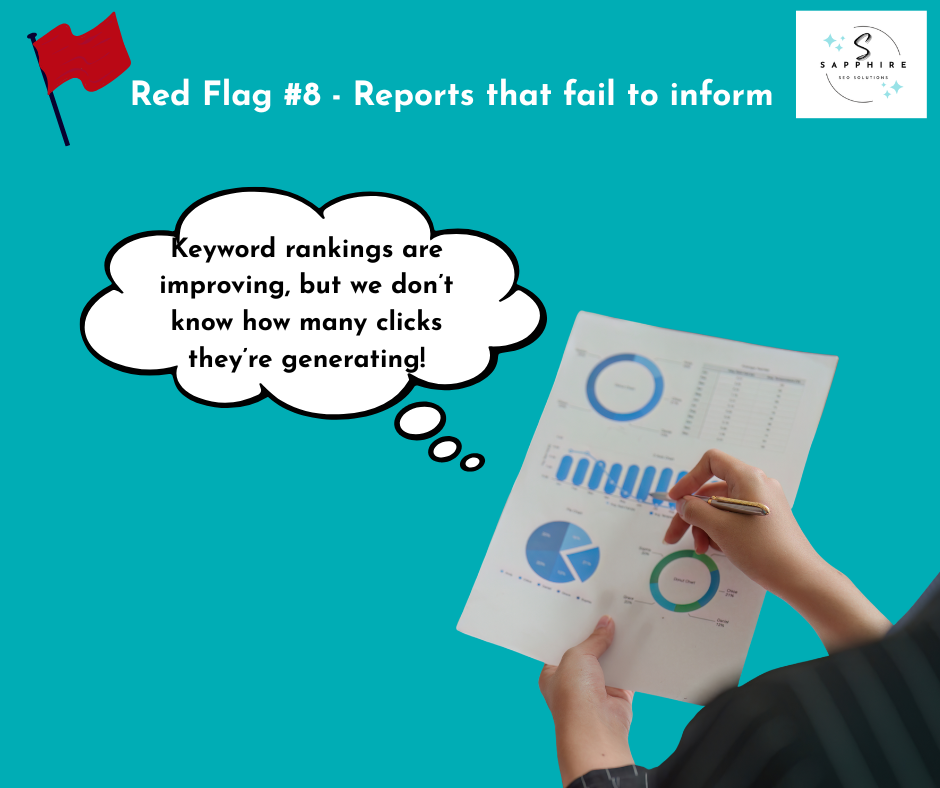
#8. When Reports Are Designed to Impress Rather Than Inform
An agency presenting monthly reports that show impressive-looking numbers while your patient inquiry volume remains flat is engaging in a form of strategic misdirection, and it is more common in healthcare SEO than most clinic owners realise.
The most commonly misrepresented metrics in healthcare SEO reporting include:
Total organic traffic volume without segmenting out informational research traffic from high-intent patient traffic
Keyword ranking improvements for terms that generate impressions but no clicks
Branded search volume increases presented as organic SEO gains when they are simply the result of your own marketing efforts
Domain Rating or Domain Authority scores, which measure relative authority but have no direct correlation to patient acquisition
A trustworthy reporting structure connects every key metric to patient outcomes. It shows which specific keywords are driving phone calls and appointment form submissions. It shows your Google Business Profile call volume from organic local searches. It shows conversion rates on your key service pages, not just the traffic arriving on them. It shows the quality and medical relevance of new backlinks acquired each month.
If your agency's monthly report does not contain these metrics, or if you have ever had to ask what a metric means rather than being told why it matters for your practice, you are receiving reports designed to justify the retainer, not to drive your business decisions.
#9. No Disclosure of AI Tool Usage or Content Generation Methodology
In the current environment, virtually every agency uses AI in some capacity, and that is not inherently problematic. What is problematic is an agency that uses AI extensively in content production, reporting, or strategy without disclosing this to healthcare clients who have compliance and accuracy obligations that AI tools cannot meet without human oversight.
Ask any prospective agency directly: which AI tools do you use, at what stage of content production, and what human review process occurs between AI output and publication?
A legitimate agency will answer this question readily and will describe a specific editorial workflow. An agency that is evasive, dismissive, or that implies their AI tools produce publication-ready medical content without clinical review is telling you something important about the quality and compliance risk of the content they will publish under your name.
In 2026, the absence of an AI disclosure policy in a healthcare SEO engagement is itself a red flag, both for your content quality and for the ethical transparency of the partner you are evaluating.

Here’s How to Vet Your SEO Partner
Ask the following questions:
How Do You Handle "Negative Patient Reviews" Without Violating HIPAA?
Patient reviews are crucial for patients actively searching, but privacy rules are strict. Your SEO specialists should have strategies to respond publicly to feedback while protecting sensitive information. This shows both medical expertise and respect for patient privacy.
Push beyond the surface answer here. Ask the agency to walk you through a specific example of how they would word a response to a negative review that mentions a specific treatment or procedure.
A genuinely experienced partner will immediately demonstrate that their response protocol never confirms or denies a patient relationship, never references any treatment or clinical details, and redirects the conversation offline through a generic contact invitation.
They should also be able to explain which review platforms they monitor, how frequently responses are issued, ideally within 24 to 48 hours, and whether they use a HIPAA-compliant reputation management tool that stores response records without triggering PHI exposure.
If the agency's answer focuses primarily on generating positive reviews without addressing the compliance dimension of negative review responses, they are demonstrating a gap in their understanding of how healthcare reputation management actually works.
What Is Your Strategy for Outranking National Health Directories?
National health directories dominate search results. A competent healthcare SEO agency will have a clear plan for improving search engine rankings and visibility so your clinic attracts potential patients directly instead of losing them to directories.
The agency's answer should describe a concrete strategy, not a general principle. They should be able to explain which search intent categories, local, specialty-specific, condition-specific, and procedural, your clinic can realistically compete for and win against aggregators like Healthgrades and WebMD, and which broad informational categories they would steer your content strategy away from because the effort-to-return ratio is poor.
A medical SEO specialist knows that national directories rarely dominate hyper-local and specialty-specific searches the way they dominate generic terms, and they build your content strategy around precisely the search terrain where an independent practice can win.
If an agency responds to this question with vague reassurances about "building domain authority," they do not have a tactical answer, which means they likely do not have a tactical strategy.
How Do You Track the Lifetime Value of an SEO-Driven Patient?
It is not enough to track clicks. True ROI comes from monitoring patient acquisition over time. Ask your partner how they measure medical search engine optimisation impact on more patients, appointment frequency, and retention to ensure your healthcare services investment pays off long-term.
A specialist's answer to this question reveals whether they understand the economics of your business or only the mechanics of SEO. The correct answer involves:
Connecting organic search data to your practice management system or CRM, wherever technically possible
Attributing phone calls and form submissions to specific organic keywords and page sources using call tracking and UTM parameters
Establishing a methodology for calculating average patient value based on appointment type, return visit frequency, and referral behaviour
An agency that answers this question with "we track your organic traffic growth each month" does not understand the difference between an SEO metric and a business outcome. That distinction is critical when you are making a significant monthly investment and need to demonstrate clinical ROI to a practice owner or board.
What Does Your Content Production and Clinical Review Process Look Like?
The content methodology an agency uses determines not just your ranking performance, but your compliance exposure and your professional reputation.
A legitimate healthcare SEO content process has clearly defined stages. Ask the agency to describe each one. Some questions you should ask include:
Who conducts keyword and topic research, and how do they ensure the topics selected reflect genuine patient search intent rather than just search volume?
Who writes the content: in-house writers with healthcare backgrounds, specialist medical copywriters, or generalist freelancers?
How is clinical accuracy verified before publication: is there a physician or medical editor review step, and if so, how is that reviewer's involvement documented?
How are author credentials displayed on published content to satisfy Google's E-E-A-T requirements?
How frequently is existing content audited and updated to reflect changes in clinical guidelines or treatment standards?
If the agency cannot answer each of these stages specifically, or describes a content process that jumps directly from keyword research to publication without a documented clinical review step, the content they produce will carry clinical, compliance, and algorithmic risk that they are not currently accounting for.
Ask to see examples of published healthcare content they have produced for existing clients, including how author credentials are presented and how medical citations are handled. The quality of those examples will tell you more than any proposal document.
Do You Currently Work with Any of My Direct Local Competitors?
If the agency you are evaluating is already implementing an SEO strategy for a practice in your specialty within your catchment area, your investment is directly subsidising a competitive advantage for a rival. And as your HIPAA Business Associate, the agency has access to sensitive operational and patient-acquisition data that requires extremely rigorous segregation to protect.
Reputable agencies that do work with multiple clients in the same specialty should be able to explain their conflict management protocols in specific terms, including:
Separate account teams with no shared personnel between competing clients
Firewall policies that prevent strategic insights learned from one client from informing another's strategy
Data storage practices that ensure your analytics, keyword performance data, and campaign intelligence are never accessible to staff working on a competitor account
If an agency is evasive about whether they work with your competitors, or dismisses this concern as irrelevant, that evasiveness is the answer. A confident and ethical partner will be transparent about their client relationships and specific about their conflict management framework.
How Do You Respond When a Google Algorithm Update Affects Our Rankings?
Google releases multiple broad core updates and dozens of targeted updates each year. Healthcare websites are among the most affected categories because of their YMYL classification, meaning a poorly prepared or poorly communicated response to a major update can cost a clinic months of ranking progress and patient acquisition.
Ask the agency the following questions:
How quickly after a confirmed algorithm update do they assess your site's performance?
How do they determine whether a ranking change is update-related or caused by a technical or content issue on your site?
What is their communication protocol, and will they proactively contact you with an explanation and a plan, or do they wait until you raise the question?
What remediation strategies do they apply when a healthcare site is negatively affected by a core update?
A specialist's answer should include a clear timeline, typically within 48 to 72 hours of a major update confirmation. They should be able to provide preliminary analysis and a structured approach to distinguishing between content quality signals, technical factors, and competitive movement as potential causes.
An agency that responds to this question with "we monitor things and adjust as needed" does not have a protocol. They have a posture, which is not the same thing when your practice's visibility depends on swift and informed action.
What Is Your Onboarding Process, and What Do You Need from Us to Get Started Effectively?
How an agency begins the relationship is usually a reliable indicator of how it will manage it over time.
A structured onboarding process for a healthcare SEO engagement should include:
A comprehensive discovery phase where the agency asks detailed questions about your:
Specialty
Patient demographics
Key revenue-generating services
Geographic coverage
Current digital assets
Compliance history
Business goals
Access requests to your Google Analytics 4, Google Search Console, and Google Business Profile, framed as manager-level access (not ownership transfer)
A technical audit of your current website and an initial competitive analysis of your local search landscape.
A specialist should also begin the BAA review and signing process during onboarding, not as an afterthought after the campaign has launched.
If an agency's answer to this question is "we just need your website URL and login, and we get started right away," they are not conducting a thorough discovery process. This means that they are building a strategy on assumptions rather than on a genuine understanding of your practice. The quality of the onboarding determines the quality of the strategic foundation on which everything else is built.
How Transparent Are You About Pricing, and What Exactly Is Included in Your Retainer?
Understanding exactly what your retainer covers and what it does not is essential before any agreement is finalised.
In 2026, medical SEO retainers from specialist agencies typically range from approximately $1,500 to $3,000 per month for a solo or small practice, $3,000 to $6,000 per month for a competitive multi-provider group, and $6,000 to $10,000 or more per month for multi-location networks or practices in highly competitive specialty categories.
These ranges reflect the actual cost of delivering compliant, clinically reviewed, technically rigorous healthcare SEO. This is why pricing well below these benchmarks should prompt questions about what is being cut from the process.
Ask any prospective agency for a fully itemised scope of work that clearly states which activities are included in the retainer and at what volume, how many pieces of content per month, how many technical audit cycles per year, how many backlink acquisition activities per month, and how frequently reporting is provided.
Ask which tools the agency uses and whether the cost of those tools is included in your retainer or invoiced separately.
Ask whether a technical audit or website migration is treated as a project fee separate from the retainer.
Ask whether content production costs are included or billed additionally based on word count.
An agency that presents a single monthly number without a detailed breakdown of what it covers is structuring its pricing to obscure what you are actually receiving.
What Are Realistic Timelines for Results, and What Will We See at Each Stage?
A credible specialist will describe a phased timeline that is realistic about the pace of sustainable SEO results. Broadly, the first 30 to 60 days of a healthcare SEO engagement are typically consumed by technical audit completion, on-page optimisation of priority service pages, Google Business Profile optimisation, and the foundational work that does not immediately produce visible ranking changes but underpins everything that follows.
Months two through four typically produce the first meaningful ranking movements for lower-competition local and long-tail keyword targets, with Google Business Profile impressions and call volume beginning to respond to local optimisation work.
Meaningful movement on competitive specialty keywords and measurable organic patient inquiry growth typically emerges in the four to eight-month range for most practices, with compounding growth continuing beyond that as content and authority accumulate over time.
An agency that promises you will see significant results within 30 days is misrepresenting how search engines work.
An agency that is vague about timelines or refuses to commit to any milestones is avoiding accountability.
The right answer is specific, staged, honest about the delay between effort and visibility, and includes agreed-upon leading indicators, technical fixes completed, local ranking position improvements, and Google Business Profile engagement growth, which allow you to assess progress before patient acquisition results fully materialise.
Scale Your Practice with a Proven Healthcare Growth Partner!
Investing in medical search engine optimization is not a short-term expense. It is an asset that grows with your medical practice. Properly executed, specialized SEO drives new patients, improves organic search visibility, and builds a trusted digital presence for your healthcare brands.
The right healthcare SEO services partner helps your clinic achieve sustainable growth by combining clinical accuracy, technical optimization, and patient-focused content. Every piece of healthcare marketing you implement today will compound over time, attracting more patients actively searching for care.
SEO is not just clicks or traffic. It is measurable, long-term growth for your medical businesses. Partner with experts who understand the medical industry and know how to turn search visibility into booked appointments.
Contact us for a specialized medical SEO audit to start attracting more patients online today!

Frequently Asked Questions
What does a medical digital strategist actually do differently from a regular SEO agency?
A medical digital strategist understands the unique compliance requirements, patient search behaviour, and clinical accuracy standards that govern healthcare websites, including HIPAA-compliant analytics configuration, YMYL content guidelines, E-E-A-T signal building through verified physician credentials, and specialty-specific keyword strategies that target patients at every stage of their decision journey, from symptom research through to booking an appointment.
How long does it take to see results from medical SEO services?
Most healthcare SEO campaigns begin with technical fixes and on-page optimisation in the first 60 to 90 days, produce initial local and long-tail keyword ranking improvements between months two and four, and deliver measurable organic patient inquiry growth in the eight to 12-month range, with results compounding steadily beyond that as content authority and backlink profiles continue to strengthen over time.
Is Google Analytics HIPAA compliant for medical websites?
Standard Google Analytics 4, in its default configuration, is not HIPAA compliant for medical websites because it transmits IP addresses alongside health-related URLs to Google servers without a signed Business Associate Agreement in place, which constitutes a protected health information violation, and clinics should instead use compliant alternatives like Piwik PRO or implement server-side tracking solutions that strip HIPAA identifiers before passing data downstream.
What should I look for in a medical SEO agency before signing a contract?
Before signing with any medical SEO agency, you should confirm they will sign a Business Associate Agreement, verify they have specialty-relevant healthcare case studies, ask who will manage your account day to day, ensure you retain full ownership of your website, Google Business Profile, and all created content, and request a clearly itemised scope of work that outlines exactly what is included in the monthly retainer.
How do I make my medical practice appear in AI search results like Google AI Overviews?
To appear in AI-generated search summaries, your medical website needs content structured with concise direct answers in the first 40 to 60 words of each section, descriptive headers that mirror how patients phrase questions to AI assistants, properly implemented schema markup including MedicalCondition and Physician tags, strong E-E-A-T signals through verified author credentials, and consistent accurate information across all platforms that AI systems cross-reference including Healthgrades, Doximity, and the NPI database.
Regulatory & Compliance References
This guide is cross-referenced with official health marketing and privacy frameworks:
- U.S. Health Privacy (HIPAA): HHS 2024 Guidance on Online Tracking Technologies
- Australian Advertising Standards (AHPRA): National Board Resources for Health Practitioners
- Truth in Advertising (FTC): FTC Health Products Compliance Guidance
- Digital Accessibility (WCAG): W3C WCAG 2.1 Level AA Standards