

What Is Website Copywriting? - Complete Guide + Expert Insights
Website copywriting is the process of creating clear, persuasive, and SEO-optimized text that guides visitors through your site and encourages them to take action. This guide explains what website copywriting is, why it matters for conversions and search rankings, and the best practices experts use to create high-performing web pages. Learn how strong headlines, simple language, structured content, and targeted messaging can improve user experience, boost trust, and drive results for your business.
Key Takeaways
Clear website copy boosts engagement and guides visitors toward taking action.
Effective web copywriting answers user questions and improves both UX and SEO performance.
Research-driven, structured copy builds trust, credibility, and stronger conversions.
Use simple language, strong headlines, and clear CTAs to increase readability and results.
Test headlines, CTAs, and layouts to refine performance and improve user behavior.
If you want your site to perform, you need to focus on website copywriting. It is a crucial part of building a website that delivers and helps website visitors decide whether they want to stay or leave. With a clear, engaging website copy, you can ensure that visitors stay on your site longer, guiding them towards what they came for, whether it's seeking information or making a purchase.
Good website copy:
Explain values in clear language
Tells readers that you understand their needs
Encourages action when someone visits your site
While a good website copy acts as a powerful tool for trust and conversion, it can be challenging to produce an engaging copy that delivers value. This is where Sapphire SEO Solutions and our affordable SEO-optimizing website copywriting services come in.
Our SEO-certified writers know how to craft a compelling website copy, following all of the best practices while addressing the needs of your target audience. We have been working with small businesses in Lakewood, Parma, Cleveland, and many more cities since 2007, helping them rank higher in the SERPs, build credibility, and gain more foot traffic.
In this complete guide, you'll learn:
What is website copywriting?
Why web copywriting matters
The best practices that make your content more effective
Key steps behind creating copy that feels natural and delivers results
What Is Website Copywriting?
In simple words, website copywriting refers to writing words that guide visitors through your site, encouraging them to take action. It is an art that's all about helping visitors understand what you offer and what they should do next. Website copywriting answers the questions your potential customers may have.
In addition to encouraging visitors to take action, website copywriting also improves the user experience of your site. It complements the design, visuals, and layout, creating a smooth transition from one section to another. This delivers a strong message that's hard to avoid.
Website copywriting also helps define your brand voice. If you have a clear brand voice, it makes your site more memorable, building trust faster.
Why Is Website Copywriting Important?
A good website copy changes perceptions visitors may have about your brand. It affects how they see your business. Also, it provides visitors with answers to the questions they may have.
With a good website copy, you can build trust, as it shows that you understand your target audience and their problems. This makes them more likely to take the next step.
Simply put, a good website copy boosts conversions, guiding visitors to take action, whether it's requesting a quote or making a quick phone call.
Not only that, but a good website copy helps with search engine optimization (SEO). Search engines love relevant, E-E-A-T content, and a good website copy provides it with just that. This means that you're more likely to show up in the search results when people search for what you offer.
For context, Backlinko reveals that the top organic result in search results gets roughly 27.6% of clicks. If you're not up there, you're losing out on a huge opportunity.
Website copywriting is also important in improving accessibility. Clear, structured information ensures that more customers come to your site, as it makes it easy for readers to understand the content without feeling overwhelmed.

What Are the Best Practices of Website Copywriting?
Today, people are more likely to skim through your content than read the entire web copy. This is because they are looking for quick answers. And your job is to provide those answers without the clutter.
Sounds challenging, right? Don't worry. Here are some of the best practices to follow:
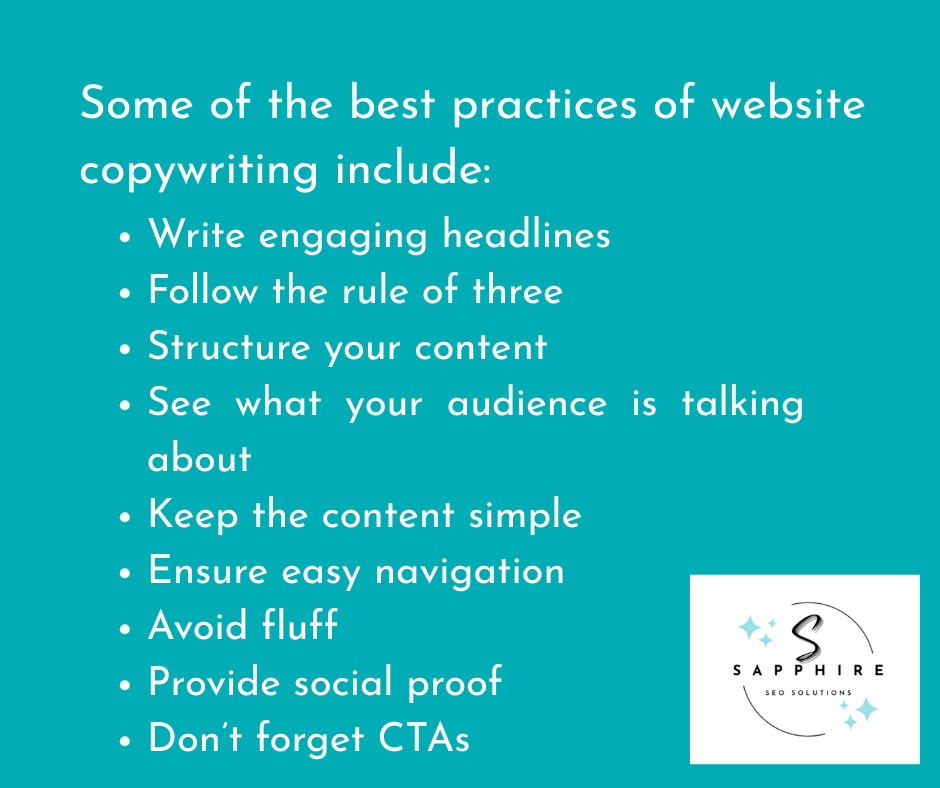
Write Engaging Headlines
Heard of the phrase "first impression is the last impression." Your headlines are those, as it's the first thing visitors notice. If the headlines on your site aren't interesting or engaging, chances are visitors are going to move on.
A good headline not only engages the reader but also improves SEO. Using the right keywords and targeting the right user intent in your titles can help search engines understand your content better, allowing for more customers to find you easily.
Follow the Rule of Three
While this is not super important, it can help make your content feel balanced and easy to digest. The rule of three refers to using three things in a group, whether it is a list, bullet points, or key benefits. This is because most people remember things that are in a group.
Plus, it breaks things into natural, easy-to-follow patterns. With the rule of three, your content won't feel repetitive. Keep in mind that it's not compulsory, but it can help you keep readers engaged if you're finding it difficult to improve your site's bounce rates.
Structure Your Content
Most visitors skim before they read. According to an old research by Nielsen Norman Group, users read only about 20–28% of a page's words, so structure matters. With how the current generation is, it's probable that this figure has further reduced in recent years. This makes it super important to structure your content from the get-go.
Break your content into short sections. Use subheadings, short paragraphs, and plenty of white space. A clean structure helps readers find what they need fast. It also makes your message feel more trustworthy.
Strong structure also improves mobile usability. Many people browse on small screens. Short paragraphs and organized content keep your message clear on any device. Use bullet points when listing features or benefits to make information scannable.
See What Your Customers Are Searching and Use That
Your customers are already telling you what they care about. Their search terms show their problems and goals. Use those insights in your copy. Speak their own language. Answer the questions they're already asking.
Keyword research also helps you match their intent. When you understand why they search, you can write pages that fit their expectations. This leads to better rankings and better conversions.
Keep the Content Simple
Simple copy is powerful copy. Say what you mean in plain language. Avoid jargon. Avoid long explanations. Clear writing helps people understand you without effort. When reading your copy feels easy, people stay longer.
Simple copy also reduces cognitive load. When visitors don't have to work hard to figure out what you mean, they're more likely to trust you and move forward.
Ensure Easy Navigation
Your copy should guide people through your site. Use clear labels, logical page flow, and helpful links.
When navigation feels smooth, visitors find what they want quickly. That boosts trust and keeps them from clicking away. Keep in mind that, according to Think with Google, more than half (53%) of mobile visitors leave if a page takes longer than three seconds to load.
Good navigation copy also reduces friction. If visitors know where they are and where they can go next, your site feels easier to explore.
Avoid Fluff
Every word should have a purpose. If a sentence doesn't inform, guide, or persuade, cut it. Fluff slows readers down and makes your message weaker. Tight copy keeps attention and delivers value.
Removing fluff also makes your message more confident. Strong website copy is clear, direct, and easy to believe.
Provide Social Proof
According to research by Spiegel Research Center, displaying reviews can increase purchase likelihood by about 270% compared with no reviews.
You can read our blog post on "The Role of Online Reviews on Local SEO" for detailed information on the importance of user-generated content.
People trust real experiences. Add testimonials, reviews, case studies, or results. Social proof shows that others have chosen you and had a good outcome. It builds confidence and reduces hesitation.
You can also use badges, logos, certifications, or media mentions. These simple elements help visitors see your credibility at a glance.
Don't Forget CTAs
Your copy needs clear next steps. HubSpot reveals that personalized CTAs have been shown to convert roughly 202% better than generic ones, so tailor your CTA copy when possible.
Tell readers exactly what to do. Use simple calls to action like "Book a call" or "Get a quote." When your CTAs are obvious and helpful, more visitors take action.
Good CTAs also set expectations. Let people know what happens next. A small hint like "Takes less than a minute" can increase conversions.
Three Important Steps to Web Copywriting
The three most important steps to web copywriting include the following:
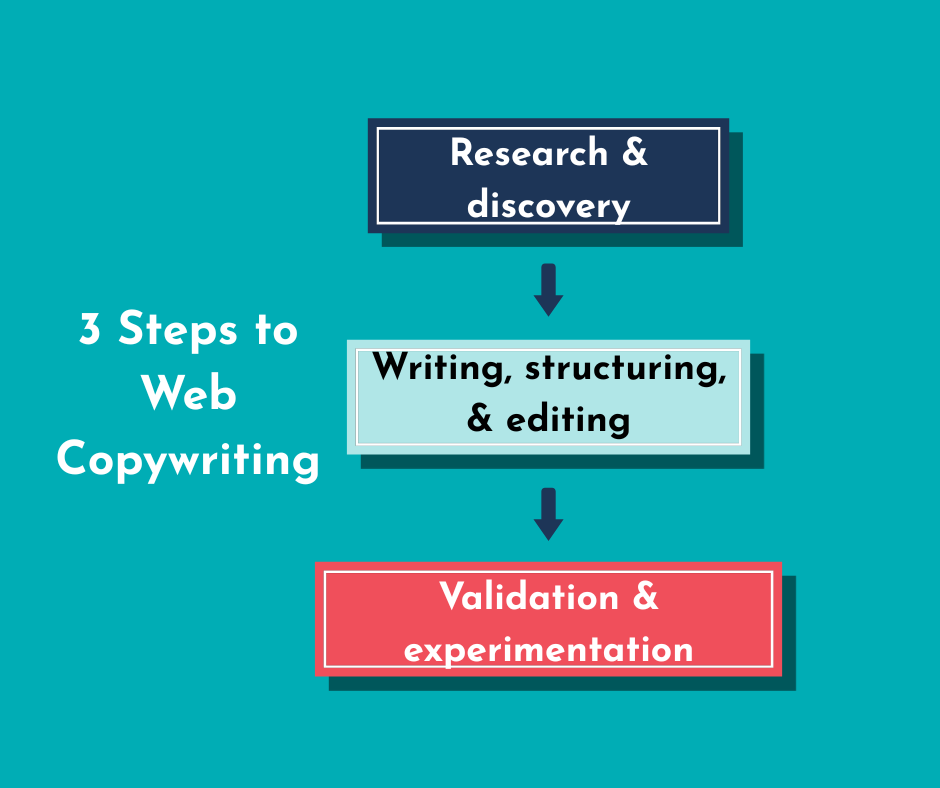
1. Research and Discovery
Everything starts with understanding your target audience. You need to know who they are, what they care about, and what problems they want solved.
Good research gives you the language they use and the questions they ask. It also shows you what your competitors are saying. This step gives you the clarity you need before writing a single word.
Research also includes reviewing analytics, studying user behavior, and identifying gaps in your current site. Understanding your target customers and target market makes a huge difference. The better your research, the stronger your copy will be.
2. Writing, Structuring, and Editing
After doing your research, it's time to start writing. It's important to write copy with purpose, so make sure to always focus on benefits (for the readers).
When writing a website copy, your sentences should be tight. You need to get to the point and make sure the paragraphs are short.
After writing, structure the content so it's easier to skim through it. This makes it easy for readers to understand the main points.
Editing is also super important. During this phase, look out for fluff. Remove sentences that you think can slow readers down. Make it easy to skim through the content.
Make sure the copy aligns with your brand voice. Keep the tone consistent throughout and ensure that it matches your personality. In brand messaging, consistency is key, and doing so can build trust in the same way across all touchpoints.
3. Validation and Experimentation
The third step in the writing process is testing, as this makes a great copy even better. See how people interact with that site or page you've written.
Experiment with different headers and analyze the results. Try out various calls to action to determine which one is best.
Testing is a great way to improve engagement and conversions. You also need to focus on validation, which includes the following:
A/B testing
Heatmaps
User feedback
Session recordings
Testing and validation help understand what works and what needs improvement. This applies to other copywriting formats as well, like email sequences.
Sapphire SEO Solutions Offers Affordable Website Copywriting Services!
Need clear, persuasive copy that's built to convert? Sapphire SEO Solutions has a team of certified SEO copywriters, specializing in different fields, who can speak to your ideal clients. In addition to that, our writing can support your SEO goals.
How are we different? We don't use an AI tool to craft written content. Whether you need a new website, a compelling landing page, a persuasive sales page, a detailed services page, optimized product pages, or an engaging home page, our writers write in a way that feels natural while driving the required action.
Why us? We are a small business that understands what small business owners need. Over the last decade, we have refined our SEO strategies that go beyond focusing solely on keywords. Our web copy connects with real people.
Fill out our online contact us form to schedule a free consultation with an SEO expert today.
Looking for SEO or AI SEO optimized content? Check out our content tiers before placing an online order now!

Frequently Asked Questions - What Is Website Copywriting?
What Exactly Does a Website Copywriter Do?
A website copywriter writes persuasive, SEO‑friendly text for web pages, including homepages, service pages, about pages, and landing pages. They research your audience, define key messaging and value propositions, polish the tone of voice, and insert calls to action. They also optimize for search engines while maintaining readability. For example, they craft messaging that resonates with your audience while helping you rank better.
How Is Copywriting Different From Content Writing or Blogging?
Copywriting is focused on persuasion and conversions. Its goal is to get the reader to take action (like buy, subscribe, or request more info). Content writing or blogging, by contrast, tends to inform or entertain, building trust or driving long-term engagement. Both are essential parts of marketing, but they serve different purposes.
Why Should My Business Invest in Website Copywriting?
Good website copywriting builds trust, communicates value clearly, and helps convert visitors into customers. It also supports SEO by using relevant keywords naturally. Without strong copy, even a beautifully designed site may fail to engage or convert.
How Do I Know What My Website Copy Should Say?
You start with research. A copywriter (or you) should identify your target audience, their pain points, and what motivates them. Then use that insight to highlight benefits, not just features. This ensures your copy speaks in a way that resonates. Gather ideas from customer feedback and competitor analysis.
Can Website Copywriting Help My SEO?
Yes. Writing website copy strategically can help your SEO a lot. By using relevant keywords, structuring content properly, and writing for humans first, you improve your chances of ranking. At the same time, compelling copy ensures visitors stay longer and take action, which is good for both engagement and conversions.
What Pages Are Important for Your Website?
Key pages include your Homepage, About Page, Services/Products Page, and Contact Page. Optional but helpful are Testimonials/Case Studies, Blog, and FAQ pages. Each page should clearly show your value, guide visitors, and include a strong call to action. These essential services pages work together to create a complete user experience.