

What Is a Website Copywriter? - Role, Skills, and Benefits
A website copywriter is a professional marketing strategist who crafts persuasive and conversion-focused text designed to turn website visitors into active customers. Unlike general content writers who focus on education or engagement, these specialists utilize marketing psychology and deep audience research to drive specific transactions such as sales and email sign-ups. Professional website copywriters bridge the gap between traffic and revenue by aligning messaging with search intent to reduce bounce rates and improve return on investment for paid campaigns. By integrating search engine optimization with brand storytelling, they ensure that every word on a page serves a clear business objective while maintaining a consistent brand voice across all digital touchpoints.
Key Takeaways
Website copywriters bridge the gap between traffic and sales by using marketing psychology to drive actions.
A website copywriter is a strategist who creates persuasive, conversion-focused text for digital platforms and brands.
Quality copywriting directly increases revenue by reducing bounce rates and aligning content with specific user intent.
Partnering with SEO-certified professionals ensures your messaging ranks on Google while building long-term brand trust.
Check for high bounce rates or inconsistent brand voice as primary indicators that you need professional copy.

According to Invesp, the global average website conversion rate sits at just 2.35%. That means 97 out of 100 visitors leave without taking action. The gap between traffic and conversions? That's where a website copywriter comes in.
Website copywriting is the strategic craft of writing persuasive text that compels people to act. It's about understanding what your customers need and speaking directly to those needs in a way that drives clicks, sign-ups, and sales.
And according to Website Planet, websites with spelling and grammatical errors see a massive drop in ad clicks while Google charges 72% more per click. This proves that quality website copywriting directly impacts your bottom line.
That's where a skilled website copywriter becomes invaluable. These professionals don't just write. They research your market, analyze your competitors, understand your audience's pain points, and craft messaging that converts browsers into buyers.
For small business owners juggling a dozen responsibilities, partnering with an experienced website copywriter means getting professional website copywriting services without the overhead of a full-time hire.
Sapphire SEO Solutions has been delivering affordable website content copywriting services to small businesses since 2007. Our writers are SEO-certified professionals who conduct thorough keyword research, analyze what your competitors are doing right (and wrong), and create content that ranks on Google while persuading visitors to convert. Let us help you turn your website into a revenue-generating machine.
In this complete guide, we'll walk you through everything you need to know about website copywriters, from what they do and how they differ from content writers, to how much they cost and whether AI can replace them.
Let’s get started!
What Is a Website Copywriter?
A website copywriter is a professional writer who specializes in creating persuasive, conversion-focused text for websites. But they're not just good with words. They're strategists who understand marketing psychology, consumer behavior, and what makes people click "buy now" instead of bouncing to a competitor's site.
The primary purpose of a good website copywriter is to drive specific actions like:
Purchases
Email sign-ups
Demo requests
Any conversion goal you've set
According to HubSpot, personalized calls-to-action convert 202% better than generic ones, and professional copywriters know exactly how to craft these high-performing CTAs.
So what makes website copywriters different from general writers? It's the sales-centric, marketing-oriented approach.
While a content writer might focus on education or engagement, a copywriter focuses on transformation and transaction. A novelist crafts beautiful prose and a journalist reports facts, but a website copywriter writes with one goal in mind: getting your ideal clients to take action. They're less concerned with literary merit and more focused on conversion metrics and user intent.
Why does this matter for your business?
Your brand voice and brand messaging are often the first impression potential customers get of your company. Digital Doughnut reveals that 80% of people only read headlines, which means your copy needs to grab attention instantly.
A skilled website copywriter ensures your:
Value proposition is crystal clear.
Benefits are front and center.
Every word on your site works toward your business objectives.
The bottom line? Website copywriters help businesses communicate value in a way that compels action and supports broader marketing objectives. They act as the strategic bridge between what you offer and what your customers actually need to hear to make a decision.
What Does a Website Copywriter Do?
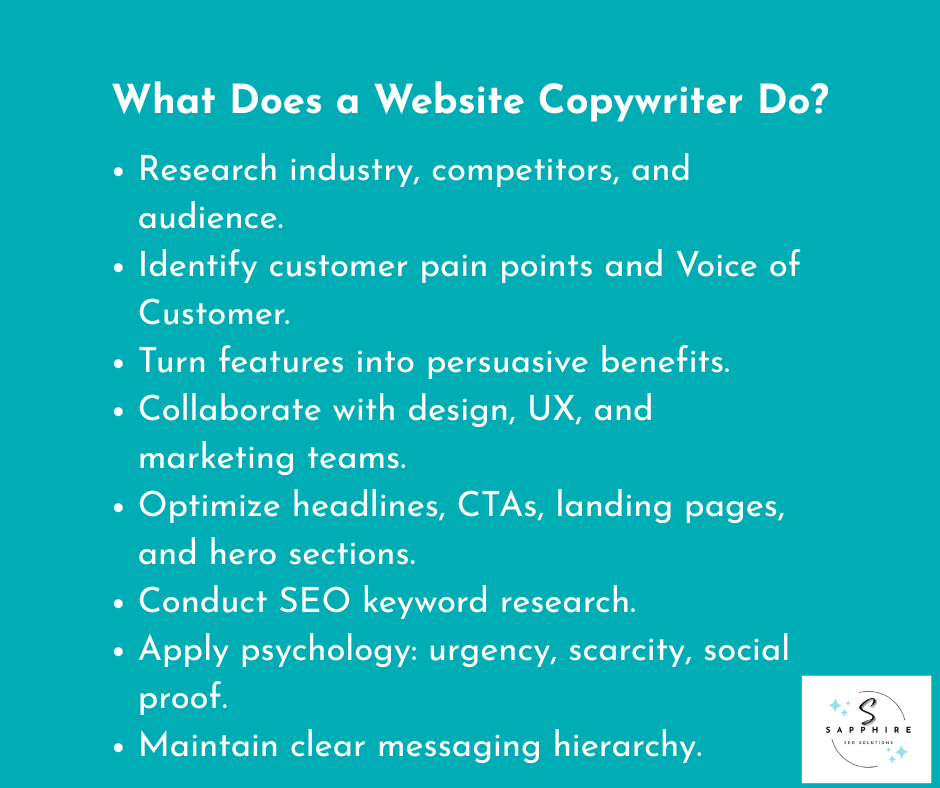
The entire process starts with deep research. A professional website copywriter digs into your industry, studies your competitors, and analyzes your target audience until they understand your customer pain points and exactly what makes your customers tick.
Here's what separates pros from amateurs: they don't guess. They research. They conduct surveys, read customer reviews, analyze social media conversations, and identify the exact Voice of Customer (VoC), which refers to the specific language your customers use when describing their problems.
Tommy Walker's 2024 'State of (Dis)Content' report reveals that most content marketers don't conduct audience research nearly enough, which is why so much web copy falls flat.
Once they understand your audience's pain points and motivations, website copywriters translate product and service benefits into compelling messaging that actually persuades visitors to act.
But writing copy isn't a solo act. Professional website copywriters collaborate with designers, UX teams, and marketers to integrate copy seamlessly into your site structure. This ensures a logical messaging hierarchy so visitors immediately understand your value proposition and know exactly what action to take next. They optimize key website elements like headlines, CTAs, landing pages, and hero sections to maximize conversions.
If SEO is part of the job, they perform thorough keyword research and align every sentence with search intent. According to the American Writers and Artists Institute, solid research forms the foundation for nearly all copywriting projects; finding facts, interesting details, and relevant stories makes copy stand out.
The psychology behind the words matters just as much as the words themselves. Professional website copywriters use persuasive psychology and conversion principles like urgency, social proof, and scarcity to move visitors toward action.
Research from Dr. Robert Cialdini shows that social proof can increase towel reuse in hotels simply by mentioning that 75% of guests reuse their towels. CXL states that adding social proof to copy can lift referral conversion rates.
That's the difference between copy that sits there and copy that sells.
What Types of Website Copy Does a Website Copywriter Write?
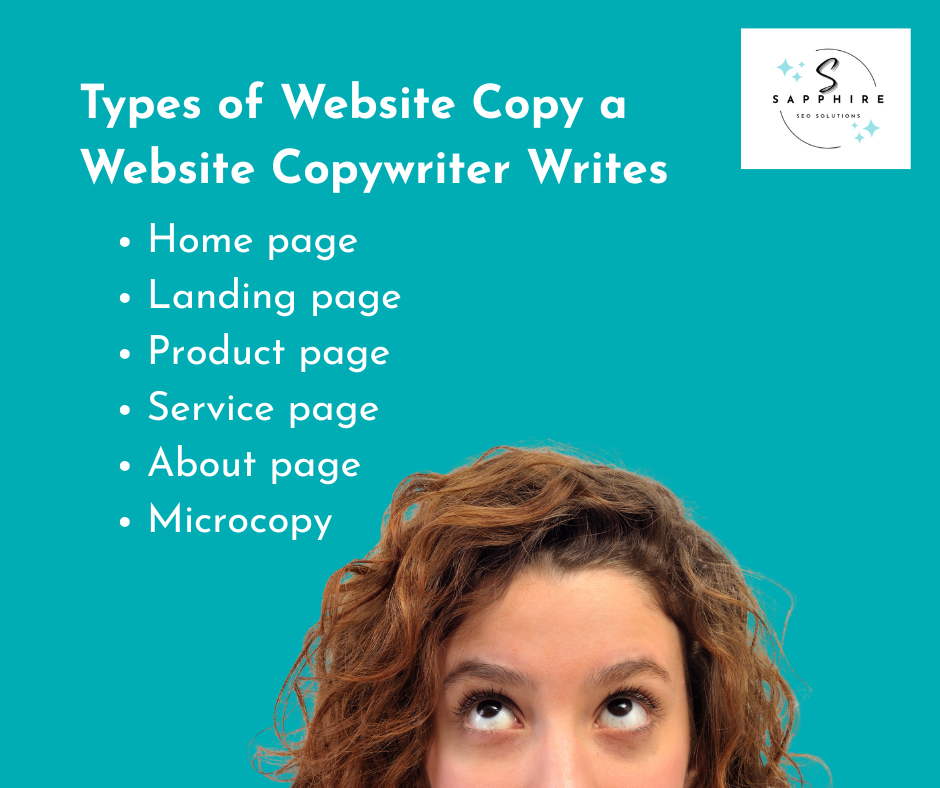
A website copywriter doesn't just handle one corner of your site. They write copy for every page where words matter, ensuring a consistent brand voice throughout the entire user journey.
There are several important pages a copywriter can work on, including the following:
Home Pages and Landing Pages
A home page is where first impressions happen. While technical speed is vital (Cloudflare states that a 1.11% conversion lift for every 100ms of load time), it means nothing if your value proposition falls flat.
Professional website copywriters craft home page copy that immediately communicates what you do, who you serve, and why visitors should care. They establish the first impression messaging that keeps people on your site instead of bouncing to a competitor.
Then there are landing pages optimized for specific campaigns or conversion goals. According to Unbounce's 2024 analysis of 41,000 landing pages, the average conversion rate sits around 6.6%.
However, professional website copywriters push those numbers higher by aligning every sentence with the visitor's specific search intent and removing friction from the decision path.
Product and Service Pages
Product descriptions and services page copy are where features become benefits. According to Lupasearch, well-written descriptions can increase conversion rates by up to 78%. NNGroup research found that 20% of failed purchases result from unclear or incomplete information. Your website copywriter doesn't just list what your product does. They show how it solves real problems.
About Pages and Brand Storytelling
About pages and brand storytelling copy matter more than most realize. ConvertCart reveals that storytelling can increase the perceived value of a product by up to 2,706%. A skilled website copywriter uses your About page to build trust and connection, transforming a dry company history into a compelling narrative that aligns with your ideal clients' values.
Microcopy
A microcopy is those tiny words on buttons, form instructions, and error messages. They influence behavior more than you'd think. According to the Ratomir Repository, optimized microcopy can increase conversion rates by 14.79% on average.
CXL reports that these small changes can reduce support time and remove friction from the user experience.
Every word on your site is an opportunity to guide, persuade, or convert. Professional website copywriters make sure none of those opportunities go to waste.
The Role of a Website Copywriter in Digital Marketing
Website copywriters don't work in a vacuum. They're central players in your entire digital marketing ecosystem, ensuring that your marketing strategy translates into a cohesive user experience.
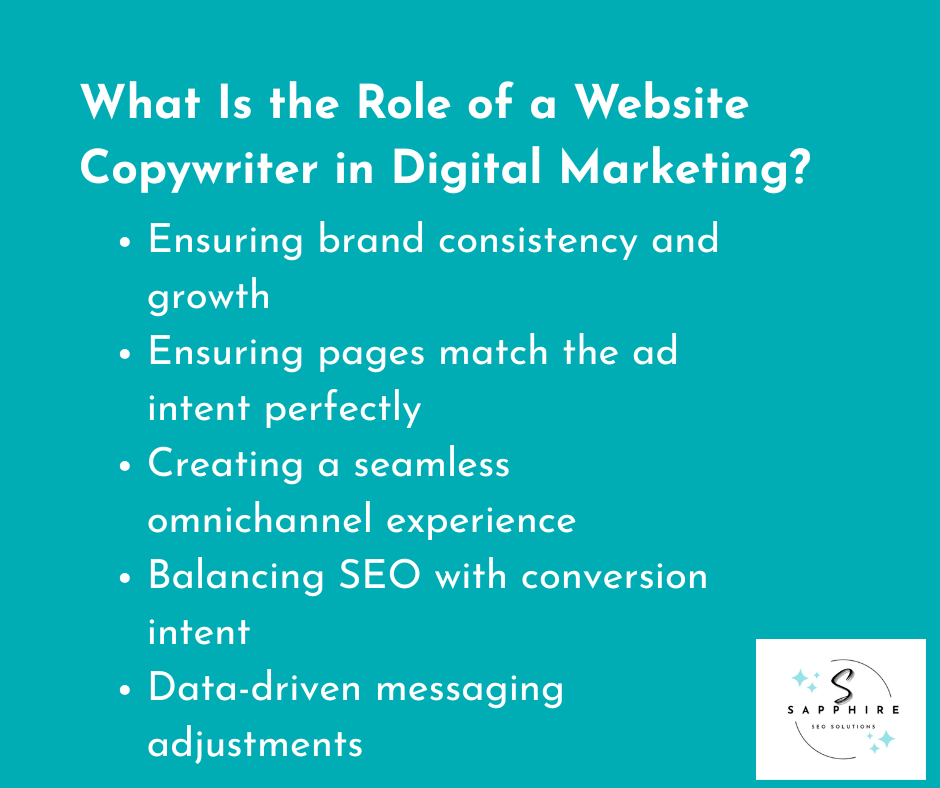
Ensuring Brand Consistency and Growth
Their job starts with aligning website messaging with your broader marketing strategy and campaigns. According to research from West Virginia University, brands with high consistency are likely to see revenue growth of 10% or more.
However, Renderforest reveals a significant gap: less than 10% of brands maintain high consistency across all products and marketing channels. A professional website copywriter closes this gap, ensuring every word on your site reinforces the same brand voice your customers see in your ads or emails.
The Art of "Message Matching" in Paid Campaigns
When you run paid ads, your website copywriter becomes your most critical asset. They support your paid campaigns by ensuring landing page copy matches ad intent perfectly. This is a concept known as "Message Match."
According to Analytify, landing pages with a single offer and a clear CTA see a 13.5% conversion rate compared to pages with multiple offers. When your ad promises one solution but your landing page delivers something else, conversions plummet.
Research from Leadpages confirms that misalignment between user expectations and landing page content directly hurts conversion rates, while proper message matching reduces bounce rates and builds trust.
Creating a Seamless Omnichannel Experience
Website copywriters work closely with email marketing and social media teams to maintain a consistent brand voice. According to Forbes and Third Wunder, maintaining consistent presentation across all platforms can increase revenue by 23%.
With eDesk reporting that 73% of customers use multiple channels during their shopping journey, a seamless experience is non-negotiable. If your email marketing sounds corporate but your social media feels playful, customers notice the disconnect. Your copywriter ensures a unified brand personality that builds confidence at every touchpoint.
Balancing SEO with Conversion Intent
Beyond tone, website copywriters help shape content frameworks that feed into both SEO and conversion paths. While the average SEO conversion rate is 2.4%, professionals who align copy with search intent can push those numbers higher. They create marketing content that ranks in search engines while simultaneously guiding visitors toward a specific conversion goal.
Data-Driven Messaging Adjustments
Perhaps most importantly, website copywriters serve as the bridge between analytics and creative adjustments. Vista Social reports that only 67% of customers trust companies enough to continue buying from them, proving that trust is earned through consistent, authentic communication.
When bounce rates spike or conversion rates drop, website copywriters translate those numbers into actionable changes. They A/B test different headlines, refine CTAs, and adjust messaging based on what the data reveals about visitor behavior. The result? A brand that stays consistent from the first social media ad to the final thank you page.
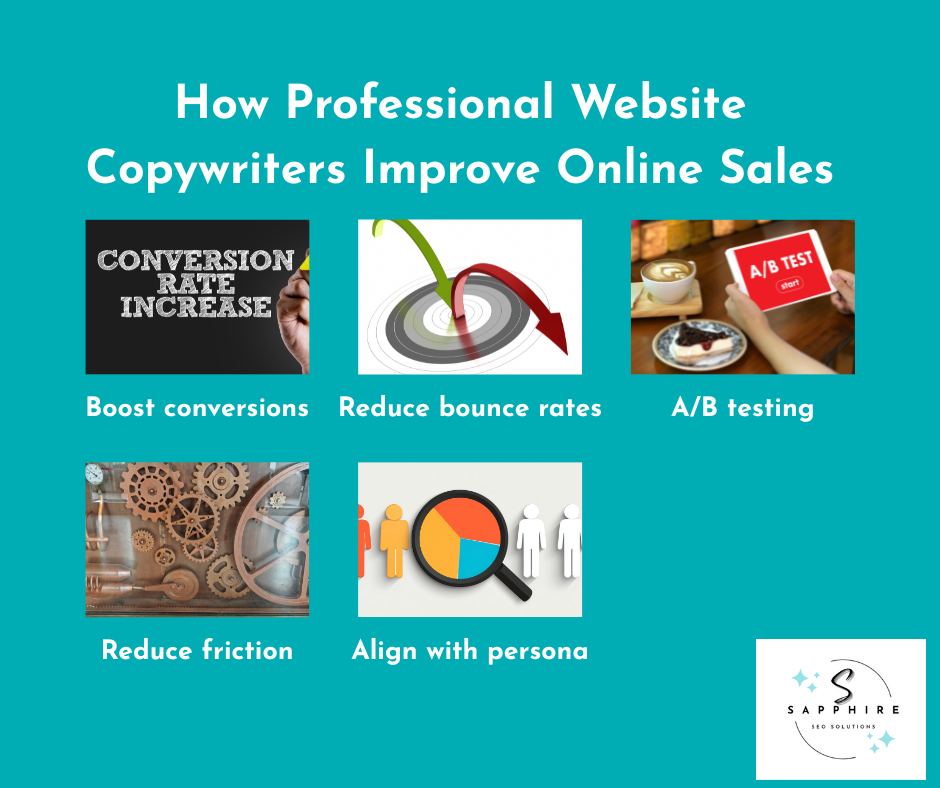
How Professional Website Copywriters Improve Online Sales
Professional website copywriters can improve online sales in many ways, including the following:
Boosting Conversion Rates Through Strategic CTAs
The impact starts with your conversion rates. Website copywriters craft benefit-driven headlines and persuasive CTAs that move visitors from curious browsers to paying customers. They understand the linguistic triggers that move a user to act versus the passive language that causes them to bounce.
Reducing Bounce Rates via Search Intent Alignment
High-converting copy does more than just earn clicks; it reduces bounce rates by providing immediate clarity. According to Semrush, an ideal bounce rate sits around 40% or below. Once it exceeds 60%, your content strategy likely needs a pivot.
Professional website copywriters recognize that misaligned content can increase bounce rates by up to 30%. By matching website copy to specific search intent, they ensure visitors find exactly what they were promised the moment they land on your page.
The Science of A/B Testing and Optimization
According to Enterprise Apps Today, 72% of companies see a boost in conversion rates through A/B testing. Website copywriters systematically test headlines, CTAs, and value propositions until they find the high-performing combination that maximizes sales.
Removing Friction from the Decision Path
Search Engine Land reveals that landing pages with fewer form fields perform better. Five fields are often the "sweet spot."
Website copywriters identify where friction exists in your customer journey and eliminate it. They strip away confusing jargon and simplify complex offers to make the path to purchase as smooth as possible.
Psychology, Personas, and the Trust Factor
Perhaps most importantly, website copywriters align language with customer psychology and buyer personas. Clique Studios reveals that while 92.6% of users are influenced by design, the words must fulfill the design's promise.
When copy speaks directly to a customer's pain points using their own language, trust builds faster. The result? More visitors taking action, more clicks turning into sales, and more relevant traffic converting instead of bouncing. That's the difference between copy that sits there and copy that actually makes you money.
What Skills Does a Website Copywriter Need?
There are several skills that are important to a website copywriter, and they include the following:
1. Persuasive Writing and Cognitive Psychology
A professional website copywriter must influence reader behavior toward a defined goal. According to Wix, 73% of people admit to skimming rather than reading, which means every sentence needs to grab attention and push toward action. There's no room for filler. Every word must serve the conversion goal.
2. Deep Research and Audience Analysis
Persuasive writing only works when built on solid audience analysis. According to Indeed, strong copywriters spend significant time conducting research to understand audience desires and language. You cannot persuade people if you don't understand their pain points or the specific vocabulary they use to describe them.
3. Strategic Marketing Knowledge
According to The Knowledge Academy, professional website copywriters must comprehend value propositions, sales funnels, and positioning strategies. They need to understand where their copy fits in the customer journey, whether it’s top-of-funnel awareness or bottom-of-funnel decision making.
4. SEO Fundamentals and Search Intent
A website copywriter who doesn’t understand keyword use and on-page optimization won't get your content seen. While SEO and its elements like on-page SEO works, the skill lies in weaving strategic keywords naturally into persuasive text so it ranks for Google but reads perfectly for humans.
5. Adaptive Tone and Brand Voice
Adaptability in brand voice separates pros from amateurs. Website copywriters must shift seamlessly between a formal B2B tone for a SaaS company and a playful voice for a consumer brand. This requires a deep understanding of brand messaging frameworks.
6. Cross-Functional Collaboration
Website copywriters don't write in a vacuum. They coordinate with product teams, designers, and UX specialists to ensure the copy works with the layout. This is often called UX writing, ensuring the words help the user navigate the site intuitively.
7. Data Literacy and Analytics
Basic analytics understanding is what separates good writers from great ones. You cannot do your job effectively without tools like Google Analytics. Professional website copywriters track metrics like:
Conversion rates
Bounce rates
Click-through rates (CTR)
Time on page
Understanding data allows for strategic improvements rather than random changes. By interpreting performance data, a copywriter can iteratively improve a page until it hits peak performance.
The bottom line? Website copywriters need to research deeply, write persuasively, think strategically, and let data guide their decisions. That combination of skills is what turns simple words into consistent revenue.
How Does a Website Copywriter Differ from a Content Writer?
Most people think website copywriters and content writers do the same thing. They don't. Here are the differences:
Transformation vs. Education
Copywriters write persuasive content to sell a product or service, while content writers focus on informative and educational writing that provides value to the reader. Copywriters persuade and drive conversions. Content writers educate and build trust.
A content writer might craft a 2,000-word guide explaining how SEO works. A website copywriter writes the landing page that convinces you to hire an SEO agency. Both use words, but the goals are completely different.
Punchy vs. Detailed
Format tells the story, too. Copywriting often comes short and action-oriented, while content writing tends toward longer and more informational pieces.
Your own website copy (those punchy headlines and CTAs on your homepage) is pure copywriting. The detailed blog posts explaining your industry are content writing.
Traditional copywriters write short, snappy content, while content writers typically produce pieces that are 1,000 words or more.
Sales vs. Engagement
Success metrics draw the clearest line between the two. Copy gets measured by conversion and sales metrics, while content gets measured by engagement and organic traffic.
The Content Marketing Institute confirms that copywriters thread urgency and scarcity into headlines to elicit fast action, while content writers want to build an engaged audience and establish long-term authority.
The Role of SEO and Psychology
SEO focus differs between the two as well. Content writing leans heavily on SEO, while copywriters may use SEO but prioritize action.
Content writers spend significant time on keyword research and internal link structures to rank on search engines. Copywriters? They care more about psychological triggers, emotional resonance, and persuasive language that drives immediate action.
The Sales Funnel Perspective
Placement in the funnel matters. Copy often appears at lower funnel stages when people are ready to buy. Content typically shows up at top and mid-funnel stages when people are still researching.
Customers early in the buying process may not be ready to purchase, but their time on your page isn't wasted if you're optimizing for a different conversion. That's where content writing shines. Nurturing prospects until they're ready for the "hard sell."
| Feature | Website Copywriter | Content Writer |
|---|---|---|
| Primary Goal | Conversion & Sales | Education & SEO |
| Focus | Marketing Psychology | Informational Value |
| Success Metric | Click-Through Rate (CTR) | Page Views / Time on Page |
| Funnel Stage | Bottom (Decision) | Top/Middle (Awareness) |
The reality is that most businesses need both. Your blog posts (content) attract organic traffic and build authority. Your landing pages (copy) convert that traffic into customers.
You can be a content writer applying copywriting principles, or you can be a copywriter taking lessons from the content world. You can be both, but the two are not the same.
Can a Website Copywriter Boost SEO for Your Business Website?
Yes. But not in the way most people think. A website copywriter doesn't just "add keywords.” They optimize the entire user experience for search engines.
Strategic Keyword Integration and Relevance
Well-written copy improves keyword relevance and search visibility on Google.
Professional website copywriters don't just "stuff" keywords. They strategically place relevant keywords in high-value places, like titles, introductions, and descriptions. This helps Google identify your content's search intent and makes your site more identifiable when indexed.
Improving "Dwell Time" and Engagement Signals
Persuasive, structured copy increases dwell time and lowers bounce rates, which improves critical SEO signals. Dwell time is the duration a user spends on your page before returning to the SERP (Search Engine Results Page).
While Google hasn't officially confirmed it as a direct ranking factor, Backlinko's study found a clear correlation between high dwell time and top rankings.
SpyFu research even shows that pages with engaging elements, like videos or compelling narrative hooks, keep users on-site significantly longer than text-only pages.
Reducing "Pogo-Sticking" and Bounce Rates
The bounce rate is a vital health metric for your site. Website copywriters prevent "pogo-sticking.” This is where users rapidly bounce back to search results. Writers do this by providing immediate value and clear navigation, sending positive engagement signals to search engines.
Technical On-Page Optimization
SEO copywriters are SEO-trained to handle the "invisible" copy that drives clicks. They:
Craft meta titles (under 60 characters) that maximize CTR.
Write meta descriptions (under 160 characters) that use emotion-evoking words to entice clicks.
Structure pages with a single H1 tag and a logical hierarchy of semantic H2 and H3 headings.
Aligning Copy with User Intent
Strong website content helps improve rankings for target terms by aligning copy with user intent. According to Algolia, 39% of purchasers are influenced by a relevant search. SEO copywriting process must prioritize relevance over search volume. Audience insight and context are the primary drivers for deciding which keywords are worth pursuing.
Long-Form Strategy and Human Value
SEO-focused website copywriters also contribute to broader content strategy, including blogs. Longer-form content (at least 1,000 words) tends to outperform shorter pieces, provided the quality remains high. SEO copywriting is the art of naturally incorporating target keywords while providing genuine value to readers.
Who Should Hire a Website Copywriter?
If you're wondering whether you need a website copywriter, ask yourself one question: Is your website generating revenue, or is it just a digital brochure?
1. New Businesses and Startups
New businesses launching their first site absolutely need professional copy. According to HubSpot, the average win rate sits at just 21%. This means 79% of visitors won't become clients.
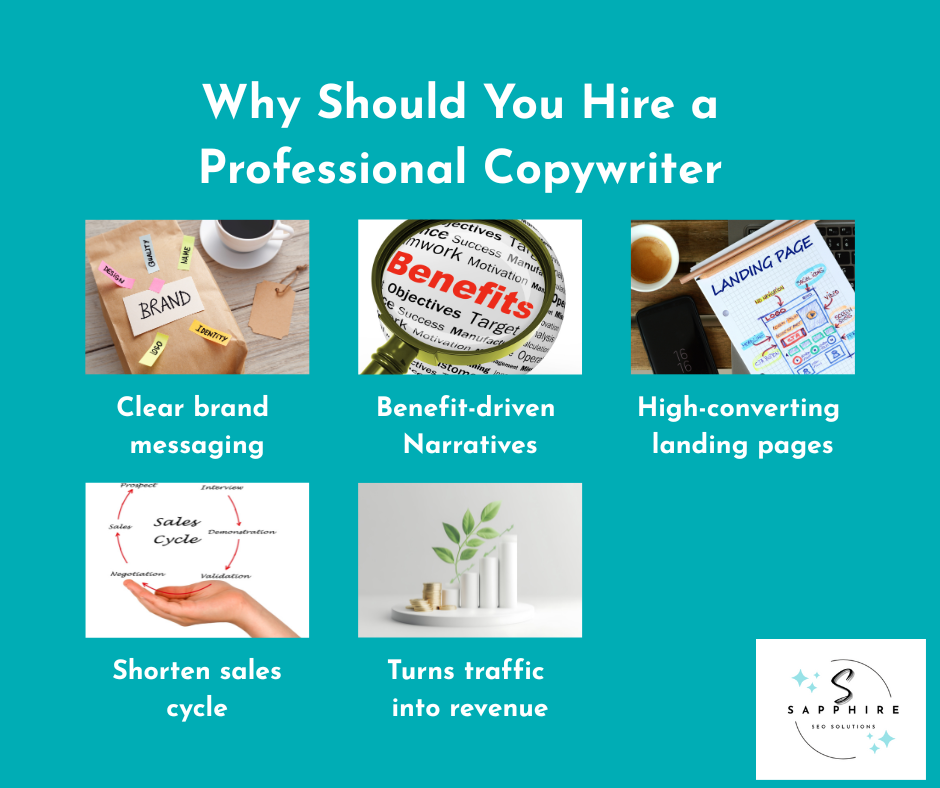
Startups cannot afford to waste that initial momentum with unclear messaging. A website copywriter establishes clear brand messaging from day one, creating a solid foundation for your value proposition.
2. E-commerce Brands
E-commerce sites with product pages depend entirely on persuasive descriptions.
Your website copywriter transforms boring feature lists into benefit-driven narratives that make people click "add to cart."
3. Companies Running Paid Campaigns
If you are spending money on ads, you need high-converting landing pages. When your ad promises a solution, your landing page copy must deliver on that exact promise to prevent conversions from tanking.
4. Enterprises Undergoing a Redesign
Enterprises redesigning websites for better engagement need more than a new UI. They need strategic copy.
A website copywriter ensures your redesign doesn't just look modern. It performs. They align every word with user intent to shorten the sales cycle for complex B2B offerings.
5. Businesses with the "Leaky Bucket" Problem
The biggest sign you need a website copywriter is having high traffic but low conversion rates. If you’re getting thousands of visitors but no sales, your traffic source isn't the problem; your copy is.
A skilled website copywriter identifies these friction points, clarifies the brand voice, and turns that "leaky" traffic into consistent revenue.
Is It Time to Hire? (A Quick Checklist)
The reality? Whether you're a small business owner or an enterprise, professional website copywriters turn words into revenue. If your current website isn't pulling its weight, that's your clearest signal to hire an expert.
What is the Average Cost of Hiring a Website Copywriter?
There are several factors that impact website copywriting costs, including the following:
1. Freelance Rates: Experience vs. Cost
Freelancers typically charge per word, per hour, or per project. According to Payscale, US-based freelance copywriters earn an average of $34.16 per hour. However, Salary.com reveals a broader spectrum:
Novice/Junior: $25 – $60 per hour.
Experienced (5+ years): $75 – $150 per hour.
Specialized Experts: $150 – $250+ per hour.
2. The "Per-Word" Trap
Typical project charges often fall into the "per-word" category, but this can be misleading. On platforms like Upwork, you can find writers for $0.01 to $0.05 per word, but this is often "filler" content. These writers rarely conduct deep research or understand your sales funnel.
For qualified and certified writers, expect to pay:
Beginner: $0.10 – $0.25 per word.
Intermediate: $0.30 – $0.50 per word.
Elite/Specialized: $1.00+ per word (e.g., medical or high-tech SaaS).
3. The Agency Advantage: Sapphire SEO Solutions
Many agencies bundle copywriting into packages with high markups to cover overhead. At Sapphire SEO Solutions, we provide a different model. Our in-house copywriters provide expert-level services starting at just $0.03 per word.
Why the difference? By maintaining a dedicated in-house team, we provide high-credentialed copy at a price point accessible to small businesses, bridging the gap between "cheap" freelancers and "overpriced" big-box agencies.
Check out the different content writing tiers we offer and how they can improve your bottom line.
4. Cost vs. ROI (Return on Investment)
The best way to view copywriting costs is through the lens of ROI. High-converting copy doesn't just "cost" money. In fact, it makes money.
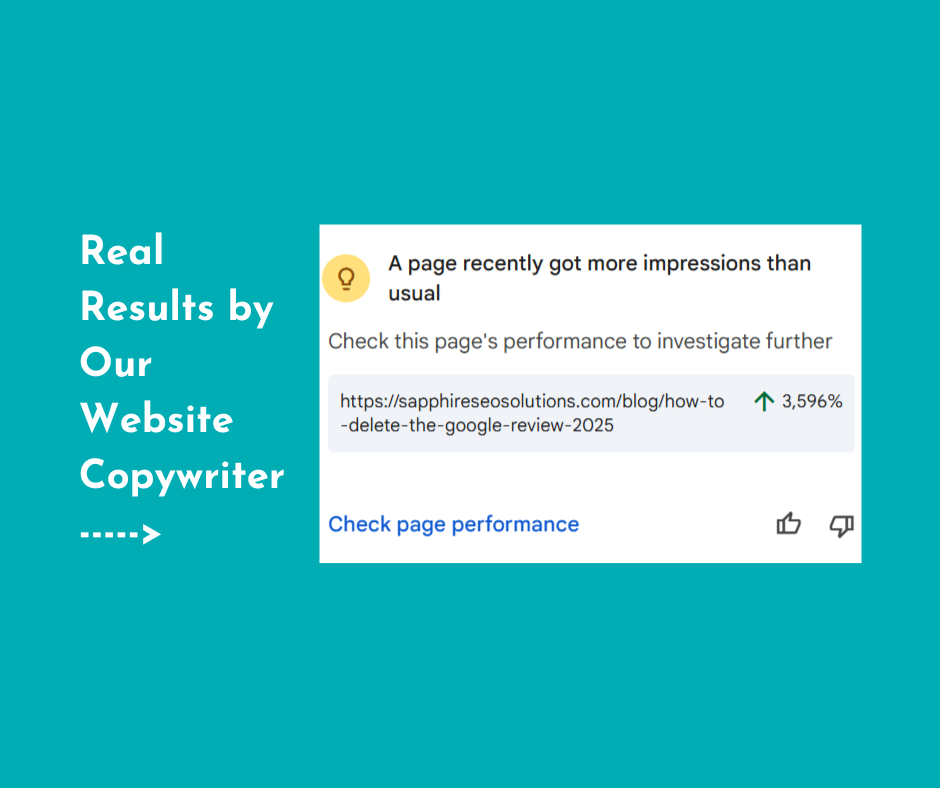
One of our writers delivered a 158% increase in organic traffic for a US-based brand in just one month. When copy improves your conversion rate from 2% to 4%, it effectively doubles your revenue from existing traffic.
5. Agency vs. Freelancer: Which is Right for You?
While freelancers offer flexibility, they often have limited capacity and require more "hand-holding." Agencies like ours offer:
Scalability: We can handle batch projects (50+ articles or a full site redesign) without missing deadlines.
Managed Quality: Every piece goes through a structured process, which includes briefing, drafting, editing, and SEO proofing.
Zero Micromanagement: Our writers understand your business goals from day one, removing the administrative headache of managing multiple solo practitioners.
| Hiring Option | Typical Rate | Best For... |
|---|---|---|
| Budget Freelancer | $0.01 - $0.05 / word | Low-stakes "filler" content. |
| Expert Freelancer | $0.50 - $1.00 / word | Niche, high-level thought leadership. |
| Traditional Agency | $1,000 - $5,000 / month | Large-scale campaigns with high overhead. |
| Sapphire SEO Solutions | From $0.03 / word | High-ROI, SEO-driven business growth. |
Read our comprehensive guide on “SEO Content Writing Agency vs. Freelancers: Which Is Best?” to learn the differences between working with a freelance writer and a content writing agency like ours.
Can AI Replace a Website Copywriter?
AI can create drafts faster than any human. But can it replace a professional website copywriter? Not even close.
While AI tools can generate drafts and assist with ideation, they lack deep strategic thinking and emotional nuance. Human-written content drives:
More organic traffic
More impressions
More clicks
AI cannot replicate a true understanding of brand voice and audience psychology. Bynder reveals that 52% of consumers reported disengaging from content they suspected was AI-generated, and 20% viewed those brands as untrustworthy.
AI copywriting essentially "remixes" words that already exist. It often misses critical conversion strategies, such as using power words or embodying specific brand values. If your copy sounds like everyone else's, your ideal clients will look elsewhere.
Skilled website copywriters leverage AI to enhance quality, not replace it. AI-generated copy edited by humans is more effective at increasing click-through rates than human writers working alone.
In sensitive situations, such as a PR crisis, the difference between "we take responsibility" and "we acknowledge our role" is massive. This cultural sensitivity and strategic timing are human assets.
AI raises the "floor" for average content, but the "ceiling" for exceptional content is still incredibly high. Professional website copywriters operate at that ceiling.
We are already bombarded with generic sales messages; AI will only increase this "sea of sameness." Copywriters who can inject personality and make words work harder will be more important than ever.
The bottom line? AI can replace a writer if you are comfortable with your brand sounding exactly like your competitors. But if you want a copy that connects emotionally, builds trust, and converts consistently, you need a human behind those words.
For an interesting read, make sure to go through our detailed guide on “Does AI Content Hurt SEO?” to learn more about AI content and its impact on your site. The guide contains insights from a digital marketing expert.
Sapphire SEO Solutions Has SEO-Certified Website Copywriters Who Can Do Wonders for Your Site!
You need website copywriters who understand more than just writing. Here’s why you should choose our writer for your website content copywriting:
Certified Expertise That Delivers
Sapphire SEO Solutions features a team of SEO-certified website copywriters. Our writers hold credentials from SEMrush, Surfer SEO, and HubSpot. These aren't just badges. They represent a deep mastery of the tools required to make your content visible in a crowded digital landscape.
A Legacy of Success Since 2007
We began as a specialized writing agency in 2007, eventually evolving into a full-service SEO powerhouse. This means we are pioneers in the industry.
With nearly two decades of experience, we’ve successfully navigated every major Google algorithm update, from Panda and Penguin to the latest Helpful Content updates. That longevity matters when you’re trusting an agency to build your brand voice and authority.
Strategic Assessment Before the First Word
Our process starts with a deep-dive assessment. We study your business and your ideal clients to create a tailored content plan that supports your specific marketing objectives.
Professional Quality at a Small Business Price Point
We believe high-quality copy should be accessible. While premium freelancers often charge $1.00 per word, Sapphire SEO Solutions offers professional, certified copy starting at just $0.03 per word. This allows small businesses to compete with larger enterprises by getting the same level of strategic optimization without the prohibitive costs.
Future-Proofing with GEO
The world of discovery is shifting. We offer both traditional SEO-optimized content and AI SEO optimized content.
According to McKinsey, 44% of users now prefer AI-powered search as their primary insight source. Our writers are trained in Generative Engine Optimization (GEO), ensuring your content is structured to be the "source of truth" for:
Traditional Google & Bing Search
AI-generated answers from ChatGPT, Gemini, and Perplexity
Partner with Sapphire SEO Solutions and Craft Content That Resonates with Your Audience
Your words are either working for your business or against it. In a digital landscape flooded with generic AI content, there is no middle ground.
Instead of generic content, you need custom content, embracing audience-centric content marketing. Audience research is super important, and this is where we come in.
Since 2007, Sapphire SEO Solutions has been helping businesses bridge the gap between "traffic" and "revenue." Whether you need a compelling homepage, persuasive landing pages, or a complete site overhaul, we provide professional expertise at a price point small businesses can afford.
Starting at just $0.03 per word, you get access to certified writers who understand conversion psychology and the latest in SEO and GEO.
Ready to start converting your site visitors? Contact us to schedule a free consultation with an expert today!
Want SEO-optimized content for your website? Check out the different content writing tiers we offer before placing an order online.

Frequently Asked Questions
What is the difference between a website copywriter and an SEO content writer?
A website copywriter focuses on persuasion and psychology to move a visitor through a sales page, while an SEO content writer prioritizes search visibility and informational value. While both roles use keywords, the copywriter’s ultimate goal is to inspire an immediate action, such as a purchase or a sign-up, whereas the content writer aims to educate the reader and build long-term authority.
Is it better to hire a freelance copywriter or a copywriting agency?
Choosing an agency is often the best choice for businesses that want a done-for-you experience where strategy, project management, and quality control are handled under one roof. Unlike a solo freelancer who may have limited capacity or varying reliability, an agency provides a scalable team of experts and a structured writing process that ensures consistent, high-quality results without requiring the client to micromanage every draft.
How do website copywriters actually help with SEO?
A professional copywriter helps your business appear in direct traffic results by structuring data for Generative Engine Optimization (GEO). They go beyond simple keyword placement by incorporating high-value elements like unique statistics, expert citations, and clear headers that allow AI platforms to easily identify and credit your brand as a primary source of truth for your target market.
Should I provide the design first or the copy first when building a website?
You should almost always prioritize copy-first design when building a new website to ensure that your message dictates the visual layout rather than being an afterthought. Starting with the copy allows you to define the user journey and value proposition clearly, preventing a situation where you have to break things in a beautiful design because the necessary persuasive text doesn't fit into pre-set aesthetic boxes.
How can I tell if website copy was written by AI or a professional human?
Professional human copy avoids the repetitive "slop" and industry jargon common in AI outputs, instead favoring "burstiness" (a natural variation in sentence length and rhythm). You can tell a human wrote your good copy if it contains unique brand personality, specific real-world examples, and emotional nuances that connect with a reader's lived experience, rather than just providing generic, predictable information.