

Best Practices for Search Engine Optimization (2026)
Learn the best practices for search engine optimization and discover how small businesses can improve rankings, increase visibility, and attract more customers. This guide explains the most effective SEO strategies for content creation, on-page optimization, off-page authority, and technical performance so you can build long-term search success.
Key Takeaways
SEO content must match user intent. Align every page with what your audience is actively searching for.
Prioritize one primary keyword per page. This helps search engines understand your topic and improves relevance.
Strong authority drives higher rankings. Earn credible backlinks and publish consistent, high-value content.
Improve site performance for faster results. Optimize speed, fix technical issues, and maintain a clean site structure.
Use data to guide SEO decisions. Track rankings, traffic, and behavior to refine your strategy effectively.
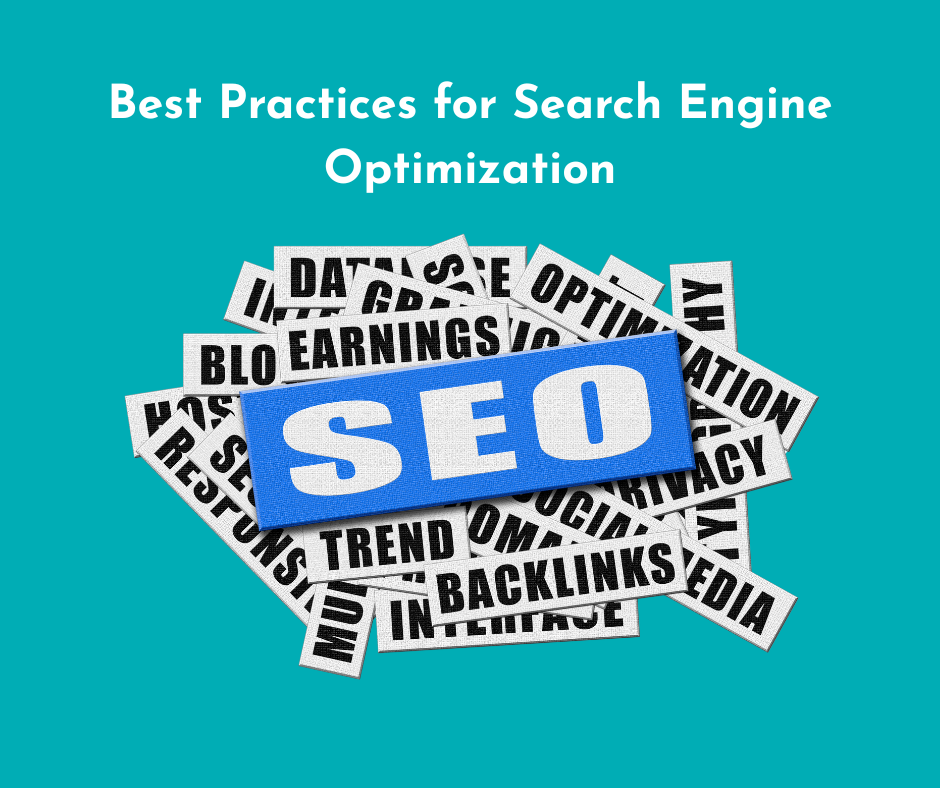
For small businesses, Search engine optimization (SEO) is a cost-effective way to grow online. Since search engines are constantly evolving, the thought of managing SEO strategies can feel overwhelming. This is where we come in.
Sapphire SEO Solutions has a team of certified SEO experts who have been helping small businesses dominate the SERPs since 2007. We understand the unique challenges small businesses face and know what it takes to help you outperform your competitors, increase visibility, and attract your ideal customers online.
In this article, we will cover the best practices for SEO content, on-page SEO, off-page SEO, and technical SEO, providing actionable tips to help your business improve search rankings and drive meaningful results.
What Are the Best Practices for SEO Content?
As content specialists who actively manage ongoing SEO strategies for dozens of small businesses every month, we’ve learned that search-focused writing only works when it directly solves user problems.
Want to know how to make content that converts for your website? Here are some of the best practices of writing SEO content:
Keyword research is super important, even today. According to Statista, over 90% of online experiences begin with a search engine, highlighting how critical keyword targeting is for visibility. But that's not all. When you do your keyword research, make sure that the content you write aligns with the user's needs, intent, and search behavior.
During keyword research, don't choose search terms that are too broad or generic. Always match relevant keywords with what your target audience is trying to search for. (Check out our guide on “Keyword Research for Construction Companies” to learn more about searching for the right terms.)
Going through the different search queries is a great way to understand the common problems business owners face. It can help you identify the right questions and patterns, allowing you to address your audience in a manner they expect you to.
Don't just create new pages for the sake of it. Only add more content to your site if you have a clear topic, targeting the right keyword intent and purpose.
Your blog posts shouldn't be targeting multiple keywords. This can confuse search engines. Only target one primary keyword and a few secondary keywords around a single core idea. (Don’t forget to read our detailed guide on “How Many SEO Keywords Should I Use?” to learn more about using keywords in your content.)
When writing content, make sure you're not just writing for humans, but also search engines, which makes structuring incredibly important.
HubSpot reports that businesses publishing SEO blogs regularly generate 55% more website visitors than those who don’t. Create content that solves the problems of your target audience instead of just writing to fill up your site or increase word count. Google loves E-E-A-T and high-quality content, and if your content doesn't provide value, the search engine may not index it. Based on our content performance studies across multiple client sites, articles that demonstrate clear expertise and specific solutions tend to achieve faster indexing and better ranking stability.
You should be writing your content to build long-term brand authority. This requires you to think like a content marketing executive. Prioritize consistency in your writing and always provide helpful information.
Always map content to the correct search terms and search intent, as this can make it easy for Google to recommend your page, allowing for better rankings over time.
If you want to publish high-quality content, do some competitor research into your competitors to help you determine what they're doing right.
Keyword stuffing is a black hat tactic that'll affect your site's SEO. Always incorporate keywords naturally, whether they are in headings, intro sentences, or different paragraphs.
Ensure that whatever you write is for your target audience. This means choosing the right language and examples that resonate with your readers.
Don't prioritize algorithms over actual users. If your content is helpful for humans, it'll most probably rank in the SERPs.
For maximum impact, work on a solid SEO strategy that aligns with your goals, whether it is building authority or aiming for more conversions. (Find out how our SEO strategist delivered a 158% growth in organic traffic in just one month.)
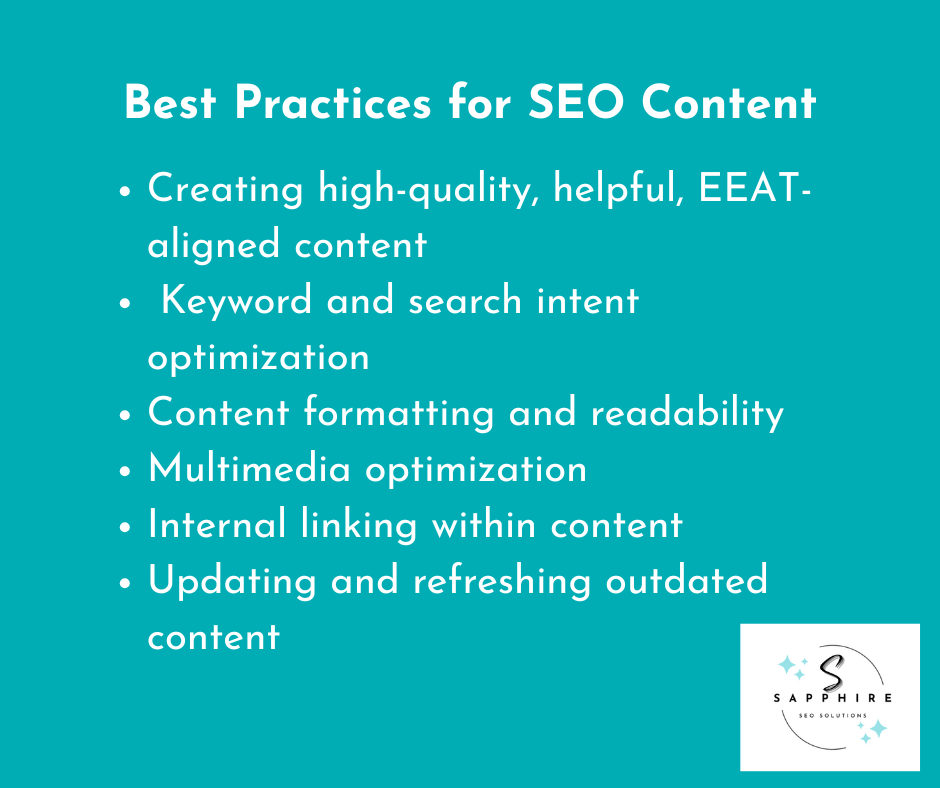
What Are the Best Practices for On-Page SEO?
Looking for help with on-page SEO? The following are the best practices that you should follow:
A clear page title that sums up the core topic and encourages a click is the best way to attract the attention of readers and search engines.
Don't forget to optimize the title tags by incorporating the primary keyword and staying within the recommended character limits.
Maintain a logical structure for your web pages, as it can help search engines and users understand the content of each page.
To avoid topic confusion, make sure to choose only one target keyword per page and build your content around it.
Search Engine Land notes that pages with optimized meta descriptions see up to 5.8% higher click-through rates than those without them. Boost clickthrough rates by crafting an engaging meta description for every page or blog you publish.
A properly formatted meta description tag is a great way to guide search engines so that they can extract the right information for search snippets.
Focus on internal links, as they can guide users and search engines toward relevant or more comprehensive content.
Every image should be uploaded with a concise image alt-text that describes the visual, making it accessible for screen readers and search engines. (To learn more about image SEO and the best practices, check out our detailed blog on “Can Adding More Pictures Increase SEO?“)
Always use descriptive alt-text and make sure to incorporate the primary keyword in at least one of the image's alt-texts.
When compressing file sizes to optimize images, don't compromise on quality. If certain formats are affecting the image quality, change the image format to another recommended one.
Structure your content and highlight key ideas with proper header tags.
Each page's title tag should convey the purpose of the page and what it aims to provide.
Don't forget to optimize the on-page title for each particular page, making it more descriptive, easy to read, and relevant to the search query.
For better navigation and authority distribution, you should consider strategically linking to other pages on your site.
Write title tags that reflect what the users might find on the page to keep bounce rates low.
Heading tags are important for dividing content into different sections, which makes it easy for users and search engines to skim or scan through.
You shouldn't just upload high-quality images, but also make sure that the pictures support the content while improving visuals.
Your image SEO strategy should include properly naming the files and using appropriate formats like WebP.
Always include the primary keyword in the first 100 words of your content to establish topical relevance. You can then sprinkle some secondary keywords across the content to support the context.
The meta title you write should be strong, descriptive, and reflect the user's intent.
Work on topic clusters by interlinking related pages to strengthen authority and relevance. We typically recommend creating clusters of 5–15 supporting articles around a core keyword, as this is the content structure that has yielded the strongest ranking improvements for our clients.
Keep page layout clean and intuitive, as it can improve how users navigate your site, leading to a better experience.
When optimizing landing pages, focus on clarity, speed, and persuasive content for better conversions.
Duplicate topics across multiple pages should be avoided, as it can confuse search engines and even lead to cannibalization and indexing issues.
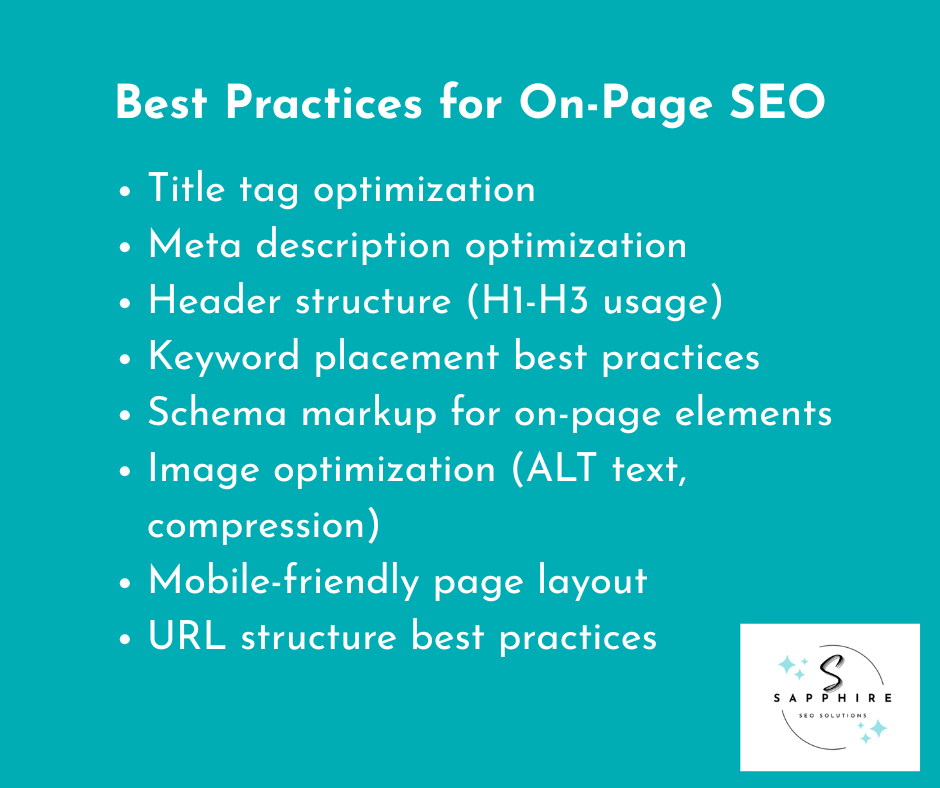
What Are the Best Practices for Off-Page SEO?
Need help with off-page SEO? Here are some tips to get you started:
Earn visibility on search engine results pages by building strong authority signals through high-value content and credible mentions.
Monitor how your content performs in search engine results to identify trends, opportunities, and gaps in competitor coverage.
Improve your presence in search results by maintaining consistent publishing, promoting your content, and earning quality backlinks.
Track performance specifically in Google search results to understand how users interact with your content and which pages gain the most attention.
Strengthen search engine rankings by attracting trustworthy, relevant links from authoritative domains.
Prioritize ethical and sustainable link building by seeking natural editorial links, not automated or manipulative schemes.
Build relationships with other sites in your industry through collaborations, interviews, or expert contributions.
Analyze competitors' sites to identify what content earns them backlinks and where your strategy can outperform theirs.
Increase your authority so your pages can rank higher for competitive and high-intent keywords.
Expand your reach by appearing in other search engines, especially if your audience uses Bing, DuckDuckGo, or Yahoo.
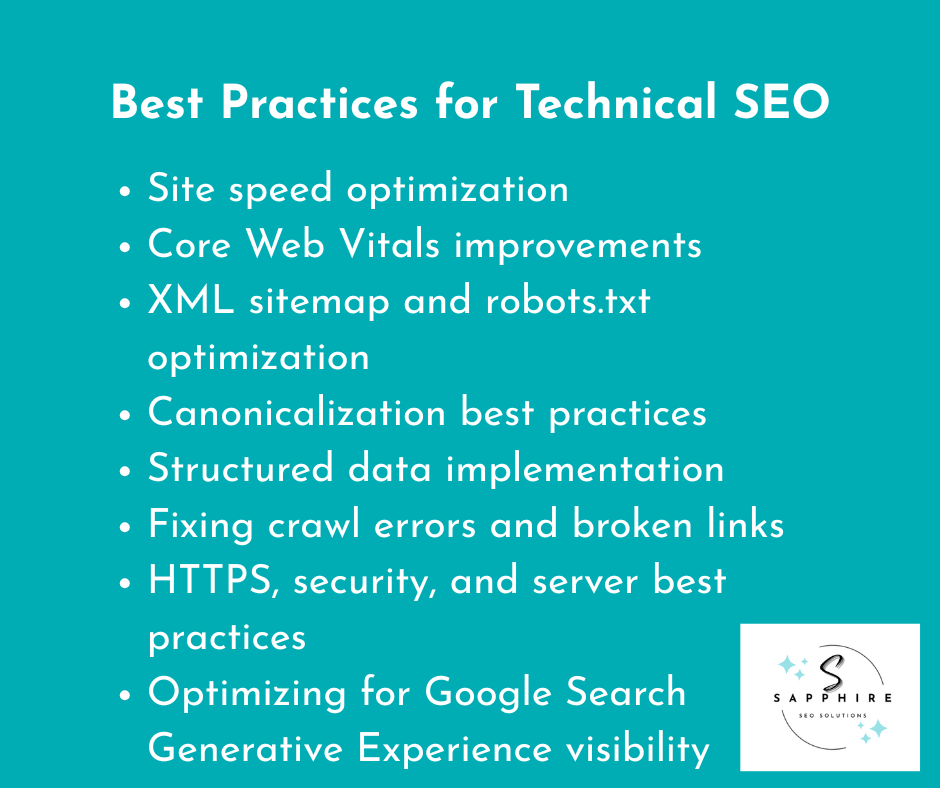
What Are the Best Practices for Technical SEO?
Technical SEO can be difficult to wrap your head around. But don't worry, we've got you covered. The following are some tips from our SEO experts:
Ensure your website is easy for search engines to crawl and index by maintaining a clean, organized site structure.
Use Google Search Console to monitor indexing issues, impressions, and page-level performance.
Regularly check Search Console for warnings or errors that may prevent pages from ranking effectively.
Track engagement and behavior with Google Analytics to understand how users interact with your most important pages.
Optimize for Google Search by following current guidelines, improving speed, and building pages that satisfy user intent.
Fix broken links quickly to prevent dead ends that harm crawlability and user experience.
Implement a proper canonical URL on pages with similar or overlapping content to avoid dilution of ranking signals.
Use a reliable content management system that supports fast performance, structured data, and responsive design.
Improve how fast your site loads by optimizing scripts, compressing files, and using efficient hosting.
Prioritize technical engine optimization by ensuring your site meets modern Core Web Vitals benchmarks.
Enhance your site’s user experience by improving navigation, layout stability, and mobile responsiveness.
Add structured data (schema markup) to help Google display rich snippets in search results and improve visibility.
Make sure Google crawls your most important pages by keeping your XML sitemap updated and your robots.txt clean.
Eliminate duplicate content that might confuse search engines about which page should rank.
Create clean, structured markup that helps search engines understand your content, context, and purpose.
Need Help Ranking Higher in Google Search Results? Contact Sapphire SEO Solutions Today!
For many website owners, SEO can feel overwhelming, especially when you’re relying on the occasional free tool that only provides surface-level insights.
These tools can be helpful for quick checks, but they don’t offer the depth, accuracy, or strategic direction needed to meaningfully improve your website’s SEO in today’s competitive landscape.
That’s where Sapphire SEO Solutions makes the difference. Our certified team brings more than a decade of experience, advanced premium SEO software, and proven data-driven strategies to every project. We don’t guess. We analyze, prioritize, and implement the optimizations that drive measurable growth.
If you’re ready to improve rankings, increase visibility, and build long-term search authority, we’re here to help. Fill out the online contact us form to schedule a free consultation with a certified SEO expert today!

Frequently Asked Questions - Best Practices for Search Engine Optimization
What exactly is SEO, and which parts should I prioritize for my small business?
Search Engine Optimization is a digital marketing technique that improves how easily people find your business online by optimizing content, site structure, speed, and credibility. A small business with limited resources should focus on local SEO, Google Business Profile, fast-loading pages, and valuable content before considering advanced technical work.
How long will it take to see results after I implement SEO best practices?
For many sites, SEO can take between 6 and 12 months to show some improvements. However, most of the progress comes after a year of consistent SEO best practices. The time it takes for SEO to work depends on many factors, including competition, domain authority, resources, and content quality.
How much does effective SEO cost, and what ROI can a small business realistically expect?
The cost of SEO can vary, depending on the scope. However, it does deliver a higher ROI than many other traditional marketing techniques, making it worth the investment. Businesses can expect to pay between $300 and $5,000 per month or even more. Fortunately, Sapphire SEO Solutions offers affordable search engine optimization services that you can rely on.
Can I manage SEO myself with free tools, or should I hire an agency or consultant?
Free tools like Google Search Console, Google Analytics, and Keyword Planners are a great way to get started with search engine optimization. But if you don't have the skills or knowledge, you're wasting precious time and resources that you can allocate to growing your business. Plus, hiring an expert can deliver consistent and faster results.
How do I choose the right SEO agency, and what red flags should I watch for?
Choosing the right agency can make or break your digital presence. An SEO agency that explains its process clearly, reports transparently, and focuses on achieving your SEO goals can do wonders for your site and business. Some red flags that you should keep an eye out for include an agency that guarantees results, offers cheap backlinks, or uses black hat tactics.
Which SEO tasks deliver the biggest impact fastest?
Some of the SEO tasks that deliver the biggest impact fastest include creating high-value pages, optimizing content for the right keywords, improving page speed, and focusing on internal linking. These can help boost rankings quickly. Small businesses can also increase their online visibility rapidly by working on local citations, setting up and optimizing their Google Business Profile, and following the best SEO tips.
How many pages and keywords should my site target, and when to publish new pages vs update existing ones?
Always target one primary keyword and a few secondary keywords per page. This ensures topic relevance and attracts the right users. Update existing content when rankings fall or information needs refreshing.
How do I measure whether SEO changes are driving real business results?
To find out whether your SEO efforts are driving business results, track organic traffic, keyword rankings, form fills, and calls. There are many tools you can use to do that, including Google Search Console and Google Analytics.
Why do rankings suddenly drop, and what should I do when they do?
Rankings can drop for several reasons, including algorithm updates, stronger competitors, technical issues, or changes in content. When you see a drop in rankings, check indexing, site errors, backlink profile, and recent updates. After that, improve content depth, speed, and relevance using refreshed seo practices instead of panicking.
What are the most common SEO mistakes small businesses make, and how can I avoid them?
Some of the most common SEO mistakes include thin content, slow sites, missing local optimization, weak keyword targeting, and ignoring technical errors. You can avoid these issues by building useful pages, fixing speed issues, earning credible links, and keeping your business website updated and crawl-friendly.