

20 Reasons Why You Need Personal Injury Attorney SEO
Personal injury attorney SEO helps law firms attract high-intent clients directly from Google and AI search results by increasing visibility, building trust, and generating consistent case leads. In a highly competitive market, firms that rank at the top capture the majority of inquiries, reduce reliance on costly ads, and achieve long-term, compounding ROI through targeted content and local search optimization.
Key Takeaways
Ranking organically ensures your firm reaches clients actively searching for legal help, often before they even consider competitors, resulting in warmer, ready-to-hire leads.
The top three search results capture over half of all clicks. Firms investing in SEO consistently convert visibility into more consultations and signed cases.
Unlike paid campaigns, SEO compounds over time. Every optimized page, blog, and backlink continues to generate traffic and leads without ongoing ad spend.
Targeting city-specific and “near me” searches ensures your firm appears where clients are searching, capturing urgent, high-value cases in your area.
Content marketing, reviews, and strategic link building position your firm as a credible authority, building client trust before the first consultation.

Every day, people who've just been in an accident, suffered a workplace injury, or dealt with medical negligence open Google and start searching for legal help. They're looking for personal injury law firms, and the ones that show up at the top of those search results are the ones winning the cases.
That's the power of personal injury attorney SEO, and it's why it can no longer be an afterthought.
Search engine optimization is the process of making your firm more visible online, specifically in the search results where your future clients are already looking. According to Search Engine Land, 63% of people seeking legal advice use a search engine to begin their research, while 37% being their search with AI tools. If your firm isn't ranking or isn't getting any mentions from LLMs, those potential clients are choosing your competitors instead.
Considered to be the most competitive, the personal injury market in the United States, according to IBISWorld, is valued at approximately $61.7 billion in 2025, with over 164,000 personal injury lawyers spread across about 60,000 law firms nationwide. Personal injury lawyers are fighting for the same clients, and if you're not investing in search engine optimization, you're leaving money on the table.
And this is where we come in. Sapphire SEO Solutions offers affordable SEO for personal injury attorneys to help boost your firm's online presence while attracting high-value cases. We work closely with lawyers to ensure that their site performs, their content delivers, and their phones are constantly ringing from prospective clients.
20 Reasons Why You Need Personal Injury Attorney SEO
Personal injury lawyers operate in one of the most competitive legal markets in the country. Potential clients use AI tools or Google to find legal help, and if you're not appearing in any of these, you're losing out.
Here are 20 reasons why your personal injury law firm needs search engine optimization:
1. Your Potential Clients Start Their Search on Google
When someone gets hurt in an accident, the first thing they do is pull out their phone and search. In 2025, 86.7% of people, according to Attorney at Work, said they would use Google to find a lawyer, making it the dominant starting point for anyone in need of legal help.
That means search engines aren't just one of many marketing channels. They're where your clients are. And the firms showing up at the top of those search results are the ones getting the calls.
Here's what this means for your firm:
Potential clients aren't waiting. FindLaw reveals that 56% of legal consumers acted within a week or sooner of realizing they had a legal need. They search for an attorney online, they decide which law firm to partner with, and then they call.
Answering Legal says that 62% of legal searches are non-branded, meaning prospective clients are searching for "personal injury lawyer near me," not your firm's name. You need to rank for what they're actually typing.
Nearly 75% of users, according to Search Engine Land, never scroll past the first page of search results. If you're not on page one, you're essentially invisible.
Search is the first touchpoint. If you're not there, you don't exist to the people who need you most. To dominate search rankings, go through our comprehensive guide on “How to Choose the Best Lawyer SEO Company“ to help you find the best law firm SEO company for your practice.
2. Personal Injury Keywords Are Among the Most Competitive (and Valuable)
Cost per click (CPCs) in the personal injury space typically range from $70 to $250, making it one of the most expensive advertising spends in any industry. And in major markets, it gets worse.
Keywords like "car accident lawyer" can exceed $300 per click in competitive cities like Los Angeles or Chicago.
And it's not just the clicks. A single lead can cost $300 to $1,000, with full client acquisition often running $2,500 to $3,000. For firms relying solely on paid ads, those costs add up fast.
Search engine marketing through organic SEO becomes a profit protection strategy because:
A car accident attorney ranking organically doesn't pay per click
Every lead from organic search costs you nothing extra
SEO compounds over time, while ad spend disappears the moment you stop paying
The firms that invest in SEO aren't just getting free traffic. They're protecting their margins in one of the most expensive digital advertising environments in the world.
Personal injury attorney SEO is incredibly competitive. Check out our detailed guide on “How Competitive Is SEO for Personal Injury Attorneys?” to learn why it’s getting more competitive and the tactics you can use to stay ahead of your competitors.

3. SEO Drives High-Intent, Ready-to-Hire Leads
There are random browsers, and then there are people who actually need help. Someone searching "personal injury lawyer after slip and fall accident" needs help now. That's the difference between random traffic and personal injury leads generated through SEO.
Here's why that matters:
Qualified leads from organic search come pre-warmed. They've already decided they need an attorney. They're just choosing which one.
Long-tail keywords, through keyword research, like "wrongful death attorney in Houston" or "motorcycle accident lawyer near me," attract more qualified leads with specific, urgent needs and less competition.
In the legal sector, organic search delivers a 4.2% conversion rate, outperforming paid search at 1.8%. More intent means better results.
Potential personal injury clients who find you through organic search have done their research, read your content, and already have a level of trust before they ever pick up the phone. That's a warmer lead than almost any other channel can deliver.
SEO doesn't just bring more traffic. It brings qualified traffic.

4. Ranking at the Top Means Winning the Majority of Cases
In personal injury law, ranking position directly determines how many potential personal injury clients find you versus your competitors. And the data backs this fact up.
The top three organic search results, according to Backlinko, collectively capture 54.4% of all clicks. That means if you're not in the top three, the majority of personal injury leads are going to someone else before they even see your name.
Here's the interesting bit. Moving from position 10 to 9 will get you around 11% more clicks, while on the other hand, moving from position 2 to 1 will get you 74.5% more clicks.
For more qualified leads, this is a winner-takes-most market. The firm at the top gets the call. The firm on page two doesn't.
5. SEO Builds Long-Term, Compounding ROI
Paid ads stop the moment you stop paying. SEO efforts don't work that way. Every piece of content you publish, every backlink you earn, and every page you optimize keeps working for you long after the initial investment.
Think of it this way. With Google Ads, you're renting visibility. With SEO, you're buying it. And over time, that ownership compounds.
The numbers back this up:
DemandSage reveals that businesses see an average ROI of $22 for every $1 spent on SEO, compared to just $2 for every $1 spent on paid ads.
SEO is the only marketing channel with both compounding performance and decreasing marginal cost over time. The longer you invest, the cheaper each lead becomes.
SEO success doesn't happen overnight. It typically takes 6 to 12 months to gain traction. But once it does, SEO performance grows on its own. Rankings improve, traffic increases, and the cost per acquired case drops significantly over time.
Read our detailed guide on “SEO vs PPC: Which Is Better for Long-Term Growth?“ to learn the difference between PPC and SEO, and how SEO is a better option for long-term growth for law firms.

6. It Positions Your Firm as an Authority in Personal Injury Law
People hire attorneys they trust. And in personal injury law, trust is built long before the first phone call. It's built through the content your firm publishes online.
When a potential client searches "what to do after a car accident" or "how long do I have to file a personal injury claim," they're looking for answers. If your firm's website content provides those answers, you're establishing yourself as the go-to authority in your market.
Here are some facts that highlight the importance of blogs for personal injury law firms:
Law firms with blogs, according to HubSpot, get 97% more backlinks. In fact, they have 434% more indexed pages than those without blogs.
DemandSage says that 80% of law firms use blogs for client development, and one-third of marketing professionals consider content marketing their top marketing investment.
Firms that produced blogs, whitepapers, and educational content saw greater client engagement and stronger relationships.
Legal services are a trust-driven industry. Clients are putting their case, their recovery, and sometimes their livelihood in your hands. Content marketing through SEO gives you the platform to demonstrate that you know what you're doing before they ever walk through your door.
Authority builds credibility. Credibility wins cases.

SEO Builds Trust Before the First Consultation
By the time a potential client picks up the phone to call your firm, they've already made a judgment call about you. Your ranking, your reviews, and your online presence have all played a role in that decision. That's why digital marketing through SEO isn't just about traffic. It's about trust.
98% of potential clients, according to Moz, read online reviews before hiring an attorney.
FindLaw states that 82% of people who contacted an attorney online used reviews as part of their decision, and nearly 40% said reviews were their primary source of information. Andava Digital
BrightLocal reveals that 47% of consumers won't hire a firm with fewer than 20 reviews. Your quantity of reviews and quality of star rating are gatekeeping factors.
Ranking high on Google signals legitimacy to your target audience before they've read a single word about your firm. It's a form of social proof. People assume that if Google is putting you at the top, you must be doing something right.
Positive reviews amplify that trust. SEO helps surface those reviews, positions your firm in front of the right audience, and ensures that when people are researching their options, they keep seeing your name. Repeated visibility builds familiarity.
Familiarity builds confidence. And confidence turns into a consultation.

8. It Generates Consistent, 24/7 Case Opportunities
Your office closes at 5 PM. Your SEO doesn't. That's one of the biggest advantages of organic search for personal injury clients. Accidents happen at midnight. People search for legal representation on weekends. Medical emergencies don't follow business hours.
A lot of potential client inquiries arrive outside standard 9-5 business hours. If your firm only relies on active marketing like paid ads or outreach, you're missing out on many people trying to reach you.
Organic search results change that entirely because:
Your SEO content ranks and generates leads while you sleep
A blog post about medical malpractice written today can bring in clients two years from now
Organic search generates 66% of call conversions in the legal sector, more than any other channel
Unlike paid ads, there's no off switch. No budget runs out at 3 AM
Once established, strong organic rankings maintain consistent traffic flow without ongoing advertising spend. That's not just convenient. It's a fundamentally more sustainable way to grow your firm.
9. Local SEO Helps You Dominate Your Geographic Market
Personal injury law is inherently local. Your clients are in your city, your county, your neighborhood. And when they need help, they're searching with that in mind.
"Personal injury lawyer near me." "Car accident attorney in [city]." These are the searches that win you cases, and local SEO is how you show up for them.
Here are some statistics to highlight the importance of local SEO for personal injury attorneys:
46% of all Google searches, according to BrightLocal, have local intent, meaning nearly half of all searches are people looking for something nearby
44% of local searchers click on local pack results, compared to just 29% for organic results below it
Businesses in the Google 3-pack, according to SOCi, receive 93% more actions, including calls, website clicks, and direction requests, than businesses ranked in positions 4 through 10
The Google Maps box at the top of local search results is where your potential clients are clicking first. And showing up there isn't an accident. It requires a deliberate local SEO strategy, including an optimized Google Business Profile, location-specific pages, consistent business information across directories, and a steady stream of reviews.
Local searches are high-intent by nature. Someone searching for a personal injury attorney in your city isn't browsing. They need help now, and if you show up in those results, you're going to be first in line.
Don’t forget to read through our comprehensive guide on “Local SEO for Personal Injury Attorneys” to learn more about the tactics to use to dominate local searches.
10. SEO Improves Website User Experience (UX)
Good SEO and good user experience go hand in hand. Google rewards websites that are fast, easy to navigate, and mobile-friendly with higher rankings. So when an SEO company improves your website structure and website optimization, they're not just helping you rank. They're making sure the people who land on your site actually stay.
Here are a few ways technical SEO improves user experience directly:
Faster load speeds reduce bounce rates. As page load time increases from 1 to 10 seconds, the probability of a bounce increases by 123%.
Mobile optimization captures on-the-go users. 53% of mobile visitors will leave a page if it takes more than 3 seconds to load, and most personal injury searches happen on mobile right after an incident.
Better UX leads to more consultations. A clean, fast, easy-to-navigate website keeps visitors engaged long enough to read your content and click your contact form.
A frustrating website experience sends potential clients straight to your competitor. On the other hand, a smooth one turns a visitor into a consultation. Technical SEO makes sure your website delivers the latter every time.

11. It Enhances Conversion Rates (Not Just Traffic)
Getting people to your law firm's website is only half the battle. Traffic without conversion is just noise. That's where on-page optimization comes in. It ensures your website doesn't just attract visitors. It turns them into consultations.
Here's what the data shows:
Pages with clear headlines and subheadings convert greater than those without.
Adding client testimonials to landing pages, according to FeedbackRobot, increases conversions by 34%.
Personalized CTAs, according to HubSpot, perform 202% better than generic ones. "Call now for a free consultation" beats "Contact us" every time.
Using relevant keywords throughout your pages also plays a direct role in conversion. When a visitor searches "slip and fall attorney in Miami" and lands on a page that speaks directly to that need, they're far more likely to stay, read, and reach out. Mismatched content sends them right back to Google.
On-page optimization (on-page SEO) aligns what people are searching for with what they find on your site. That alignment is what turns a visit into a signed case. More traffic is great. More clients from the same traffic is better.
12. SEO Helps You Capture Niche and Long-Tail Opportunities
Everyone wants to rank for "personal injury lawyer." It's competitive, expensive, and dominated by the biggest firms in every market. But that's not where the best cases come from anyway. The real opportunity lies in specificity.
Long-tail keywords are longer, more specific search phrases like "drunk driving accident attorney in Phoenix" or "construction site injury lawyer in Brooklyn." They get fewer searches, but the people searching them know exactly what they need. And they're ready to act.
Here are some eye-opening statistics for long-tail keywords:
Long-tail keywords, according to Answer Socrates, account for roughly 70% of all search traffic, yet most firms are still chasing the same competitive head terms.
Increv reveals that long-tail keywords convert at 2.5x the rate of generic search terms because the intent behind them is far more specific and urgent.
The average conversion rate for long-tail keywords, according to Embryo, is 36%, compared to just 2.35% for short-tail keywords.
Good keyword research uncovers these high-value opportunities hiding in plain sight. It's what allows a smaller firm to compete on search engine results pages without going head-to-head with firms spending five figures a month on SEO.
Better keyword rankings for niche terms often deliver better cases, too. Someone searching "wrongful death attorney after nursing home negligence" is a high-value, urgent case. And with the right SEO strategy, your firm is the one they find.
13. It Strengthens Your Competitive Advantage
Your competitors are already investing in personal injury SEO heavily. The National Law Review states a study that shows that almost 80% of law firms rate search engine optimization as their most effective method for attracting clients. And the average law firm spends $120,000 to $150,000 annually on SEO alone. This has become a standard practice among the firms winning the most cases.
Legal SEO is a zero-sum game. Every client your competitor captures through search engine results is a client you didn't get. And every gap in your SEO strategy is an open door for them to walk through.
The good news? Gaps can be closed. But they require action. Here's what you need to know:
High-growth injury law firms conduct SEO and keyword research as a core business function, not an afterthought, and they outgrow competitors by a factor of five.
Nearly 97% of firms using paid ads alone struggle to achieve consistent ROI due to rising competition, while firms investing in organic SEO build sustainable, compounding visibility.
Staying visible in legal SEO isn't a one-time project. It requires ongoing optimization as Google's algorithm evolves and competitors continue investing.
The firms dominating your market invested in SEO early and kept going. The question isn't whether personal injury SEO is worth it. It's whether you can afford to let your competitors keep outranking you.
14. SEO Amplifies Your Brand Visibility Across Channels
SEO doesn't just help you rank on Google. Done right, it extends your firm's presence across the entire web. Through strategic link building, your name starts appearing in places your competitors aren't, and that kind of multi-channel visibility is hard to buy.
Here's how it works in practice:
Getting featured in local news outlets and legal publications puts your firm in front of wider audiences while earning powerful backlinks
Guest posts on reputable legal blogs drive referral traffic and strengthen your domain authority
Listings in legal directories like Avvo and FindLaw create additional touchpoints where potential clients can find you
Websites with backlinks from local directories and community organizations see a massive increase in visibility within local search results. And guest posting on relevant legal publications can also boost referral traffic and brand visibility.
Search rankings benefit, too. When reputable sites link to yours, it acts as a public endorsement, strengthening your authority and helping you rank higher for competitive legal searches.
Think of link building as expanding your digital footprint. Every mention, every backlink, and every directory listing is another path leading potential clients straight to your firm. The more paths there are, the harder you are to ignore.

15. It Supports Reputation Management and Reviews
Your Google Business Profile is often the first impression a potential client gets of your firm. And what they see there, specifically your reviews, can determine whether they call you or move on.
Reviews are a direct quality signal to Google. They can significantly affect your rankings in Google Maps, where potential clients are searching for legal services in their area. More reviews, better rankings. Better rankings, more clients.
Here's what the data tells us:
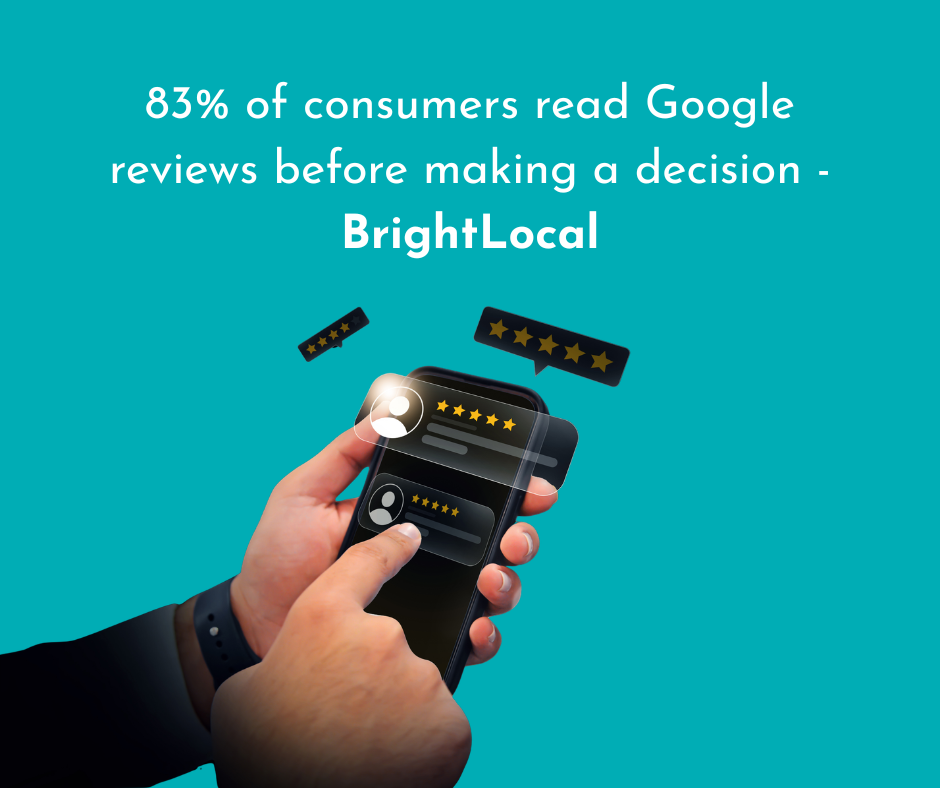
83% of consumers, according to BrightLocal, primarily read reviews on Google before making a decision.
Listings with higher numbers of reviews consistently rank higher in local search, with review quantity and recency being among the most important local ranking factors.
Every 10 new Google reviews, according to SOCi, results in a 2.8% increase in conversion rates.
A good SEO strategy includes actively managing your Google search results presence, which means encouraging satisfied clients to leave reviews, responding to feedback professionally, and ensuring your profile is complete and up to date. Reputation and rankings go hand in hand.
Learn more about the importance of reviews for local SEO by reading our comprehensive guide on “The Role of Online Reviews in Local SEO Rankings.”
16. SEO Helps You Compete Against Large Firms and Aggregators
Big law firms have big budgets. They can spend tens of thousands of dollars a month on paid ads and still not blink. For smaller firms, competing on ad spend alone is a losing battle. SEO levels the playing field.
Google's recent algorithm updates have actually favored smaller, niche-specific firms over large generic websites, with one small personal injury firm in Austin jumping from page 3 to page 1 statewide after focusing on quality, localized content. You don't need a massive budget. You need the right strategy.
Here's why personal injury lawyers can win against larger competitors through SEO:
Niche content targeting specific case types outperforms generic firm pages
Local SEO gives smaller firms geographic dominance that bigger firms can't always replicate
High-quality, authoritative content now outranks sheer domain size in Google's eyes
The best personal injury lawyer in a search result isn't always the biggest firm. It's the most optimized one.
Strategic SEO lets you punch well above your weight class. And in a market dominated by aggregators and large firms, that matters.

17. It Aligns with Modern Client Behavior and Expectations
The way people find and hire attorneys has fundamentally changed. After a car accident or a personal injury claim, people search immediately. They research thoroughly, and they make decisions fast.
The firms that thrive are not those with the biggest advertising budgets, but the ones that understand how modern clients behave and how technology influences search.
What modern personal injury clients expect:
Instant answers. They want to understand their rights before they ever speak to a lawyer. If your content answers their questions, you earn their trust first.
Educational content. Content that directly answers questions like "What should I do right after a car accident?" aligns with how real clients search and boosts both visibility and engagement.
Digital-first research. Clients are evaluating your firm online long before they pick up the phone. Your website, your content, and your reviews are all part of that evaluation.
Firms that align their SEO strategy with actual client behavior don't just rank higher. They convert better.
18. SEO Efforts Enable Data-Driven Marketing Decisions
One of the biggest advantages of SEO over traditional marketing is visibility into what's actually working. With tools like Google Analytics and Google Search Console, you're not guessing. You're making decisions based on real data.
By unifying website, ad, and intake data in one system, these tools give law firms a 360-degree view of marketing performance, what's working, what's not, and how to get better ROI from every channel.
Here's what that looks like in practice:
Google Search Console shows which keywords are driving traffic and which pages are underperforming
Google Analytics tracks user behavior, bounce rates, and which pages lead to consultation requests
Together, they help you gain valuable insights into where your best cases are actually coming from
You can identify high-converting pages, double down on what works, and cut what doesn't
The data proves that investing in high-intent, conversion-optimized content delivers a higher ROI than churning out generic posts, even when raw traffic numbers look similar.
Valuable insights from SEO data turn your marketing from a cost center into a measurable growth engine.
19. It Future-Proofs Your Law Firm Against Industry Changes
The legal marketing landscape is shifting fast. Ad costs continue to rise, and with Google's AI-driven ad systems making keyword auctions more competitive and less predictable, cost-per-click keeps climbing higher. Firms relying solely on paid ads are facing a shrinking return on an expanding spend.
SEO is the hedge against that trend. But it's also evolving. To maximize visibility in today's environment, law firms must adopt strategies that ensure their firm appears not only in standard search results but also in the AI-generated answers that are becoming central to how users find information.
The firms investing in essential SEO strategies now are building an advantage that compounds because:
Strong SEO practices rooted in authority, trust, and quality content are exactly what Google's algorithm rewards, whether in traditional search or AI-generated results
SEO remains the cornerstone of successful law firm marketing, even as AI continues to shape the search landscape.
Early investment in SEO creates rankings, authority, and content assets that are extremely difficult for late movers to replicate quickly
The firms that start now build a moat. The firms that wait will find it far more expensive to catch up.
To learn more about the costs involved in running SEO campaigns, don’t forget to read our detailed guide on “How Much Does SEO for Personal Injury Attorneys Cost.”
20. Search Engine Optimization Directly Impacts Revenue Growth for Personal Injury Law Firms
At the end of the day, everything comes back to revenue. More visibility means more traffic. More traffic means more leads. More leads mean more signed cases. That's the straightforward math behind why search engine optimization is one of the highest-ROI investments a personal injury law firm can make.
An effective SEO strategy doesn't require you to outspend your competition. It requires you to outsmart them. For a personal injury law firm operating in one of the most competitive legal markets in the country, that distinction is everything.

Partner with Sapphire SEO Solutions for Results-Driven Personal Injury Attorney SEO!
Personal injury lawyer SEO is the difference between a full caseload and watching potential clients hire your competitors. From dominating local search to building long-term authority, every element of a strong SEO strategy feeds directly into your firm's growth.
At Sapphire SEO Solutions, we specialize in exactly this. As a dedicated SEO agency for personal injury firms, we combine proven local SEO strategies, targeted content, and technical expertise to put your firm in front of the clients who need you most. Our local SEO tactics are built specifically for the legal market, so you're not getting a generic approach. You're getting a strategy designed to win cases.
Your competitors are already investing. The question is whether you'll let them keep outranking you. Contact us today to schedule a free consultation with an expert, and let's build an SEO strategy that turns search rankings into signed cases.
Ready to order SEO-optimized content for your law firm? Check out the different content writing tiers we offer before placing an online order.

Frequently Asked Questions - Personal Injury Attorney SEO
What exactly does “personal injury attorney SEO” involve for law firms?
Personal injury attorney SEO is the process of optimizing a law firm’s website and online presence to rank higher in search engines like Google and AI-powered platforms. It includes keyword research, on-page optimization, content creation, backlink building, local SEO, and reputation management. The goal is to attract high-intent clients searching for legal help, increasing visibility, leads, and revenue.
How long does it typically take for SEO to start generating leads for personal injury lawyers?
SEO for personal injury lawyers usually takes 6 to 12 months to show significant results. Early improvements, like faster page speeds and optimized content, may generate small traffic increases within a few weeks, but consistent lead generation grows as search rankings improve, and authority builds over time.
How much does personal injury attorney SEO cost, and is it worth the investment?
The cost of personal injury attorney SEO varies, typically $2,000 to $10,000 per month, depending on competition and services. It is worth the investment because organic SEO leads are high-intent, free of per-click costs, and compound over time, delivering long-term ROI that often outperforms paid advertising.
Can personal injury law firms do SEO themselves, or should they hire experts?
Law firms can perform some SEO tasks, like publishing blogs and optimizing pages, but hiring experts is recommended for maximum results. Professional SEO agencies provide technical optimization, strategic keyword targeting, link building, and data-driven adjustments that small teams often cannot implement efficiently.
What are the most important SEO strategies for personal injury lawyers to rank locally?
Key local SEO strategies include optimizing the Google Business Profile, creating city-specific landing pages, generating and managing client reviews, building local backlinks, and ensuring consistent name, address, and phone information across directories. Combined, these strategies help personal injury lawyers dominate local search results and attract urgent, high-value cases.