

How Landscapers Can Rank in Multiple Cities
Your crews are booked solid at home. So the next move seems obvious: start showing up in the next city over, then the one after that.
Not quite that simple, though. Most landscaping companies trying to figure out how landscapers can rank in multiple cities make the same mistake. They slap a new city name onto an existing page and wait for the phone to ring. That doesn't work anymore. Search engine optimization has changed, and Google has gotten a lot better at telling a real, established landscaping business apart from a page built just to grab traffic.
Sapphire SEO Solutions has been working with landscapers since 2007, helping them rank across multiple cities and get more customers. We have certified SEO experts who follow best practices to get your site ranking the right way!
This guide covers how to expand organically, build real credibility in a new city, and avoid the mistakes that trip up landscaping services trying to grow past their hometown.
Key Takeaways
Ranking in multiple cities is achievable, but only with real proof that you serve each area.
Expanding requires building local relevance city by city, not just adding more pages.
Google and AI search now evaluate reviews, projects, and reputation, not just keywords.
Launch a few cities first, collect reviews, then expand gradually instead of all at once.
Quality city pages built on genuine experience always outperform a large stack of thin ones.
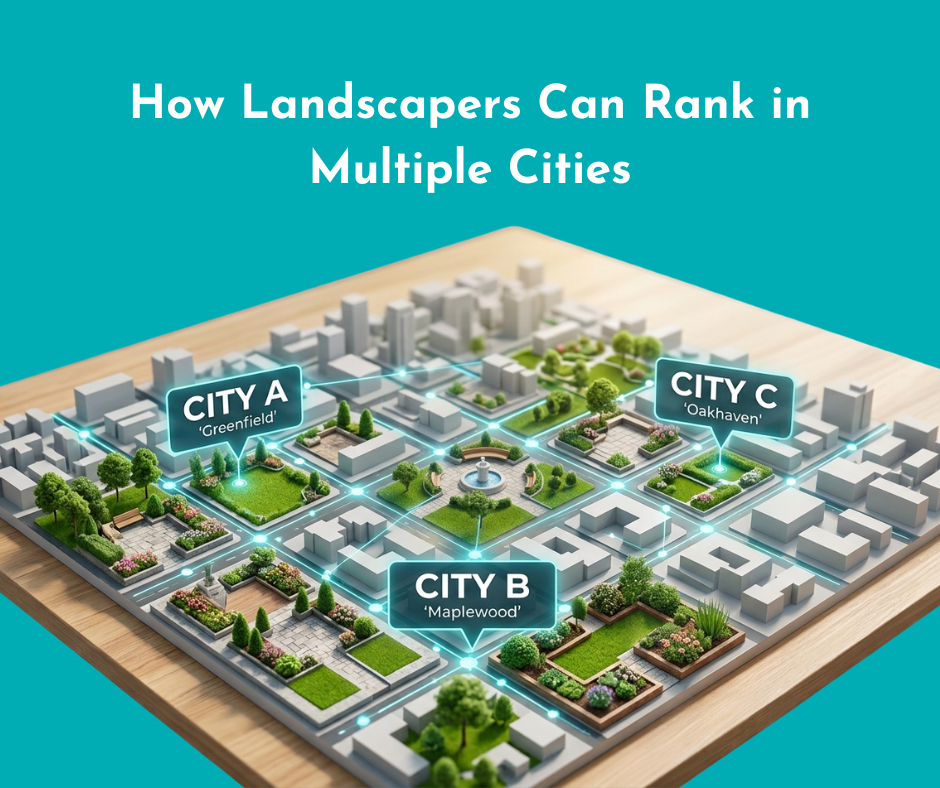
Why Ranking in Multiple Cities Is More Challenging Than Most Landscapers Expect
Landscaping isn't a business that operates out of a storefront. You're a service area business. Crews and equipment travel to the customer, not the other way around. That one fact changes everything about how local SEO works for you.
Here's the thing about search engines: they favor the business closest to the person doing the searching. Type "landscaping company near me" and Google leans toward whoever's a few miles away, not whoever's got the nicest website three towns over. Distance matters. So does how much competition already exists in that city. A town with two established local businesses is a different fight than a city with twenty.
And building visibility somewhere new takes time. There's no shortcut that skips past that.
This is why organic search rankings in a new city rarely show up just because you added another page to your site. Showing up in local search results means Google needs a reason to believe you actually work there, not just that you'd like to. That's a separate question from how you show up on the map itself, which is a topic covered in Google Maps SEO for Landscapers.
Choose the Right Cities Before Creating New Pages
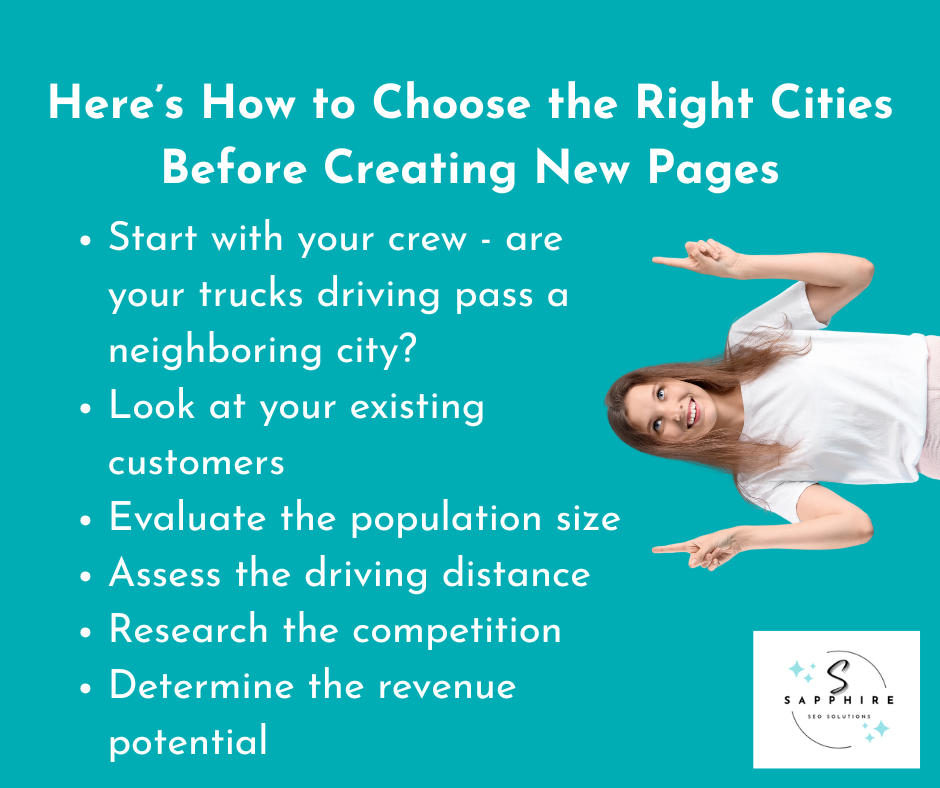
Before you build a single new page, figure out which cities actually deserve one. This is where a lot of landscaping SEO strategy falls apart. Businesses pick cities because they sound good, not because the numbers back it up.
Start with where your crews already go. Do you have trucks driving past a neighboring city every week anyway? That's a strong sign.
Look at your existing customers too, especially the ones who call back every season for recurring jobs. Then weigh that against the harder numbers:
Population size
Realistic driving distance
How much competition is already there
What the revenue potential actually looks like once you factor in gas and labor
Search demand matters as well. A city full of people searching for landscapers is worth more than one where nobody's looking. That's where keyword research and local keywords come in, figuring out what your local market is actually typing into Google before you build a page for it.
Five cities picked carefully will get you further than thirty picked at random. Chasing target keywords across every small town nearby spreads your search traffic thin and tanks your keyword rankings everywhere at once.
Build Local Relevance Before Expecting to Rank
Here's what Google actually wants to see: proof. Not a page that mentions a city name a dozen times, but real evidence that your crews have worked there, know the area, and understand what homeowners in that specific town are dealing with.
That proof comes in a few forms. Local projects you've completed in that city. Testimonials from customers who live there. A Google review that happens to mention the neighborhood by name carries more weight than a generic five-star rating ever will. Read our detailed guide on “The Role of Online Reviews in Local SEO Ranking” for a better understanding.
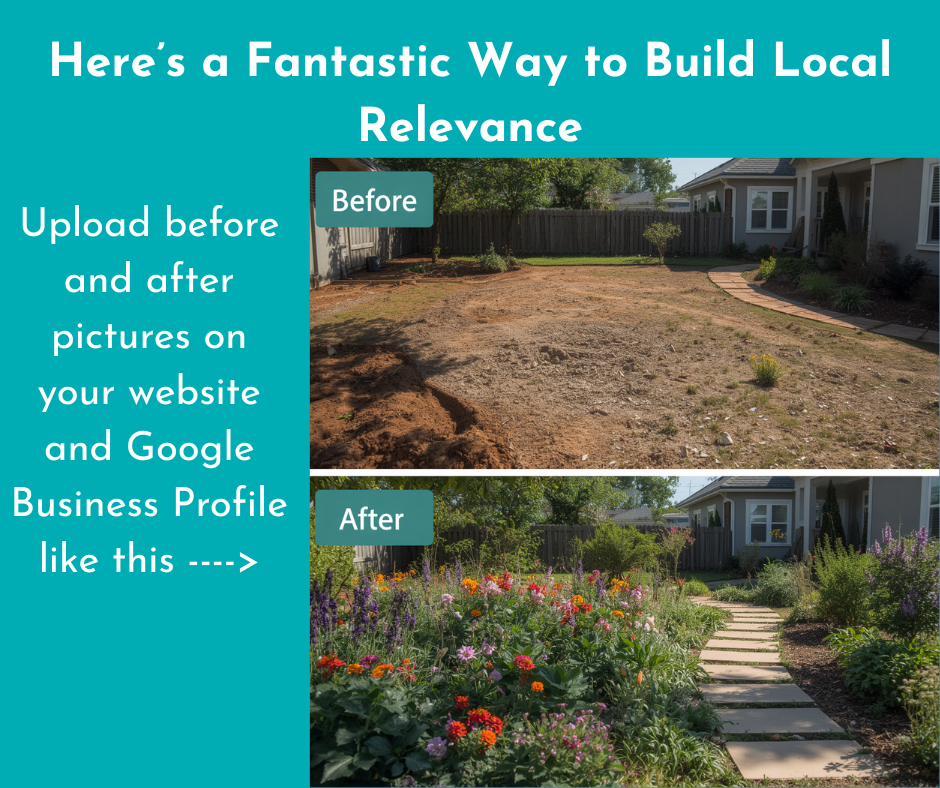
Before and after photos from actual jobs in that town, not stock images pulled off the internet, do a lot of the heavy lifting here. A page with a real before-and-after gallery from a specific city tells Google, and the homeowner reading it, that you've genuinely worked there.
Collecting that proof takes effort. Collecting customer reviews shouldn't be an afterthought after a job wraps up. Ask for one while the work is still fresh in the customer's mind, and ask if they'd mention the city or neighborhood if they're comfortable doing so.
Beyond photos and reviews, think about what actually matters to someone in that city. A few ideas worth working into the page include:
Localized FAQs that answer questions specific to that area
Neighborhoods mentioned naturally, not stuffed in for the sake of it
Landscaping challenges common to that city, like heavy clay soil or seasonal flooding
Local climate considerations that affect planting schedules or grass types
Irrigation needs based on rainfall patterns in that area
HOA considerations, since plenty of communities have rules about what's allowed in a front yard
Native plants that actually thrive in that region
Drainage problems tied to that city's soil or terrain
Even something as small as referencing nearby garden centers or local events signals that you're paying attention to that specific place, not copying and pasting the same page with a new city name swapped in.
None of this replaces genuinely useful, locally relevant content. The goal isn't hitting a city name 30 times on a page. It's demonstrating that you understand the place well enough to attract homeowners searching for a landscaper who actually knows their yard, not just anyone with a truck.
Getting that content in front of the right person starts with understanding how homeowners search for landscaping services in the first place.
Create Location Pages That Serve Real Customers
Not every city on your list needs its own page. Location pages make sense when you genuinely serve that area.
Here's the rule worth keeping in mind: one city page per real service area, and that page should answer the actual questions a customer in that location has. What do lawns need there? What's the going rate for a typical job? What's the process for getting a quote? A page that does that is worth having. A page that exists just to say "we work here too" isn't.
Two mistakes come up constantly when businesses create dedicated service pages for new cities.
The first is duplicate content: dozens of pages that are basically identical, with the city name swapped out.
The second is what Google calls doorway pages: thin pages built to catch a search, then push the visitor somewhere else entirely. Google's spam policies specifically call out both practices, and city swapping like this is exactly the kind of thing they're built to catch.
None of this means service pages are a bad idea. It means page count isn't the goal. Ten location-specific landing pages that genuinely help someone are worth more than fifty that don't.
Can You Rank in Cities Where You Don't Have an Office?
Yes. And this is one of the more misunderstood parts of expanding into new cities.
Landscaping is a service-area business, the same as real estate agents, plumbers, or mobile mechanics. None of them need a storefront for customers to walk into. Google actually built its systems around this. Through Google Business Profile, you can list a service area instead of a physical address and still show up on Google Maps and in local search.
Honesty matters here, though. Some businesses try to fake their way into more cities. They rent a virtual office they never set foot in. They create a Google Business Profile for an address that isn't real. Sometimes they build a fake location entirely, just to look like they have a presence somewhere they don't.
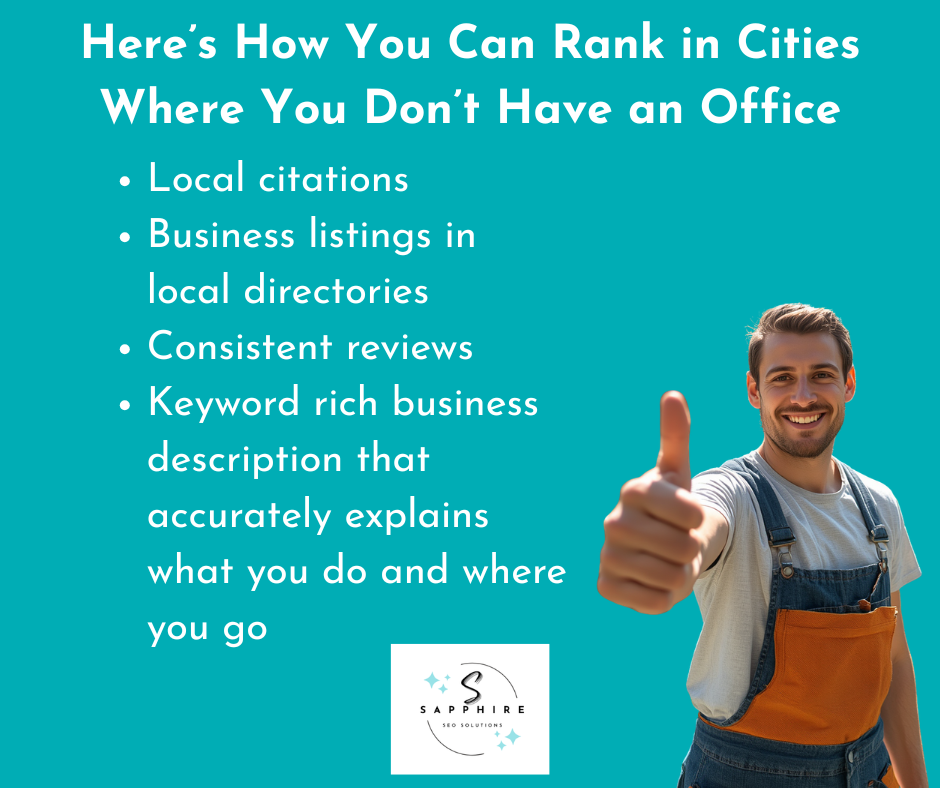
Don't do any of that. Google's gotten good at spotting it, and getting caught can mean a suspended profile instead of a ranking boost. What Google's actually looking for is genuine presence, not manufactured signals. That shows up through:
Local citations
Business listings in local directories
Consistent reviews
Keyword-rich business description that accurately explains what you do and where you go
For the full setup on getting your profile right, read our guide on “Google Business Profile Optimization for Landscapers.” And for how that connects to showing up on the map itself, check out our comprehensive guide on “Google Maps SEO for Landscapers.”
Expand into New Cities Gradually
Slow down. That's the whole strategy here.
Launch a handful of cities first, not twenty at once. Let those pages sit for a while. Complete real jobs in those areas, collect reviews from the customers you worked with, and go back and improve the pages once you've got something real to say. Then, and only then, expand further.
This matters for a simple reason. A lawn care company that suddenly has thirty new city pages appear overnight doesn't look like a business that's growing. It looks like a business that's trying to game the system. Google notices patterns like that. A lawn mowing service that adds three cities, builds them up over a few months, then adds three more looks like exactly what it is: a real operation expanding at a real pace.
Gradual growth gives you something else too: room to actually create useful content. Content marketing works best when it's tied to real experience, and a handful of solid blog posts about jobs you've actually completed in a city beats a dozen thin pages with nothing behind them. If you're stuck on blog post ideas, write about the actual problems potential customers search for when they're trying to find a lawn care service—drainage issues, seasonal cleanup, or whatever else comes up on the job.
Common Multi-City SEO Mistakes Landscapers Make
Some of the common SEO mistakes landscaping companies make when expanding are easy to avoid once you know what they look like. Here are a few of them:
Targeting cities you don't actually serve tops the list. It sounds harmless, but it sets you up for a page that can't back itself up.
Copying the same page repeatedly, swapping the city name, creating dozens of them overnight, and expecting immediate rankings. That combination almost never works. Google wants on-page SEO that reflects a real place. A page with no local proof, no photos, and no reviews mentioning that city gives it nothing to go on.
Ignoring competition is another one. Some cities are worth the fight. Others aren't, at least not yet. Expanding too quickly into either kind, without a clear read on what you're up against, usually backfires.
The pattern underneath most of these mistakes is the same: focusing on page quantity instead of relevance. On-Page SEO that targets keywords naturally, built around a real service area, will outperform a stack of thin pages every time. That goes for technical SEO and off-page SEO too, not just what's written on the page. And internal linking between your city pages should reflect how a real business operates.
Why AI Search Rewards Genuine Local Expertise
Something's shifted in how search engines understand a business, and it's worth knowing about AI SEO before you build out ten more city pages.
AI-driven search doesn't just count how many times a keyword shows up on a page anymore. It looks at a business more like a real, connected thing—what SEO people call an entity—and pulls together everything it can find about that business from across the web. Consistency matters here. So do reviews, completed projects, clearly defined service areas, and a track record that actually holds up when checked against other sources.
That's a meaningful shift for landscaping SEO. A page stuffed with keywords but backed by nothing real doesn't hold up under that kind of scrutiny. A page tied to genuine local experience, real reviews, real projects, and a real reputation in that city does.
This is also where you get to see whether any of this is actually working. Google Analytics and Google Search Console show the key SEO metrics that matter, including:
Organic traffic to your city pages
Phone calls coming from people who found you there
Contact form submissions from homeowners ready to book
Expect this emphasis on authentic local evidence to keep growing, not fade.
Start Ranking in Multiple Cities with Sapphire SEO Solutions!
Ranking in multiple cities isn't out of reach. However, chasing dozens of locations at once almost always backfires. Building credibility city by city, with real projects and real reviews behind each page, works.
Quality beats quantity here, every time. A handful of pages that demonstrate real experience will outperform a long list that doesn't.
If building this out feels like more than your team has time for, that's exactly what Landscaping SEO Services is for. Sapphire SEO Solutions can create a solid local SEO strategy that helps you expand organically while staying within your budget.
Contact us to schedule a free consultation with a certified SEO expert today!
If you’re looking to write more service pages, we can help. Place an online order today, and we’ll deliver an SEO-optimized service page that does wonders for your site!

Frequently Asked Questions
How can landscapers improve local SEO to rank in multiple cities?
Focus on cities you actually serve. Collect local reviews, complete real projects there, and build pages that prove it instead of just naming the city.
What are effective local SEO tactics for service businesses expanding to new areas?
Launch a few cities at a time, gather reviews after each job, and improve those pages before adding more. Gradual growth beats rapid, thin expansion.
What are the best tools for managing multi-city SEO campaigns for landscaping businesses?
Google Analytics and Google Search Console track what's working. Google Keyword Planner helps prioritize cities. Beyond that, consistent reviews and real project photos matter most.
How do landscapers optimize Google My Business listings for different locations?
Set an honest service area instead of a fake address. Keep listings accurate, collect reviews per city, and never rent virtual offices just to rank.
How can a landscaping company create unique website content for several target cities?
Write about real jobs in that city, local climate needs, neighborhood mentions, and common problems homeowners there face—not just the city name repeated.