

Finding a Landscaper: How Homeowners Really Search Today
Finding a landscaper used to be simple. You'd ask a neighbor, maybe call a friend who just redid their backyard, and go from there.
That's not really how it works anymore.
Today, homeowners starting a landscaping project pull from a dozen different places before they ever pick up the phone. Google. Reviews. Photos on Instagram. A recommendation from family, sure, but also a quick search to see who else is out there. Most people aren't calling the first name they hear. They're doing research, comparing a handful of companies, and quietly ruling some out before a single conversation happens.
This shift matters. It means the way homeowners find and choose a landscaper today looks nothing like it did even a few years back. In this article, we'll walk through that whole process. Where homeowners start looking. What they search for. How they compare companies. And what makes one landscaper stand out while another gets passed over.
Key Takeaways
Homeowners now research landscapers across Google, YouTube, AI tools, reviews, and social media before contacting anyone.
Most homeowners compare at least two or three companies, checking reviews, photos, and websites side by side.
Trust is built before the first call, through consistent reviews, real photos, and clear service information.
Companies often get eliminated silently, without ever knowing a homeowner considered and passed on them.
AI search tools are becoming a starting point for homeowners, not a replacement for reviews and websites.
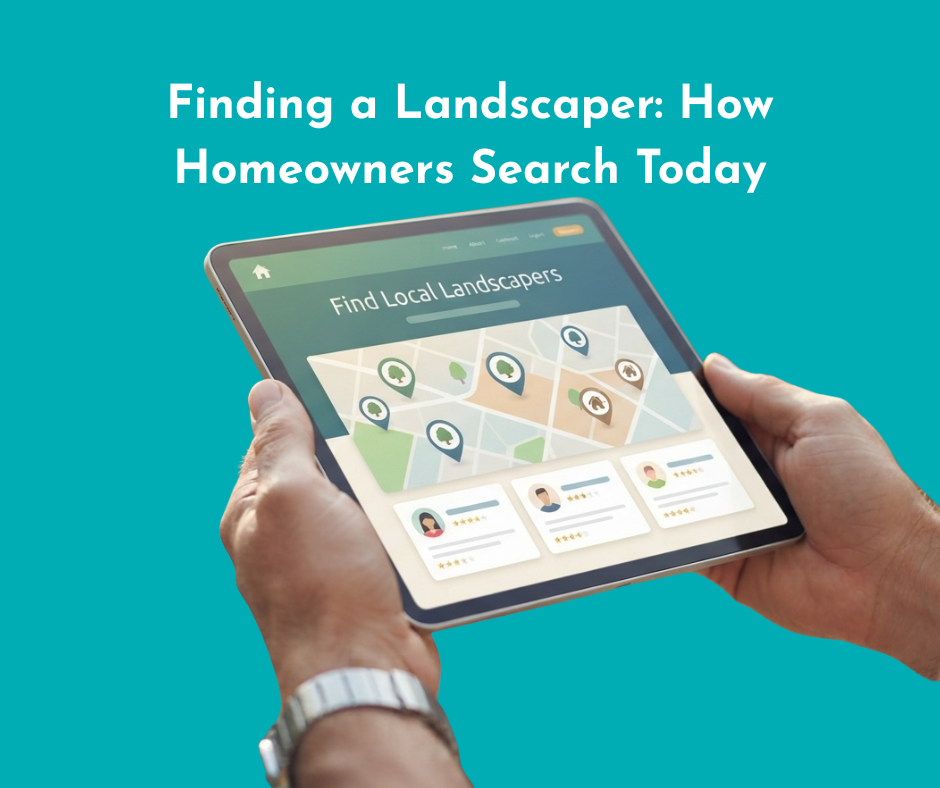
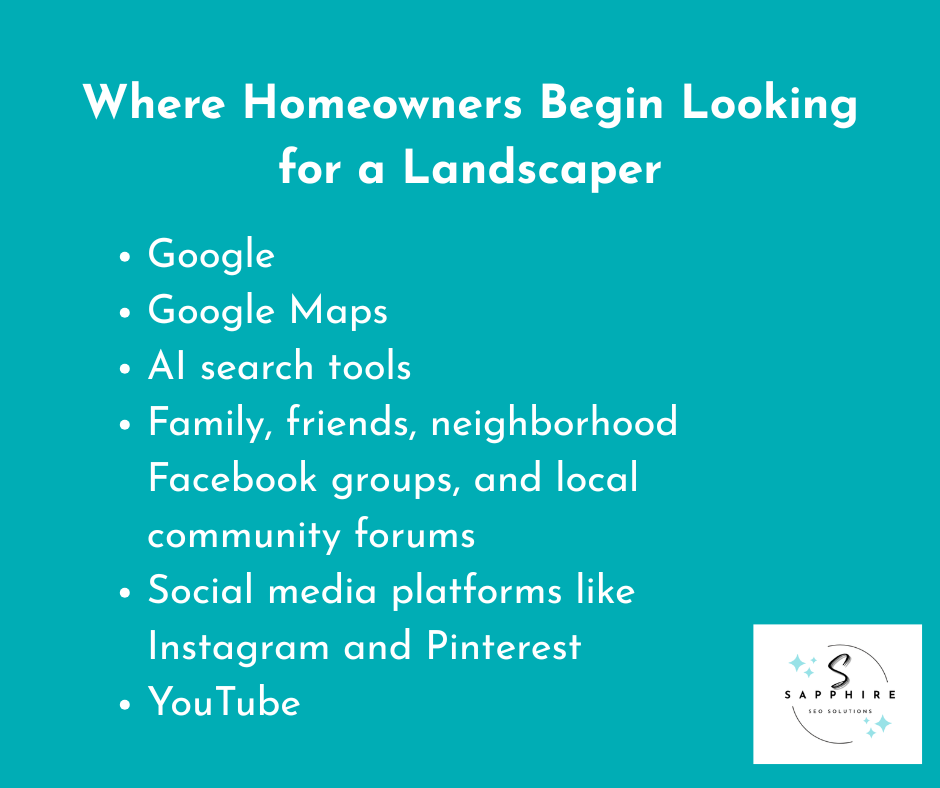
Where Homeowners Begin Looking for a Landscaper
Most homeowners don't start with a single search. They bounce around.
Google is usually the first stop. Homeowners often begin with Google because it lets them compare multiple landscapers, reviews, photos, and locations in just a few minutes.
A quick search for "local landscapers near me" or "landscaping company in [city]" pulls up a list, and from there, people start to browse. Google Maps comes right after. Homeowners want to see who's actually close by, what their star rating looks like, and how many jobs they've done in the area. That's also where a lot of online reviews live, so it doubles as a research stop and a trust check in one.
AI search tools are showing up earlier in the process too. Instead of typing a few keywords, homeowners are asking full questions, like which landscaper in their city has the best reviews for patio work, and getting a summarized answer back.
Then there's the personal side. A recommendation from family or friends still carries weight. So does a post in a neighborhood Facebook group, or a thread on a local community forum asking who did that beautiful backyard down the street.
Social media plays its own role. Someone scrolling Instagram or Pinterest for yard inspiration ends up clicking through to a business's profile, then their website, and suddenly that's a new lead.
Another important source of information for homeowners is YouTube. People looking for patio installation often watch transformation videos to understand what's included in the work, who to call, what to expect, what to be careful of, and all the other good stuff.
None of these sources work alone. Homeowners move between all of them before they land on a shortlist, and companies that show up well across the board (something we cover in Google Maps SEO for Landscapers) tend to make that list more often.
How Homeowners Figure Out What Type of Landscaper They Need
Here's something a lot of homeowners run into early on. They know they want their yard to look better, but they don't actually know who to call.
Many homeowners don't realize that landscape designers, hardscape contractors, lawn care companies, irrigation specialists, and tree service providers often specialize in different types of work. Understanding that difference helps narrow the search much faster.
Searching for "a landscaper" and searching for a specific specialist are two different things. Someone who wants a new patio isn't looking for the same person as someone who just wants their lawn mowed on a schedule. So the searches start broad, then narrow fast.
A homeowner might start with landscaping services in general, then realize what they actually need is a hardscape contractor for a paver patio, or an irrigation company to fix a sprinkler system that never worked right. Someone dreaming about a backyard with water features and a full garden design might search for a landscape architect or landscape designer instead. And plenty of people just want basic lawn care services, things like mowing, pruning, and weeding, without any big installation involved.
As the project becomes clearer, so does the search. A homeowner who figures out they need tree work will look for a tree service company specifically, not a general landscaper. And once someone settles on a lawn care company for ongoing lawn mowing, that search gets a lot more specific too. Once homeowners know what they need, finding the right company gets a lot easier.

What Homeowners Search for Online When Looking for Landscaping Services
The search process usually starts wide open. A homeowner might type something as simple as "backyard ideas" or "how to improve my yard," just trying to figure out what's even possible. No company name. No specific service. Just browsing.
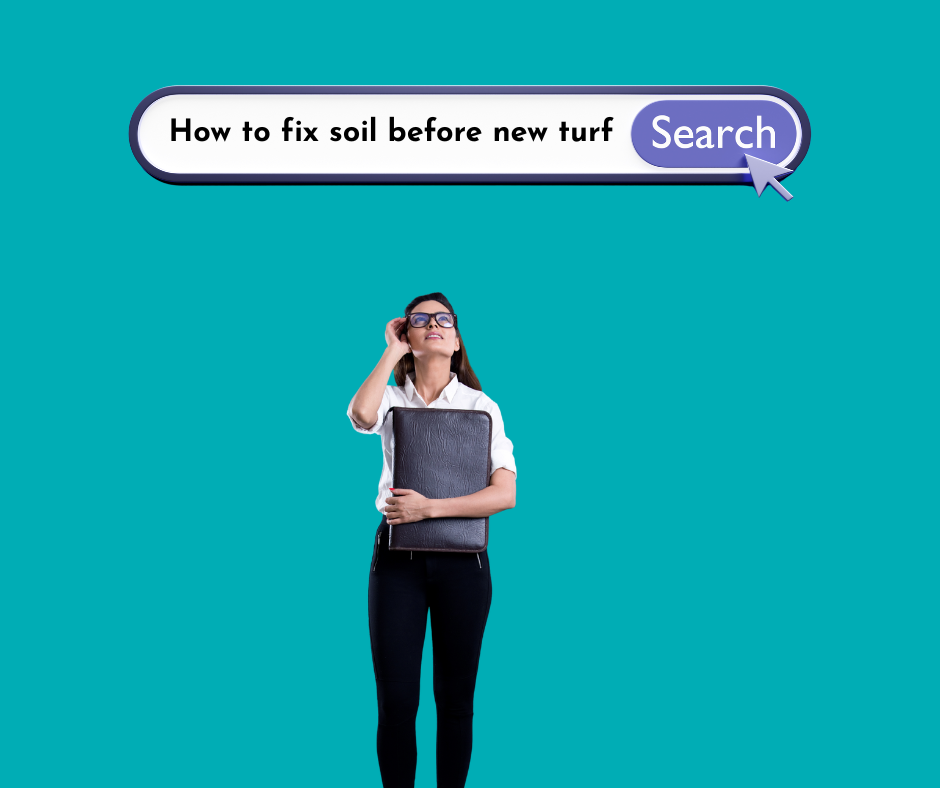
As the picture gets clearer, the searches get more detailed. Someone might move from a general "garden ideas" search to something like "best plants for shady outdoor space" or "how to fix soil before laying new turf." A homeowner dealing with a patchy lawn or overgrown trees starts searching for exactly what's wrong, not just what looks nice on Pinterest.
Local intent shows up fast, too. Once someone knows what they want, "near me" gets added to almost everything. A patio installer near me. A tree trimmer near me. That's the point where research turns into actually looking for someone to hire.
Image searches play a bigger role than people realize. Homeowners search photos of finished patios, front-yard makeovers, and garden layouts to get a feel for a company's actual work, not just their sales pitch. AI-generated answers are entering the picture here too, summarizing options and pointing homeowners toward companies worth a closer look.
And before anyone reaches out, there's almost always a review search. "Best landscaper reviews near me" or a quick check of a company's rating. By the time someone lands on the right contractor, their search has gone from vague inspiration to a very specific decision.
How Homeowners Compare the Best Landscaping Companies
Landscaping projects are highly visible, often expensive, and difficult to undo. A poorly installed patio or drainage issue can cost thousands to correct, which is why homeowners spend more time researching landscapers than they would for many other home services.
By the time a homeowner has a shortlist, they're not just glancing at names anymore. They're digging in, and most of that digging happens before anyone picks up the phone.
Reviews are usually the first thing people check. Not just the star rating, but what satisfied customers are actually saying. Someone mentioning that a crew showed up on time or cleaned up properly after a job carries more weight than a generic five-star rating with no comments attached.
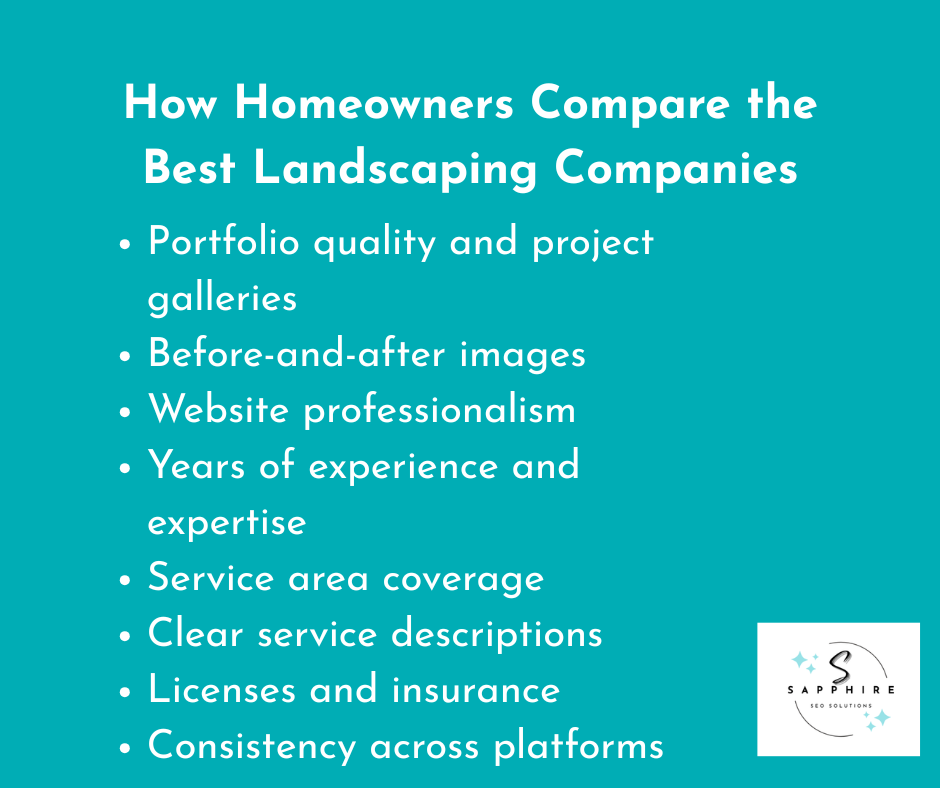
From there, homeowners start looking at the work itself. A few things tend to come up over and over:
Portfolio quality and project galleries, to get a real sense of what the company can do
Before-and-after images, especially for bigger jobs like patios or full yard renovations
Website professionalism, since a messy or outdated site makes people question everything else
Years of experience and general expertise
Whether the company actually serves the homeowner's area
Clear, specific service descriptions instead of vague "we do it all" language
Trust signals like necessary licenses and insurance
Consistency across platforms, meaning the business name, hours, and contact info match everywhere someone finds them
That last point matters more than people expect. If a company's Google listing says one service area and its website says another, that's an easy way to lose trust fast.
Clear contact information matters here too. A homeowner who can't quickly figure out how to reach someone, or how to get a quote, usually just moves on to the next option. Homeowners expect to find an easy way to get in touch and request a quote. When they can't, they often move on.
None of this happens in a phone call. It happens quietly, on a screen, long before a homeowner reaches out. Companies that come across as qualified professionals with real knowledge of their trade get access to that shortlist. The ones that don't get crossed off without ever knowing it.
Homeowners Rarely Choose the First Landscaper They Find
This one deserves its own moment, because it explains almost everything else in this article.
Homeowners don't land on a landscaper's website and immediately reach for the phone. Not usually, anyway. What actually happens looks more like this:
They open a handful of tabs at once, comparing companies side by side
They compare reviews across two or three sites, not just one
They compare photos, looking for work that matches what they picture for their own house
They revisit websites more than once, sometimes days apart
They ask family what they think, or whether anyone's used the same company before
They step away and come back later, the same way someone might browse a local nursery before deciding what to plant
None of this is unusual. It's just how people make decisions on something this visible and this permanent. A yard isn't something you replace next month if you don't like it.
That's exactly why a strong first impression matters so much. If a homeowner comes back three days later and the website still doesn't answer their questions, they've probably already moved on.
What Makes One Landscaping Company Stand Out During the Search Process
Trust doesn't happen during the first phone call. It happens way before that, while a homeowner is still just scrolling.
Authentic project photos make a bigger difference than most companies realize. A real backyard, with real lighting and a little bit of mess in the background, tends to feel more convincing than a stock photo of a perfectly staged patio. It signals good work, not a marketing brochure.
Detailed service pages help too. When a homeowner can clearly see what a company offers instead of guessing, it feels like less of a gamble. The same goes for content that actually teaches them something, like how to boost curb appeal or protect property value with the right landscaping choices. That kind of content builds confidence that a company knows what it's talking about.
Local expertise matters as well. A professional who clearly understands the climate, soil, and growing conditions in the homeowner's area comes across as someone who can handle the project efficiently, without a learning curve.
Recent customer reviews carry weight too, more than old ones. A steady stream of fresh feedback tells a homeowner this company is still active and still delivering.
Consistent branding, clear communication, and fast response times round it out. Put all of that together, and a homeowner starts to feel like hiring this good landscaper would be hassle-free, one of the biggest benefits they're actually looking for.

What Causes Homeowners to Remove a Landscaper From Their Landscaping Project Shortlist
Getting cut from a shortlist usually isn't dramatic. It's quiet. A homeowner clicks away, and the company never even knows they were being considered.
Several factors tend to be behind it. Few or outdated reviews are one of the biggest. If the most recent feedback is from two years ago, a homeowner starts wondering whether most landscapers on their list are still active or even still in business.
Poor project photography doesn't help either. Blurry photos, stock images, or no photos at all make it hard for a person to picture what the actual job would look like.
A generic website is another red flag. If the services listed are vague, or there's no mention of local environmental factors like soil type, drainage issues, or the kind of plants that actually survive in the area, it starts to feel like a copy-paste operation instead of a local expert.
Missing examples from nearby neighborhoods raise the same doubt. So does a slow response to a message or form. If a homeowner has to wait days for a reply, they've usually already moved on to someone else.
Unclear service areas, confusing navigation, and inconsistent business information across different platforms all add up to the same feeling: this company isn't quite dialed in. And once that doubt creeps in, homeowners rarely give it a second chance. They just move to the next name on the list.
Why Homeowners Compare Multiple Good Landscapers Before Making a Decision
A landscaping project is real money. Whether it's a full backyard renovation or one of the smaller projects like a fresh flower bed, homeowners want to feel confident before they pay for it. That confidence usually doesn't come from a single company.
So they compare. A homeowner might revisit two or three websites more than once, rereading reviews they already skimmed the day before. They'll pull up portfolios side by side, checking whose work actually matches the look they have in mind. Response time gets weighed too. If one company answers within an hour and another takes three days, that difference says a lot before a single quote comes in.
Professionalism factors into it as well. How a company communicates, how organized their plan sounds, and how confident they seem about the cost of the work all get compared right alongside price.
And price matters, sure, but it's rarely the only thing that decides it. A homeowner working with a tight budget might still pass on the cheapest quote if another company feels more trustworthy. Comparing isn't about finding the lowest number. It's about finding the company they feel good handing their money to.
What Finally Makes a Homeowner Reach Out?
After all that comparing, something eventually tips a homeowner from browsing to actually picking up the phone. It's rarely one single thing. It's a build-up of small signals that add up to enough confidence to act.
By that point, a homeowner usually has:
Enough trust in the company to believe they'll do the job right
Enough evidence, gathered across reviews, photos, and the website itself
A website that answered their questions instead of raising new ones
Photos that matched the style they had in mind for their own yard
Reviews that felt authentic, not generic or copy-pasted
A company that looked responsive, based on how others described working with them
Homeowners rarely contact every landscaper they research. They contact the few they've already convinced themselves are worth talking to.

How AI Search Is Changing the Way Homeowners Discover Landscapers
Search is getting more conversational. Instead of typing "landscapers near me," more homeowners are asking full questions, like which company in their area has the best reviews for patio installs, or who's known for reliable hiring and on-time crews.
AI tools respond with summaries that pull together reviews, websites, and other information into one quick answer. For a homeowner short on time, that's an easy starting point. It narrows the field before they've clicked a single link.
But it rarely ends there. Most people still check the actual website. They still read reviews themselves. An AI summary might point someone toward three companies worth considering, but the final decision usually comes down to whether those companies still hold up once a homeowner looks closer.
That's the real shift. AI isn't replacing the research homeowners do. It's just becoming another place they start it.
Work with Sapphire SEO Solutions and Appear When Homeowners Search for Local Landscapers!
By now, one thing should be clear. Finding someone to handle a landscaping project isn't a one-step decision anymore. Homeowners move through Google, reviews, social media, YouTube, and even AI tools before they ever pick up the phone, comparing companies the whole way through.
And at every one of those touchpoints, they're forming an opinion. Consistent information across all those sources builds trust. Missing or conflicting information does the opposite, usually without a homeowner ever saying why they moved on.
The companies that show up clearly, with credible, helpful information wherever a homeowner happens to look, are the ones that make the shortlist. That's the whole game.
At Sapphire SEO Solutions, that's exactly where we come in. We’ve worked with many landscapers since 2007 and understand their needs better than any other. Our experts have helped small and medium-sized landscaping businesses thrive in the online space.
Interested in knowing how we can help you? Contact us to schedule a free consultation with an SEO strategist today!
Looking to order SEO-optimized content for your landscaping business? Check out the different content writing tiers we offer before placing an order online.

Frequently Asked Questions
Where is the best place to find a reputable landscaper?
There's no single best place. Most homeowners find good results by checking Google, reading reviews, and asking family or neighbors, then comparing what they find across all three.
What should I look for when comparing landscaping companies online?
Recent reviews, real project photos, clear service descriptions, and a website that's easy to navigate. Licensing and insurance matter too, especially for bigger jobs.
How many landscaping companies should I compare before making a decision?
Most homeowners compare at least two or three before reaching out to anyone. It's less about a magic number and more about feeling confident in the choice.
Do homeowners still rely on referrals, or do most people search online first?
Both, usually at the same time. A referral often kicks off the search, but most people still look the company up online before calling.
Can AI tools and Google Search help me find the right landscaper?
Yes. They're useful for narrowing down options fast, whether you need someone for full grass installation or a smaller cleanup job. Most homeowners still double-check with reviews before deciding.